

Developed by General Motors Europe (GME), the “GME 60323 Determination of Weave Density of Knitted Fabrics” standard is an engineering material testing standard used to determine the weave or seam density of knitted and warp-knitted textile fabrics used in automotive interiors. This standard ensures that textile materials meet General Motors’ quality and performance requirements by providing a consistent procedure for measuring the number of loops, rows, and rows in a given fabric area. This standard is commonly referred to by testing laboratories as “Determination of Weave Density” or “Determination of Weave Density of Knitted Fabrics”.
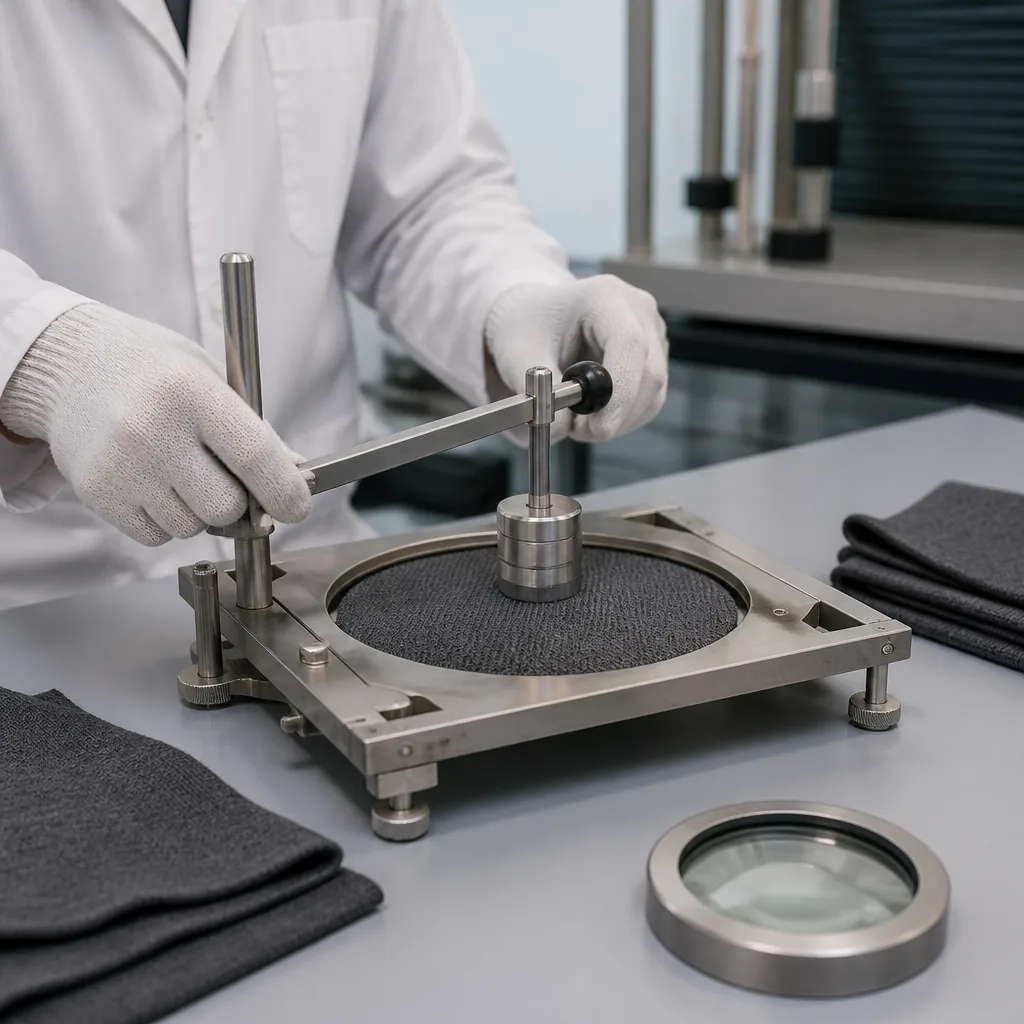
The primary aim of the GME 60323 standard is to establish a uniform method for evaluating the structural density of knitted fabrics. Fabric density directly affects many performance characteristics, including:
General Motors suppliers can ensure that textile materials consistently meet design specifications and manufacturing requirements by applying a standardized measurement method.
The GME 60323 standard applies primarily to knitted textile materials used in automotive interiors. These include:
The described method is designed for quality control, material adequacy, supplier approval, and production monitoring.
Knitted fabrics consist of interconnected loops instead of the vertical warp and weft threads found in woven fabrics. The GME 60323 standard measures the density of these loops by specifying the following parameters:
Measurements are typically taken along a specific length (e.g., 10 cm or another defined measurement length), depending on the material properties.
Typical laboratory equipment used in these tests includes:
Modern laboratories often use automated optical measurement systems to improve repeatability.
This testing method essentially follows these steps:
Taking multiple measurements helps account for natural variations throughout the fabric.
A typical assessment includes the following:
Acceptance limits are determined by the materials engineering specification for the specific component.
Fabric density significantly impacts vehicle interior performance in automotive manufacturing because it affects:
Although developed for General Motors, similar fabric density ratings are widely used in the following areas:
The GME 60323 standard complements several other General Motors textile standards, including:
The advantages of implementing the GME 60323 standard are as follows:
Modern vehicle interiors require fabrics that are attractive, durable, and consistent. Even small variations in stitch density can affect appearance, flexibility, comfort, stitching performance, and long-term wear. The GME 60323 standard provides a repeatable method to verify that knitted fabrics meet General Motors' engineering requirements before being used in manufacturing vehicles. By controlling fabric density, manufacturers can improve product quality, reduce defects, and ensure consistent performance throughout the vehicle's lifespan.
This standard is considered necessary for the following reasons:
Consequently, the GME 60323 standard is necessary because seam density of knitted fabrics is a fundamental property affecting appearance, strength, dimensional stability, manufacturability, and long-term durability. By providing a standardized method for measuring this property, this standard enables suppliers to produce interior textile components with consistent quality, reliable performance, and a uniform appearance across all vehicles.
For many years, our organization, with its competent and experienced staff, has been understanding the needs of its clients, providing the advanced testing services they require, and assisting them in the establishment, implementation, and improvement of management systems. Within this framework, we also provide testing services compliant with the GME 60323 standard.
To get an appointment, to get more detailed information or to request an evaluation, you can ask us to fill in our form and reach you.

