

The “Ford DVM-0033 Cold Temperature Deformation Test” standard, developed by Ford Motor Company (Ford), describes a Ford engineering test method used to evaluate the behavior of automotive floor mat and carpet materials after exposure to low temperatures. This standard assesses whether these materials maintain their shape, flexibility, and dimensional stability when exposed to the cold environmental conditions frequently encountered during vehicle use in winter climates.
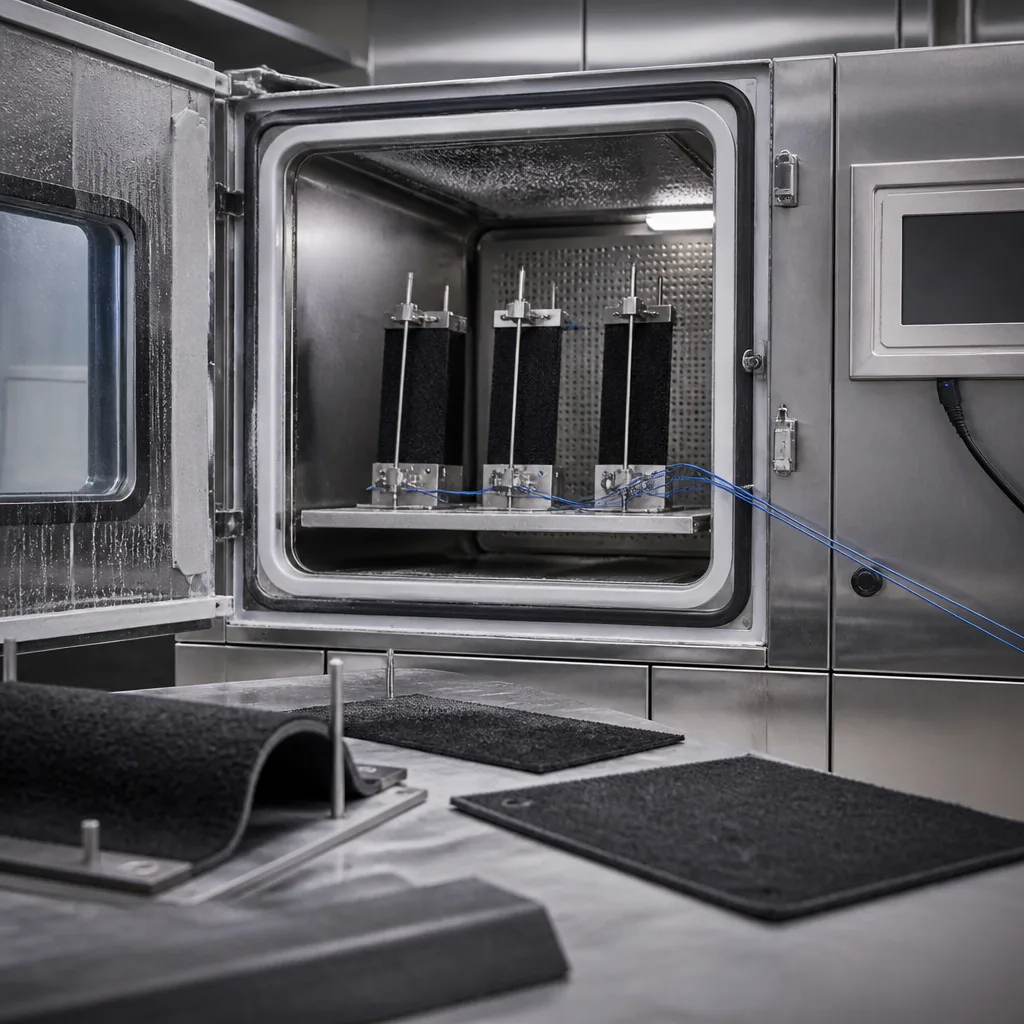
This test is primarily applied to the following:
This method was developed to ensure that interior trim materials continue to function properly and maintain their appearance after prolonged exposure to sub-zero temperatures.
Vehicle floor coverings are exposed to severe temperature fluctuations throughout their service life. In cold climates, materials can harden, permanently deform, curl, or crack. The test method described in this standard evaluates the material's resistance to these effects by measuring its ability to recover from deformation after cold conditioning.
This standard helps to determine the following:
In general, this method follows these steps:
The amount of permanent deformation remaining after healing is the primary performance criterion.
Materials may fail the test under certain circumstances. Typical failure modes include:
Permanent wrinkles
Excessive curling at the edges
These defects can negatively affect both the aesthetics and functionality of the vehicle.
The materials typically tested using this method include:
Cold weather performance is particularly important for vehicles sold in cold regions such as Canada, the United States, Scandinavia, Russia, and the European Alps. In these environments, interior floor materials can be exposed to temperatures well below freezing for extended periods. Permanently deformed materials can lead to customer dissatisfaction and even prevent the mat from being positioned correctly.
Materials that meet the requirements of the Ford DVM-0033 standard generally provide the following:
The Ford DVM-0033 standard is typically used in conjunction with other Ford interior performance specifications, including:
Together, these tests provide a comprehensive assessment of the durability of automotive interior materials under real-world service conditions.
The Ford DVM-0033 standard test method is considered necessary because it verifies that automotive floor mats, carpets, and similar interior materials can withstand exposure to low temperatures without permanent deformation or damage. Vehicles are often used in environments where temperatures drop well below freezing, and interior upholstery materials must continue to perform as designed. This standard is important for the following reasons:
In conclusion, the Ford DVM-0033 standard is important because it ensures that automotive upholstery materials maintain their shape, flexibility, appearance, durability, and safety after exposure to low temperatures. By identifying materials that can resist permanent deformation in winter conditions, this standard helps Ford deliver reliable, high-quality vehicle interiors that perform consistently throughout the vehicle's lifespan.
For many years, our organization, with its competent and experienced team, has been understanding the needs of its customers, providing the advanced testing services they require, and assisting them in the establishment, implementation, and improvement of management systems. Within this framework, we also provide testing services compliant with the Ford DVM-0033 standard.
To get an appointment, to get more detailed information or to request an evaluation, you can ask us to fill in our form and reach you.

