

The “GMW 4141 Pile Deformation – Environmental” standard, developed by General Motors Worldwide (GMW), is a test standard used to evaluate the resistance of textile pile materials to deformation due to environmental influences. This standard is particularly applicable to automotive textiles and pile surfaces where maintaining a smooth and attractive appearance is important. The aim of this standard is to assess the environmental resistance of fiber orientation, especially under heat and humidity.
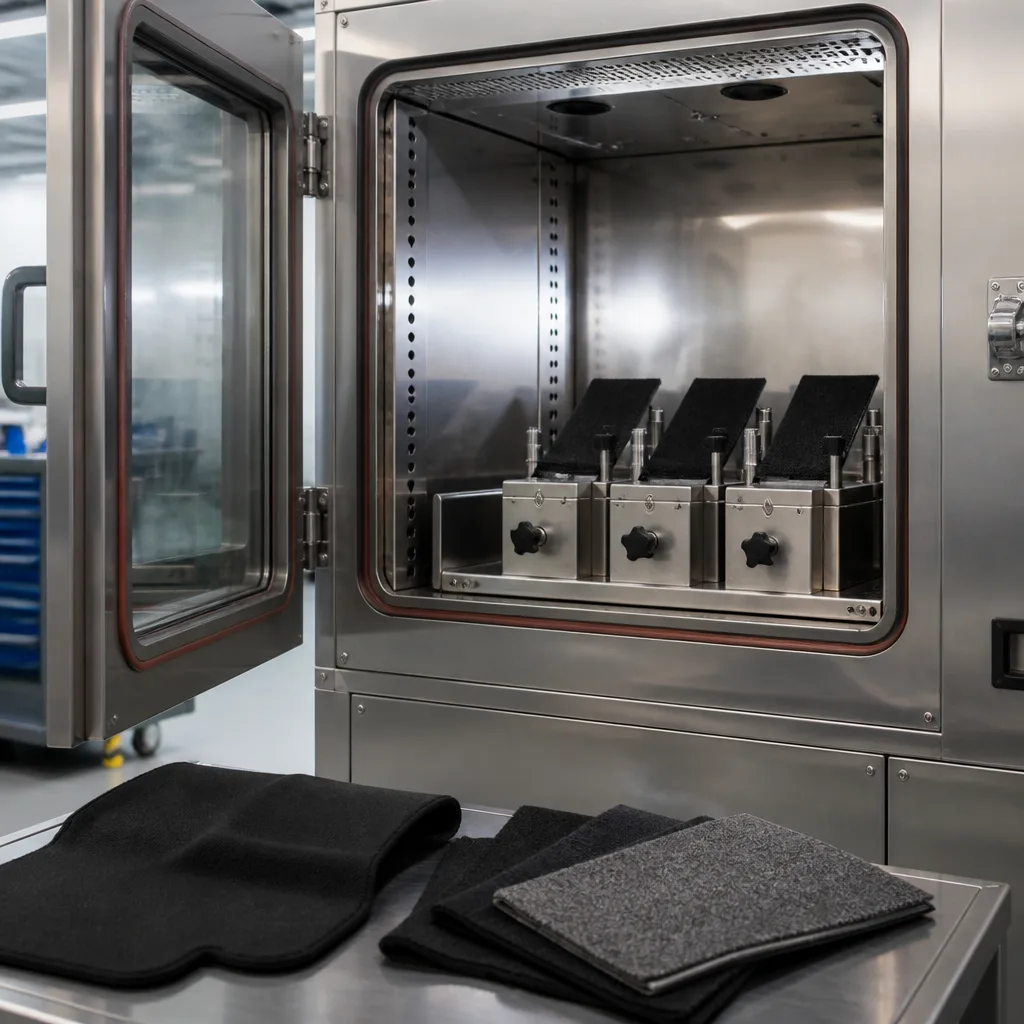
Pile refers to the fluffy fibers or loops of yarn that make up the visible surface of a textile. It is commonly found in automotive carpets, velvet, upholstery, and other interior textiles. During vehicle use, these fibers may change orientation for the following reasons:
As a result, an irregular or permanently altered surface appearance may occur. For example, a textile might initially have fibers that lie relatively straight. After exposure to high temperature and humidity, the fibers may straighten, bend, felt, or orient themselves in different directions. This phenomenon is called pile deformation.
The primary purpose of the GMW 4141 standard is to determine whether an automotive textile can maintain an acceptable pile appearance after exposure to environmental conditions. This testing helps General Motors and its suppliers evaluate the following:
The GMW 4141 standard is primarily related to automotive textile and pile surface materials. Examples include:
The precise applicability and acceptance requirements of the material must be determined from the relevant General Motors material specification or engineering drawing.
A key feature of the described test method is its environmental exposure. Laboratory descriptions specifically relate the GMW 4141 standard to heat and humidity exposure. A typical evaluation concept is: starting material, environmental conditioning, recovery/evaluation, air deformation assessment.
Environmental exposure aims to reproduce the conditions that automotive interior textiles might encounter during use. It is important to distinguish this from an abrasion test. The GMW 4141 standard does not primarily measure how much material has abraded. Instead, it assesses how the orientation and appearance of the pile change as a result of environmental conditions.
The test primarily concerns the change in the appearance/orientation of air after environmental exposure. Depending on the applicable requirements for the material, the evaluation takes the following characteristics into account:
It should not be assumed that the actual acceptance criteria are universal. These are specified in the relevant General Motors material specification, drawing, or component requirement.
Essentially, automotive interior textiles are exposed to significant temperature and humidity changes throughout their lifespan. A material that appears acceptable when new may develop noticeable drape degradation after environmental exposure. This leads to:
Therefore, environmental air testing is a crucial part of verifying the appearance of an automotive interior.
The GMW 4141 standard test method should be distinguished from some other textile tests in the following way:
For comparison, the GMW 4090 standard addresses yarn count, while the GMW 3347 standard addresses lint collection and retention properties. Current textile laboratory listings evaluate these methods in conjunction with the GMW 4141 standard in automotive textile testing programs.
The GMW 4141 standard is particularly useful in terms of automotive quality because automotive interior quality is not determined solely by mechanical durability. Visual appearance and long-term surface stability are also critical. A carpet or upholstery fabric may meet durability and abrasion requirements, but may still be unacceptable if its pile visibly deteriorates after exposure to heat and humidity.
In conclusion, the GMW 4141 standard can be part of a broader material validation program, along with the following tests:
In short, the GMW 4141 standard includes a test method used by General Motors to evaluate how the pile surfaces of automotive textiles respond to environmental conditions, particularly heat and humidity. The primary goal of this standard is to ensure that the pile fibers maintain an acceptable orientation and appearance after environmental exposure. This makes the standard valuable for verifying automotive carpets, velvet, upholstery, and other interior textiles containing pile. For suppliers, this test provides a crucial indication of whether a textile can maintain its visual quality and surface appearance throughout the vehicle's lifespan.
For many years, our organization, with its competent and experienced staff, has been understanding the needs of its clients, providing the advanced testing services they require, and assisting them in the establishment, implementation, and improvement of management systems. Within this framework, we also provide testing services in accordance with the GMW 4141 standard.
To get an appointment, to get more detailed information or to request an evaluation, you can ask us to fill in our form and reach you.

