

The “GMW 4217 Dimensional Stability Test for Automotive Materials” standard, developed by General Motors Worldwide (GMW), is a test standard designed to evaluate the dimensional stability of materials used in automotive applications. This standard is particularly relevant to textiles, foams, plastics, and other flexible automotive materials. Changes in dimensions in these materials can affect fit, appearance, assembly, and long-term performance.
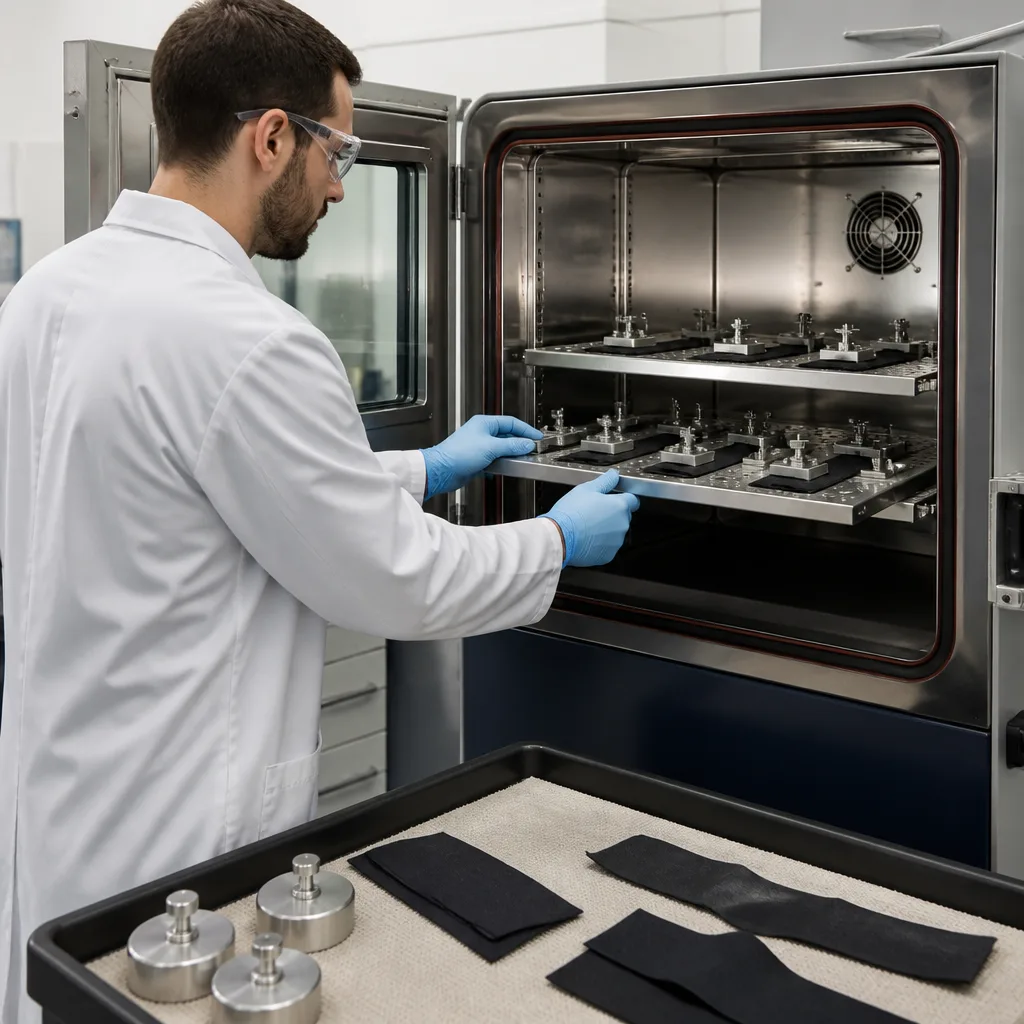
Dimensional stability describes a material's ability to maintain its original dimensions after being exposed to specified environmental or conditioning conditions. Automotive materials can shrink, expand, deform, or change shape for the following reasons:
Even relatively small dimensional changes can lead to problems when a material is incorporated into a precisely fitted vehicle component. For example, excessive shrinkage of an automotive textile or foam-backed material can cause wrinkles, gaps, poor fit, or tension during assembly.
The primary purpose of the GMW 4217 standard is to provide a controlled method for determining whether a material retains acceptable dimensional properties after a specified process. Therefore, the test is useful for the following purposes:
Advanced laboratories define the GMW 4217 standard as a method for dimensional stability testing of rubber, plastics, textiles, and related automotive materials.
An important feature of the GMW 4217 standard is that the test can be distinguished according to the conditioning environment. Test laboratories list the following applications separately in relation to this standard:
This shows that dimensional behavior can be evaluated under different humidity conditions. This distinction is important because some materials behave differently when dry compared to when they absorb water or moisture.
The general principle of dimensional stability testing is to compare the dimensions of a test specimen before and after a specific conditioning process. Generally, the testing process follows these steps:
Sample preparation, conditioning, measurement requirements, and acceptance criteria are included in the GMW 4217 standard.
The GMW 4217 standard is seen in testing programs involving various automotive materials. Laboratory accreditation records associate the standard with dimensional stability testing for materials including rubber, plastics, and textiles. Potential applications include:
Exact applicability depends on material specifications and General Motors component requirements.
Dimensional stability is particularly important in automotive manufacturing because components are designed with relatively tight dimensional relationships. A material whose dimensions vary drastically can cause the following:
Dimensional changes to internal components can be particularly noticeable. A material may meet basic mechanical requirements but still be unsuitable if it significantly changes its shape during use.
GMW 4217 is one of several dimensional stability methods used in automotive material testing. Advanced laboratories list this standard alongside methods such as ASTM D1204, DIN 53892-2, SAE J883, and other original equipment manufacturer-specific requirements. However, each standard may have different characteristics in the following respects:
Therefore, a supplier must use the method specifically requested in the relevant General Motors material or component specification.
For automotive suppliers, dimensional stability testing can be used both during the development phase and in production quality monitoring. During the development phase, it helps engineers compare different materials, structures, adhesives, coatings, and manufacturing processes. During the production phase, it helps identify variations resulting from:
A material that consistently passes dimensional stability testing provides greater confidence that the finished component will retain its intended geometry.
The GMW 4217 standard itself should not be interpreted as establishing a universal dimensional change limit for every automotive material. The permitted dimensional change normally depends on the material or component specification referenced by the GMW 4217 standard. Therefore, the following should be clearly stated in a test report:
In conclusion, the GMW 4217 standard includes a test method used to determine the dimensional stability of automotive materials. This method is used to evaluate whether materials maintain their dimensions after specified conditioning, including dry and wet conditions.
This standard is important because seemingly minor dimensional changes at the material level can lead to significant problems in vehicle assembly, appearance, and long-term performance. Therefore, the GMW 4217 standard is a useful part of material qualification and automotive quality control programs.
For many years, our organization, with its competent and experienced staff, has been understanding the needs of its clients, providing the advanced testing services they require, and assisting them in the establishment, implementation, and improvement of management systems. Within this framework, we also provide testing services in accordance with the GMW 4217 standard.
To get an appointment, to get more detailed information or to request an evaluation, you can ask us to fill in our form and reach you.

