BS 5852 Assessment of the Flammability of Upholstered Seats with Smoke and Flame Ignition Sources
The BS 5852 standard, developed by the British Standards Institute (BSI), describes methods for assessing the flammability of upholstered seating by means of smoky and flame ignition sources. It explains how to assess the flammability of single material combinations, such as coverings and fillings used in upholstered seating sets, or complete seating sets, when exposed to flame ignition sources with heat outputs ranging from the burning of a match to the burning of four double sheets of full-size newspaper. This standard does not necessarily cover ignition resulting from acts of deliberate vandalism and arson.
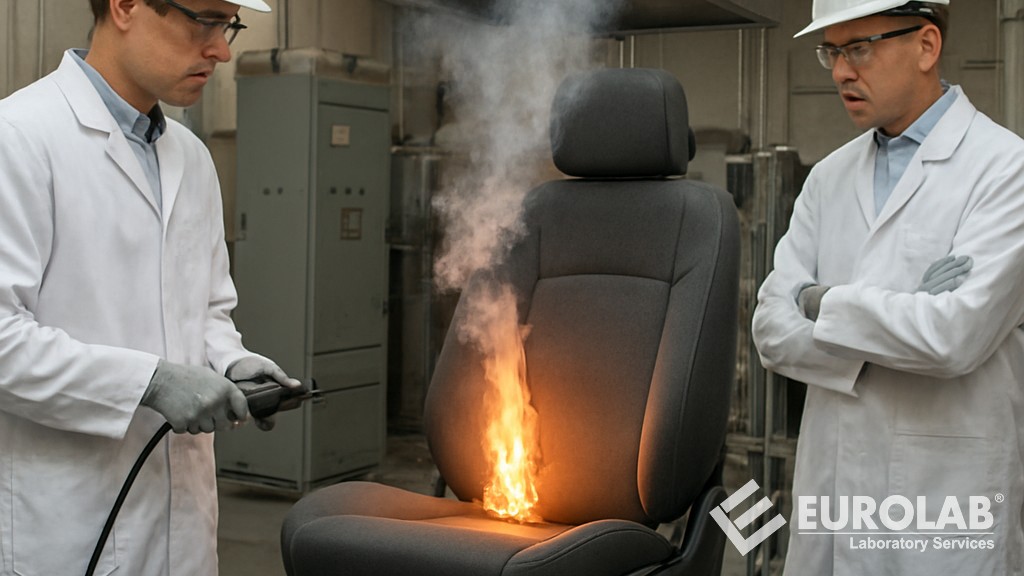
This standard describes the following methods:
- Testing of upholstered seating composites with flame ignition sources.
- Testing fully upholstered furniture pieces with smoky or flame ignition sources.
The possible ways in which this standard can be used to specify the potential flammability of components, together with other specified materials, or when more specific information about design characteristics is required, are included in this standard annex (Annex B).
This standard is a key one that specifies methods for testing the flammability (resistance to combustion) of upholstered seating and furniture components. By focusing on how materials used in sofas, chairs, cushions, and similar products react to various ignition sources, it helps reduce fire risks in residential, commercial, and public settings.
The BS 5852 standard evaluates composite samples, typically combinations of upholstery fabrics (covers) and filling materials (foams, fillers), rather than individual materials. It simulates real-world ignition scenarios using increasingly intense sources. The main ignition sources are:
- Source 0: A glowing cigarette (simulates accidental ignition from smokers' equipment).
- Source 1: Butane flame equivalent to a match.
- Wood cradle ignition source 5 (Crib 5): A more intense flame source typically required for medium to high-risk applications (e.g., public buildings or contract furniture).
- Higher sources (e.g., Source 7): Used in stricter classifications for very high-risk environments.
Tests are performed on prototype assemblies that mimic the structure of real furniture (seat and back interfaces are critical areas).
Success usually means:
- There should be no progressive smoldering or flare-up after the ignition source is removed.
- The flames or smoldering should extinguish themselves within the specified time (e.g., in most cases, the smoldering should not last more than 10 minutes).
- There should be no burning down to the underlying filling, and this should not cause a malfunction.
The precise criteria vary depending on the ignition source and whether the test is for low, medium, high, or very high hazard levels. This is generally linked to the BS 7176 standard, which classifies hazard levels for outdoor living spaces using methods from the BS 5852 standard.
The main reasons why the BS 5852 standard is considered important are as follows:
- Consumer and public safety: Before strict flammability standards, upholstered furniture fires were a significant cause of injury and death in homes. Compliance has significantly reduced such incidents.
- Legal requirements: Upholstered furniture used in homes must meet the cigarette (Source 0) and match (Source 1) tests required by current regulations. In higher-risk environments (hotels, nursing homes, offices), Crib 5 or higher is generally required.
- International impact: Although of British origin, the BS 5852 standard is referenced or accepted in many countries, particularly for export to European Union markets. This standard runs parallel to standards such as EN 1021-1/2 (European equivalents for cigarette and match testing).
- Industrial application: Manufacturers of fabrics, foams (e.g., fire-retardant polyurethane), and complete furniture use this standard to certify their products. Flame-retardant treatments or naturally durable materials help products pass the standard.
This standard includes the following subsections:
- BS 5852 § 12.5.2 Source 0: This section refers to a specific test procedure and clause, called ignition source 0, which includes the smoky cigarette test used to assess the flammability of upholstered furniture. Ignition source 0 is an unfiltered cigarette (typically about 68 mm long, 8 mm in diameter, mass about 1 g) that is lit and allowed to burn smokily without an open flame. This simulates real-life accidental ignition from a discarded or forgotten cigarette, which has historically been one of the most common causes of upholstered furniture fires. This is a smoky (not flaming) test. The aim is to check whether the upholstery composite (fabric covering + filling such as foam) gradually develops smoky or flaming combustion after the cigarette has burned.
- BS 5852 § 12.5.2 Source 1: This section refers to the specific test procedure and clause for assessing the flammability of complete upholstered furniture parts using ignition source 1 (match equivalent flame test or butane flame or small flame test). Ignition source 1 simulates a small open flame, such as a match or lighter, burning using a calibrated butane gas burner. A flame approximately 35–40 mm high is produced at a gas flow rate of 45 ml/min (standardized to provide an energy input of approximately 0,001 kWh). The flame is applied directly to the test area for 20 seconds. This is a flame ignition test (different from the ember ignition test) designed to assess resistance to ignition sources commonly encountered in furniture fires, such as carelessly used matches, lighters, or trash can fires. This test evaluates whether composite flooring (fabric + foam, fiber or other filler materials) ignites, whether the flame persists, or whether it leads to gradual combustion after the flame is removed.
Consequently, the BS 5852 standard remains a cornerstone of fire safety for upholstered furniture in the UK and beyond, ensuring materials are resistant to ignition from everyday sources such as cigarettes or small flames, and in more stringent cases, larger flame sources, thereby limiting the spread of fire in homes and buildings and ultimately saving lives.
For many years, our organization, with its competent and experienced staff, has been understanding the needs of its clients, providing the advanced testing services they require, and assisting them in the establishment, implementation, and improvement of management systems. Within this framework, we also provide testing services compliant with the BS 5852 standard.



