

The “GMW 3274 Pile Deformation - Mechanical” standard, developed by General Motors Worldwide (GMW), is a material testing specification used to evaluate the mechanical resistance of pile or fibrous surfaces. This standard deals with the evaluation of pile deformation caused by mechanical wear or friction.
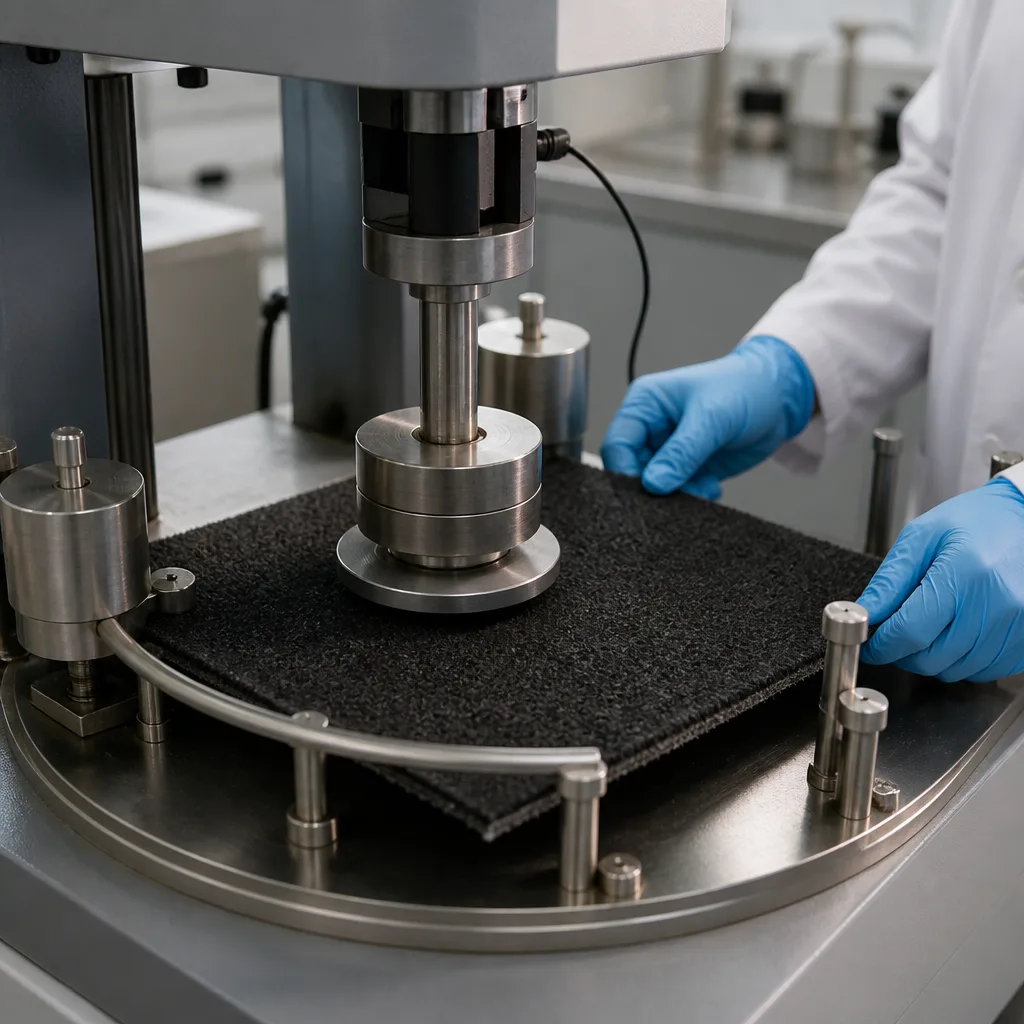
Pile fibers are commonly found in automotive interior applications such as carpets, textile coverings, flocked surfaces, and other fibrous upholstery components. During vehicle use, these surfaces may be subjected to repeated contact with shoes, clothing, tools, hands, and other components. This type of contact can alter the orientation and appearance of the fibers.
The GMW 3274 standard provides a controlled method for assessing this type of damage and helps determine whether a material retains an acceptable appearance after mechanical use.
The primary objective of the GMW 3274 standard is to determine the resistance of the fiber direction to mechanical impact, particularly abrasion. This test method aims to identify the following changes:
Pile refers to the fibers that extend outwards from the surface of a textile or flocked material. These fibers give materials like carpets and flocked fabrics their characteristic texture and appearance. When a pile surface is subjected to mechanical contact, the fibers can be permanently displaced. For example, fibers that were initially standing upright may straighten or orient themselves in a different direction. This phenomenon is called pile degradation.
Fiber degradation is important in automotive interiors because a material can have its appearance significantly degraded while remaining structurally sound. A visible change in fiber direction can create patches, marks, or shade differences on the surface.
The GMW 3274 standard, in principle, evaluates the effect of controlled mechanical friction or abrasion on the surface of the material. This method is generally described as a crockmeter-type method and uses a controlled frictional action to apply mechanical stress to the material. In general, the evaluation includes:
The complete device configuration, load, stroke, cycle count, conditioning requirements, and evaluation criteria are detailed in the GMW 3274 standard.
This standard applies particularly to materials with visible fibrous or fluffy surfaces, including but not limited to:
This standard is defined by advanced laboratories as one of the methods used for air deformation testing, among other automotive material testing methods.
The GMW 3274 standard is important because automotive interior materials are subjected to repeated mechanical contact throughout their lifespan. A material that performs well in its unused state may develop visible defects after repeated friction. These defects can negatively affect:
The GMW 3274 standard should not be considered merely a traditional textile abrasion test. It specifically focuses on pile deformation and fiber orientation resulting from mechanical impact. This distinction is important. A material can withstand a certain amount of abrasion without losing significant mass, yet its fibers may be visibly flattened or reoriented. Therefore, a pile deformation test provides information about surface appearance and fiber orientation, rather than simply measuring material loss.
The GMW 3274 standard is listed in test equipment references alongside conventional friction and wear standards, strengthening its connection to controlled wear equipment.
Test results generally relate to visual or physical changes in the air surface after mechanical processing. Key observations include:
Acceptance limits are typically determined not only by the GMW 3274 standard but also by the relevant General Motors material or component specification. Therefore, laboratories and suppliers should always use the customer's specific drawing, material specification, or program requirement along with the relevant GMW 3274 standard.
The described test method is particularly useful when selecting materials for areas that are frequently in contact, such as:
These applications may be subjected to repeated pedestrian traffic, sliding contact, loading and unloading of objects, and other mechanical interactions.
In summary, the GMW 3274 standard is an automotive material testing specification used to evaluate how a pile or fibrous surface responds to controlled mechanical friction or wear. Its primary purpose is to assess changes in fiber orientation and surface appearance, rather than simply measuring material loss.
This testing method is valuable for evaluating the durability and visual performance of automotive textile and velvet materials. By subjecting a material to controlled mechanical stress, manufacturers and suppliers can identify surfaces prone to flattening, fiber displacement, or other visible fiber deformations before the material enters vehicle production.
For many years, our organization, with its competent and experienced staff, has been understanding the needs of its clients, providing the advanced testing services they require, and assisting them in the establishment, implementation, and improvement of management systems. Within this framework, we also provide testing services in accordance with the GMW 3274 standard.
To get an appointment, to get more detailed information or to request an evaluation, you can ask us to fill in our form and reach you.

