

The “GMI 60307 Automotive Interior Trim Materials Heat and Cold Resistance Testing” standard, developed by General Motors International (GMI), is a materials testing standard related to evaluating the heat and cold resistance of automotive materials. This standard defines procedures to determine whether materials used in vehicle components can withstand extreme temperatures without unacceptable changes in appearance, mechanical properties, or functionality.
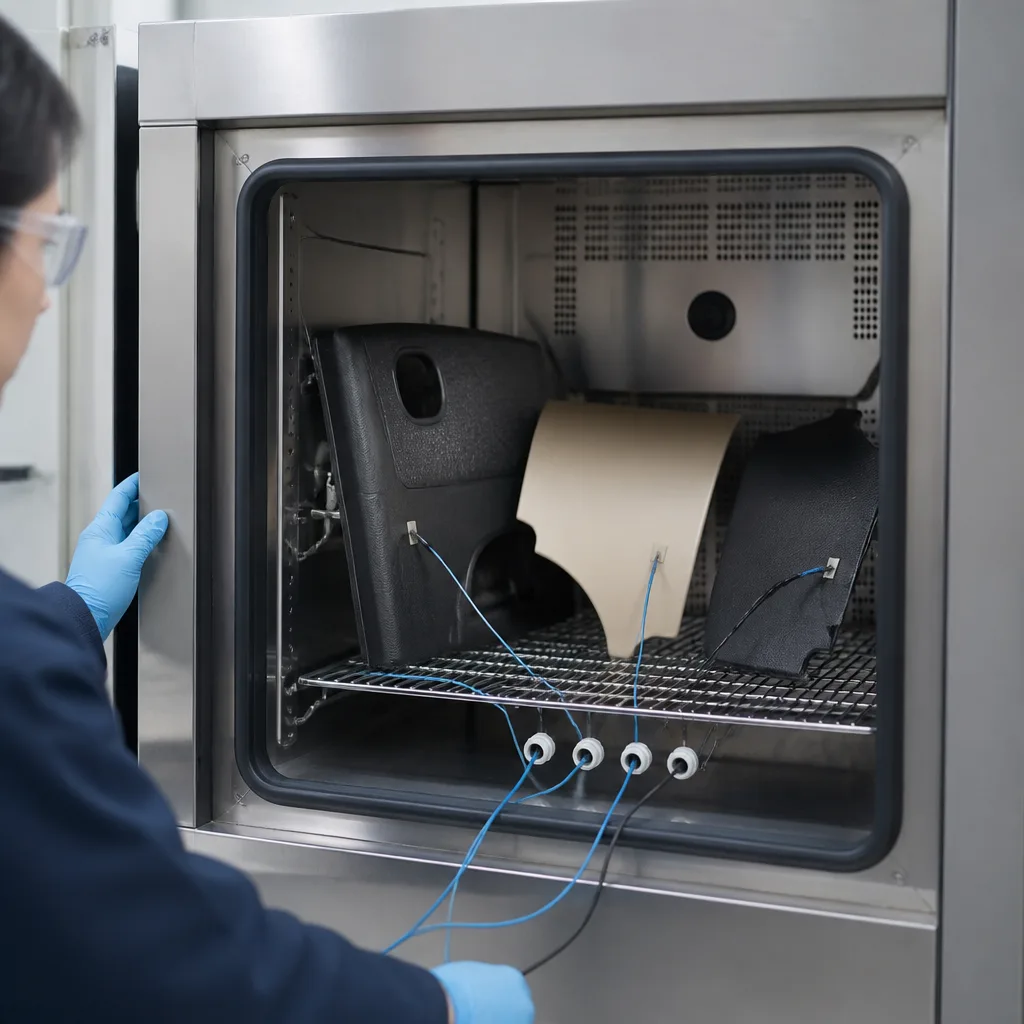
The GMI 60307 standard relates specifically to interior and upholstery materials where exposure to high and low temperatures during vehicle operation can affect durability, safety, and customer perception.
The primary purpose of the GMI 60307 standard is to verify that automotive materials maintain acceptable performance after being exposed to extreme temperatures. This test evaluates resistance to:
Automotive components are frequently exposed to temperature cycles, from the cold conditions of winter to the high solar load inside parked vehicles. A material that performs well at room temperature may degrade after repeated thermal stress.
The GMI 60307 standard is applicable to materials used in the following areas:
General Motors interior material standards typically require verification of the physical, environmental, and durability performance of interior components such as instrument panels, upholstery, floor coverings, seats, and consoles.
In principle, these tests involve preparing test specimens from the material or finished part, exposing the specimens to specified temperature conditions, examining the specimens after conditioning, and comparing the changes against acceptability requirements. Typical evaluation includes:
While the exact parameters depend on the material category and the relevant General Motors specification, heat/cold resistance testing typically includes the following:
The goal is to simulate the following:
The evaluation determines whether the materials have reached the following condition:
In the automotive industry, the GMI 60307 standard is considered important for the following reasons:
This standard helps prevent potential premature failures.
These defects negatively impact the perceived quality of the vehicle.
Thermal resistance testing reduces these risks.
The GMI 60307 standard is part of a broader General Motors materials qualification system. Relevant assessments may include:
In conclusion, the GMI 60307 standard is a crucial automotive material qualification standard for evaluating heat and cold resistance. This standard ensures that vehicle materials remain stable, attractive, and functional under challenging temperature conditions throughout the vehicle's lifespan.
For suppliers, compliance with the GMI 60307 standard demonstrates that their materials can withstand real-world environmental conditions and meet General Motors' durability expectations. Practically, the GMI 60307 standard answers a critical engineering question: will this material maintain its performance after years of extreme temperature variations?
For many years, our organization, with its competent and experienced team, has been understanding the needs of its clients, providing the advanced testing services they require, and assisting them in the establishment, implementation, and improvement of management systems. Within this framework, we also provide testing services compliant with the GMI 60307 standard.
To get an appointment, to get more detailed information or to request an evaluation, you can ask us to fill in our form and reach you.

