

The “GMW 15600 Determination of aldehyde and ketone emissions in vehicle cabin air” standard, developed by General Motors Worldwide (GMW), defines a test method used to determine aldehyde and ketone emissions in vehicle cabin air. This standard is part of a group of automotive interior air quality methods used to assess chemical emissions that may affect the air inside a vehicle.
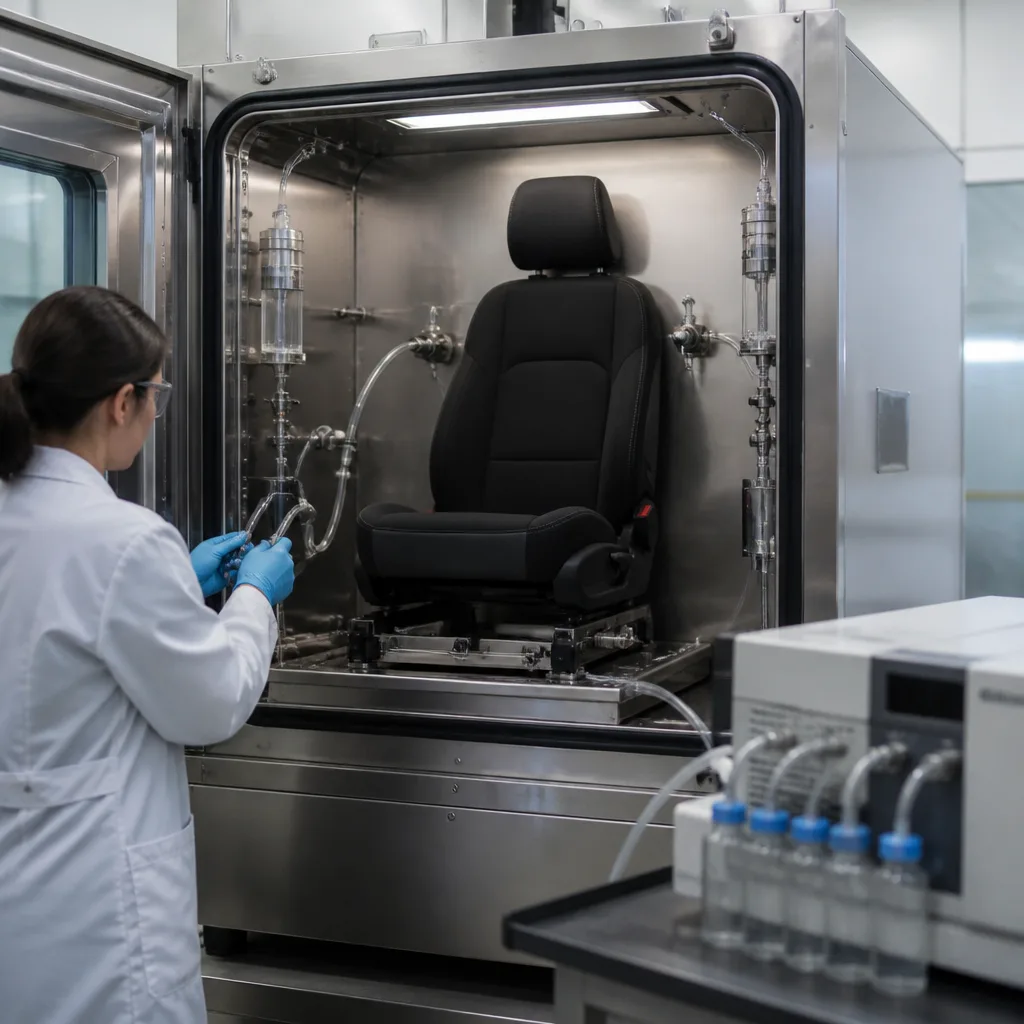
This standard is particularly important for automotive interior components because materials such as plastics, adhesives, coatings, foams, textiles, and other upholstery materials can release small amounts of volatile chemicals into the cabin.
The GMW 15600 standard focuses on aldehydes and ketones found in the vehicle cabin air. These compounds belong to a broader group of volatile organic compounds that can be released from interior materials. Examples of compounds that might be important for this type of analysis include:
The aim is not to determine the presence of these substances, but to determine their concentrations using an appropriate analytical procedure.
Vehicle occupants may spend a significant amount of time inside the vehicle, making interior air quality a crucial aspect of vehicle design. The GMW 15600 standard helps manufacturers and suppliers in the following areas:
The GMW 15600 standard should not be confused with other GMW methods that address different emission categories. For example,
These methods complement each other by addressing different chemical groups or different sources/sampling approaches. Accreditation documents confirm this distinction between the GMW 15600, GMW 15634, GMW 15635, and GMW 15654 standards.
The basic concept in these tests is to obtain an air sample representing the vehicle interior environment and determine the concentration of target aldehydes and ketones. In a typical analytical workflow, the process follows these steps: vehicle cabin or test environment, air sampling, collection of target compounds, laboratory analysis, quantification, and evaluation according to applicable requirements.
The analytical determination of carbonyl compounds typically requires a sensitive chemical analysis technique. Laboratory accreditation records define the GMW 15600 standard as a method for aldehyde and ketone determination, distinguishing it from material emission methods such as the GMW 15635 standard.
The precise sampling configuration, conditioning conditions, sampling time, analytical parameters, and acceptance criteria are included in this standard.
The method described may be applicable to the assessment of emissions associated with many in-vehicle materials, including those listed below:
The aim is to control the contribution of interior materials to the chemical composition of the vehicle cabin environment.
Chemical emissions from automotive materials can be significantly affected by environmental conditions. Temperature, exposure time, material history, and ventilation can all influence the amount of chemicals released. Therefore, automotive emissions testing typically requires carefully controlled test conditions. The laboratory must adhere to specified conditioning and sampling requirements to ensure consistent comparison of results from different materials and suppliers.
The result of an aldehyde and ketone emission test is usually reported as the concentration of the detected compounds in the air sampled. The report may identify the individual compounds and their corresponding measured concentrations. Depending on the customer's specifications, the results can then be compared against specified limits or acceptance criteria. Meanwhile, it is important to distinguish between the following:
For an automotive supplier, the GMW 15600 standard may be part of a broader internal material qualification program. A supplier may be required to demonstrate that a proposed material does not produce unacceptable chemical emissions when integrated into a vehicle. This makes the method useful in the following situations:
In summary, the GMW 15600 standard defines an automotive interior air quality test method used to determine aldehyde and ketone emissions in vehicle cabin air. Its primary role is to provide a standardized approach to assess potentially emitted carbonyl compounds and support cabin air quality control.
In short, the GMW 15600 standard evaluates cabin air, while GMW 15635 and similar standards address aldehyde and ketone emissions from interior materials.
For practical laboratory work, precise sampling procedures, equipment, conditioning parameters, analytical requirements, and acceptance limits are addressed within this standard. Details regarding this standard may vary depending on revisions and instrumentation.
For many years, our organization, with its competent and experienced staff, has been understanding the needs of its clients, providing the advanced testing services they require, and assisting them in the establishment, implementation, and improvement of management systems. Within this framework, we also provide testing services in accordance with the GMW 15600 standard.
To get an appointment, to get more detailed information or to request an evaluation, you can ask us to fill in our form and reach you.

