

The “GMW 14162 Color Fastness to Artificial Weathering” standard, developed by General Motors Worldwide (GMW), describes a test method used to evaluate the resistance of automotive interior materials to artificial weathering.
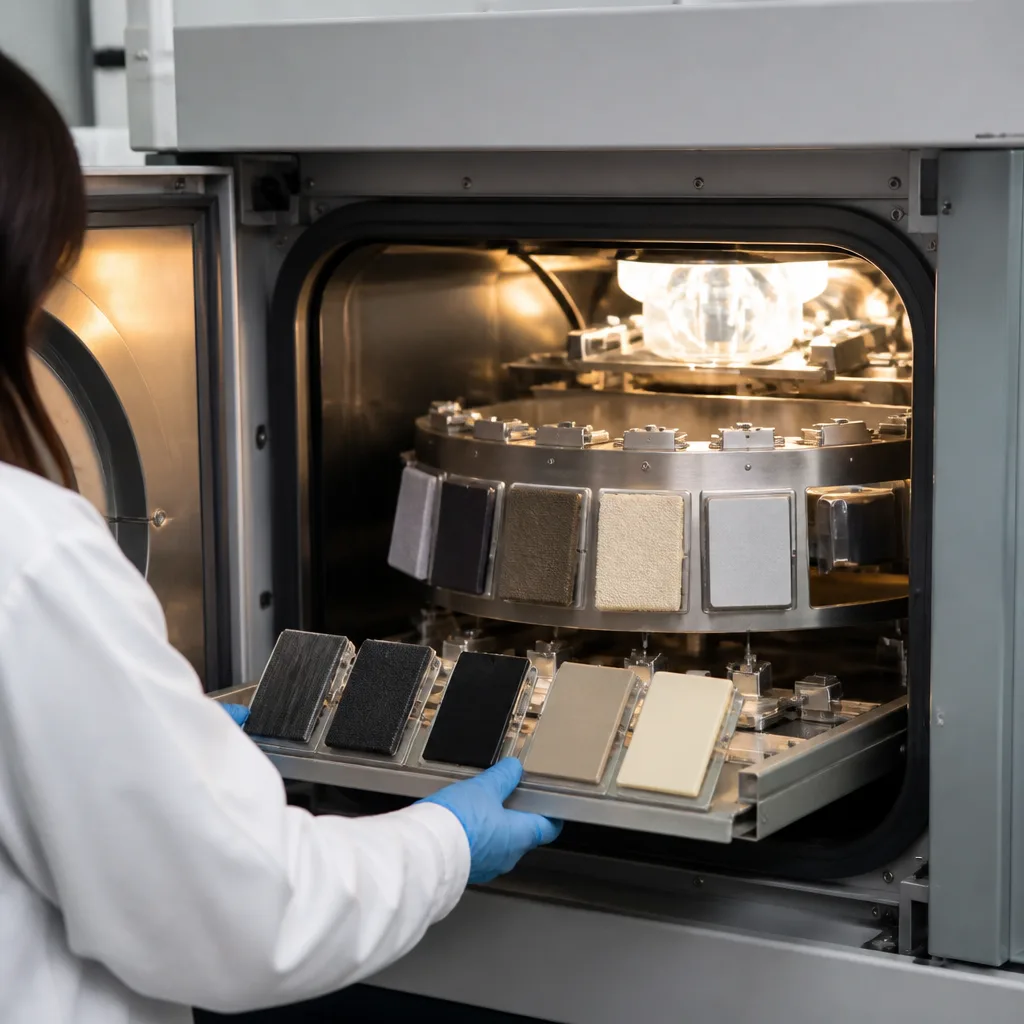
This standard uses a xenon arc light source to simulate the effects of sunlight, heat, and humidity that automotive materials might be exposed to inside a vehicle. In addition to color fastness, this method is also used to evaluate material degradation caused by prolonged exposure to simulated sunlight.
Vehicle interior materials are constantly exposed to solar radiation through the windshield and windows. Over time, this exposure can cause:
The GMW 14162 standard provides a controlled laboratory method to accelerate these effects.
Artificial abrasion is the accelerated exposure of a material to controlled environmental conditions designed to reproduce key aspects of natural wear. In the GMW 14162 standard, the primary radiation source is a xenon arc lamp. The test environment may also include high temperature, humidity, and alternating light/dark periods. The aim is not simply to expose a material to ultraviolet light. The test is designed to reproduce a combination of environmental stresses that might occur inside a vehicle. This is particularly important for interior components because temperatures on surfaces exposed to sunlight can be significantly higher than the ambient temperature inside the cabin.
The GMW 14162 standard defines four possible exposure methods. These methods differ primarily in terms of radiation wavelength, temperature, and whether the samples are exposed to alternating periods of light and darkness:
A xenon arc weatherproof chamber produces radiation intended to reproduce the spectral characteristics of natural sunlight. The equipment monitors the following parameters:
Commercial xenon arc weather resistance systems specifically list the GMW 14162 standard among the automotive test methods they can perform. Therefore, laboratory equipment needs to be configured appropriately for the specific method requested.
The GMW 14162 standard is specifically applicable to automotive interior materials. Accredited automotive laboratories list the standard for the following materials:
Typical automotive applications include:
The exact material, exposure method, duration, and acceptance criteria generally depend on the relevant material specification or component requirement.
One of the primary aims of the GMW 14162 standard is to determine whether a material retains its color and appearance after accelerated exposure. Typical assessments include:
In conclusion, the GMW 14162 standard is more than just a simple color fading test. It can also serve as an assessment of artificial weathering/deterioration.
The GMW 14162 standard is important because automotive interior materials must maintain their appearance and functional integrity throughout the vehicle's lifespan. A material that looks perfect when new can significantly deteriorate after prolonged exposure to sunlight. For example, a dashboard material might initially have an acceptable dark color. However, after prolonged exposure to sunlight, it may become lighter, take on a brownish or yellowish appearance, or undergo surface degradation.
Tests conducted according to the GMW 14162 standard allow manufacturers to identify these problems before production vehicles are released to the market. The main benefits of these tests are as follows:
For many years, our organization, with its competent and experienced staff, has been understanding the needs of its clients, providing the advanced testing services they require, and assisting them in the establishment, implementation, and improvement of management systems. Within this framework, we also provide testing services in accordance with the GMW 14162 standard.
To get an appointment, to get more detailed information or to request an evaluation, you can ask us to fill in our form and reach you.

