

The standard “VW 50134 PA6 for finished parts outside the vehicle interior – Material requirements”, developed by the Volkswagen automobile company, describes the material requirements for glass fibre-reinforced or mineral-reinforced polyamide 6 (PA6) in the engine, chassis, transmission and body areas (without paint coating).
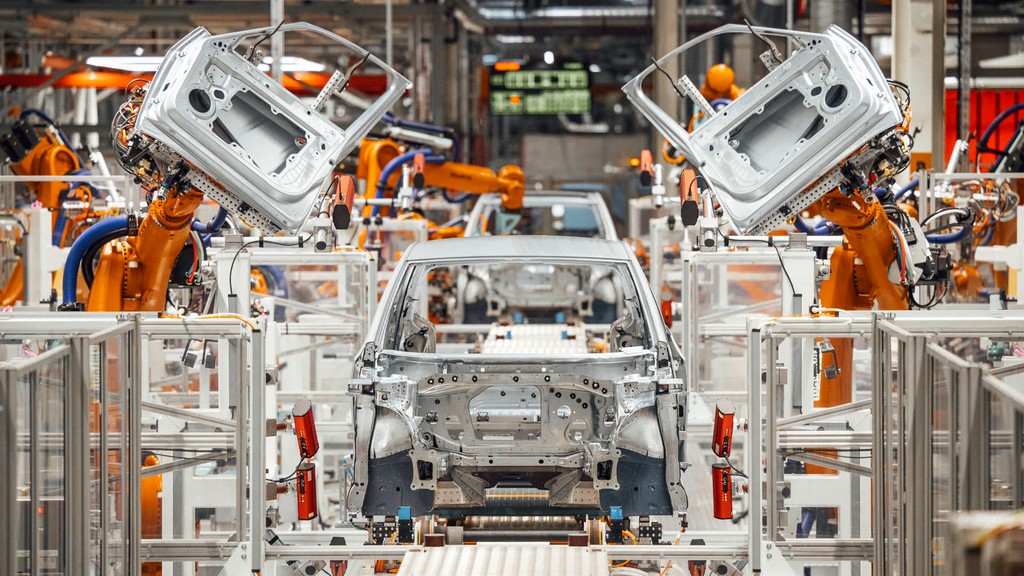
In the automotive industry, polyamide 6 (PA6) is a widely used component. The main uses of polyamide nylon plastics include: automobile parts, automobile intake manifolds, automobile mirrors, pedals, automobile hoods, automobile wheel covers, automobile remote control locks, automobile oil containers, terminals, wiring harnesses, terminal blocks, extruded wire and cable sheaths, flexible pipes, cable outer covers, plugs and sockets, capacitor switches, circuit breaker housings, gears, electrical instrument housing materials, and the like. Polyamide (PA) 6 is one of the most common structural plastics. It is easy to process, has high impact strength, and has high moisture absorption.
The requirements in this standard are specified as follows:
A distinction is made between dry and conditioned conditioning conditions. Samples taken from components in a dry state are dried until their weight remains constant and stored continuously in a dry atmosphere prior to testing. Samples taken from components in a conditioned state are dry samples that are conditioned in a waterproof bag filled with water at 70 degrees until the equilibrium condition as given in the tables in the standard is reached. In contrast to this procedure, samples can also be subjected to accelerated conditioning in accordance with the DIN EN ISO 1110 standard.
Specific material requirements (e.g. flammability, emissions) must be obtained from the drawing. Complete breakage or damage to components that would impair function is not permitted.
During the production process, it must be ensured that the parts always have the correct moisture content for perfect assembly. This must be specified in each case after a successful assembly trial. The moisture content must be at least 0,7 percent before the assembly trial. For components that are clipped, latched or snap-on during assembly, the moisture content must correspond to the equilibrium condition specified in the table given in the standard. Any deviations must be stated on the drawing and are only permissible after consultation with the purchaser. For parts that cannot be conditioned or cannot be conditioned during assembly, impact-resistant PA6 material must be used.
The melting temperature must be at least 215 degrees.
Components shall not have any change in shape or surface condition after heat aging and subsequent cooling. Dimensional change in length and width shall not exceed 0,5 percent.
The finished parts should be fully functional at low temperatures. Then after heating to 23 degrees plus/minus 2 degrees, there should be no cracks or damage.
Among the numerous testing, measurement, analysis and evaluation studies that our organization has carried out for businesses in various sectors, our organization also provides testing services defined in the “VW 50134 PA6 - Material requirements for finished parts outside the vehicle interior” standard with its trained and expert staff and advanced technological equipment.
To get an appointment, to get more detailed information or to request an evaluation, you can ask us to fill in our form and reach you.

