

Ford FLTM BZ 108-01 Bag Method Test for Measuring Volatile Organic Compounds

Ford FLTM BZ 108-01 Bag Method Test for Measuring Volatile Organic Compounds

The “Ford FLTM BZ 108-01 10-liter bag method for measuring volatile organic compound (VOC) emissions from vehicle interior materials” standard, developed by Ford Motor Company (Ford), describes a laboratory test method used to determine volatile organic compound (VOC) and total volatile organic compound (TVOC) emissions from automotive interior materials. This standard serves as a material-level screening procedure to assess whether components used in vehicle cabins meet Ford’s air quality and emissions requirements.
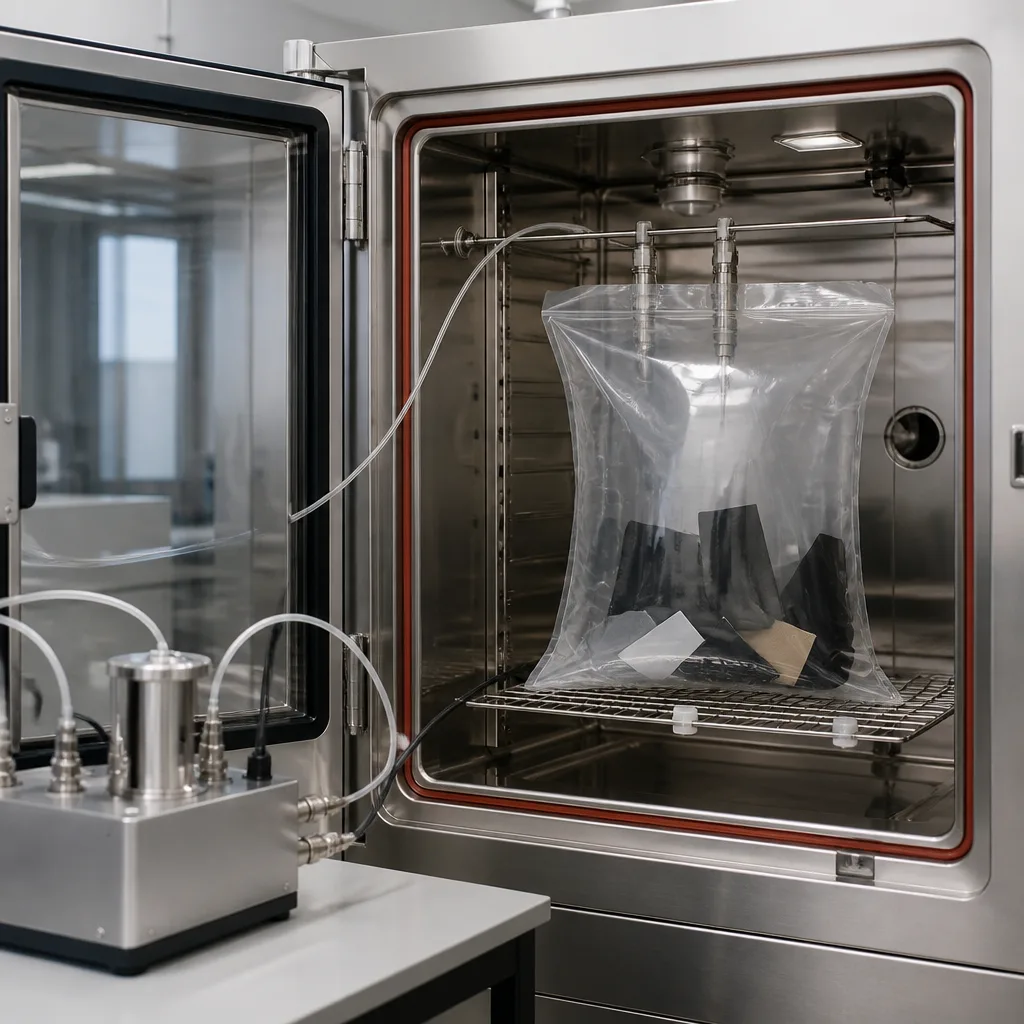
Ford FLTM BZ 108-01 Bag Method Test for Measuring Volatile Organic Compounds

Modern vehicle interiors incorporate numerous non-metallic materials, such as:

  • Textile
  • Leather and synthetic leather
  • Carpets
  • Adhesives
  • foams
  • Plastics
  • flooring materials

Over time, these materials can release volatile organic compounds (VOCs), contributing to the following:

  • Indoor fragrances
  • Passenger discomfort
  • Condensation on interior glass surfaces
  • Deterioration in cabin air quality.
  • Concerns about compliance with regulations

The Ford FLTM BZ 108-01 standard was developed to identify materials with excessive volatile organic compound emissions before they can be approved for vehicle production.

In principle, this method uses a 10-liter sampling bag (emission bag) to measure volatile organic compound emissions from a test sample. The material sample is placed inside a specially prepared emission bag and exposed under controlled environmental conditions. Volatile organic compounds emitted from the material accumulate in the bag's atmosphere. The collected air sample is then analyzed using laboratory equipment such as:

  • Gas chromatography (GC)
  • Mass spectrometry (MS)
  • Thermal desorption systems

The analysis determines the following:

  • Individual volatile organic compound (VOC) concentrations
  • Total volatile organic compound (TVOC) emissions
  • Compliance with Ford material specifications.

This procedure is often referred to as the 10-liter bag method.

In general, this testing method follows these steps:

  • Preparation of a material sample.
  • For example, placing it in a clean 10-liter sampling bag.
  • Conditioning under specified temperature and time conditions.
  • Collection of volatile organic compounds emitted from the bag atmosphere.
  • Instrumental analysis of the collected compounds.
  • Comparison of measured emissions with Ford's acceptable limits.

The Ford FLTM BZ 108-01 standard generally applies to the following materials:

Dashboard materials

  • Door trims
  • Ceiling tiles
  • Upholstery fabrics
  • Carpets
  • Sound insulation materials
  • polyurethane foams
  • Interior plastic components
  • Adhesive systems

These materials can significantly affect the air quality inside the vehicle.

The Ford FLTM BZ 108-01 standard belongs to a broader family of automotive emissions standards that includes the following:

  • ISO 12219-2 Indoor air quality of road vehicles - Part 2: Screening method for the determination of volatile organic compounds emitted from vehicle interior parts and materials - Bag method
  • GMW 15634 Determination of volatile and semi-volatile organic compounds in vehicle interior materials.
  • VDA 277 Laboratory emission tests of organic compounds
  • Hyundai/KIA MS 300-55 Automotive interior volatile organic compound (VOC) emissions.

The Ford method is conceptually similar to other bag-based volatile organic compound emission procedures used in the automotive industry.

The main advantages of the 10-liter bag method are as follows:

  • It enables rapid screening of candidate materials.
  • It requires relatively simple sample preparation.
  • It shows good sensitivity for the detection of volatile organic compounds.
  • Suitable for routine supplier qualification tests.
  • It supports vehicle cabin air quality targets.
  • It helps identify problematic materials in the early stages of development.

Due to its efficiency, this method is widely used in material approval and supplier verification activities.

Automotive manufacturers are paying increasing attention to cabin air quality due to customer expectations and global environmental requirements. Materials that emit excessive volatile organic compounds can lead to:

  • Strong new car scents
  • Customer complaints
  • Failure to comply with internal specifications.
  • Increased warranty risks
  • Non-compliance with legal regulations

In short, the Ford FLTM BZ 108-01 standard helps ensure that interior materials contribute to a cleaner, healthier, and more comfortable vehicle environment. By screening materials before production, Ford can maintain consistent interior air quality performance across its vehicle programs.

The main reasons why this standard is important are:

  • Maintaining vehicle cabin air quality: Automotive interior materials such as plastics, foams, adhesives, carpets, and textiles can release volatile organic compounds over time. High levels can cause:
    • Unpleasant odors
    • Eye, nose, and throat irritation.
    • Passenger discomfort
    • Decrease in perceived vehicle quality.

This standard provides a standardized method for measuring these emissions before materials are approved for production.

  • It supports material selection: Vehicle manufacturers evaluate thousands of materials during product development. This standard allows engineers to:
    • To objectively compare candidate materials.
    • Choosing lower-emission alternatives
    • Verifying supplier materials
    • Establishing consistent quality requirements.

In this way, only compatible materials enter the production process.

  • It prevents air quality problems at the vehicle level: A single vehicle can contain hundreds of interior components. Even if each component emits only small amounts of volatile organic compounds, the combined effect can significantly increase cabin VOC concentrations. Testing materials individually helps prevent:
    • Excessive total vehicle VOC emissions
    • Air quality malfunctions during vehicle validation.
    • Late-stage engineering changes
  • It supports global regulatory trends: Many countries and regions are introducing stricter requirements regarding in-vehicle air quality and chemical emissions. This standard enables Ford to:
    • To meet internal organizational requirements.
    • Compliance with international VOC testing practices.
    • Preparing for current and future regulations.
    • Showing environmental responsibility
  • It supports sustainability goals: Low-emission materials contribute to healthier vehicle interiors and support broader environmental objectives. This standard encourages suppliers to:
    • Using cleaner raw materials
    • Optimizing production processes
    • Reducing residual solvents and volatile chemicals.
    • Developing more environmentally friendly products

In summary, the Ford FLTM BZ 108-01 standard is a specific emissions test method designed to evaluate VOC and TVOC emissions from automotive interior materials using a 10-liter sample bag. This standard plays a significant role in material qualification, supplier approval, and vehicle cabin air quality management. Through the early detection of high-emission materials, it supports Ford's goals for passenger comfort, product quality, and environmental compliance.

For many years, our organization, with its competent and experienced staff, has been understanding the needs of its customers, providing the advanced testing services they require, and assisting them in the establishment, implementation, and improvement of management systems. Within this framework, we also provide testing services in accordance with the Ford FLTM BZ 108-01 standard.

WhatsApp

