

The standard "FVV R530 Testing the Suitability of Cooling Water Concentrates for Use as Cooling Water in Internal Combustion Engines," developed by the Combustion Engine Research Association (FVV), describes a procedure for testing cooling water concentrates for use in internal combustion engines. The purpose of this procedure is to determine the effect of corrosion inhibitors in cooling water concentrates on metal surface damage caused by high-temperature corrosion and complex conditions, and to evaluate transient changes.
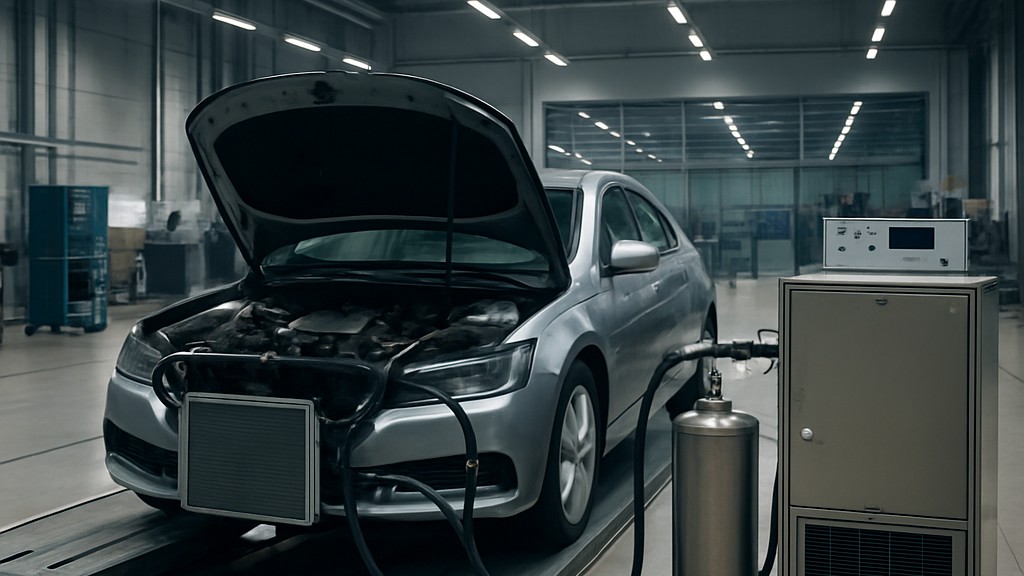
A full test of the effect of corrosion inhibitors in coolant can be performed by focusing on the damage caused to metal surfaces through corrosion and complex interactions at high temperatures.
The complete test includes the following individual tests on freshly made test fluids:
The requirements for the values that cooling concentrates must meet for use in specific cooling systems are determined by engine manufacturers from time to time, depending on the nature and purpose of the equipment.
The following fluid types are required for the complete testing regime:
Any excess cooling concentrate is stored in case repeated testing is necessary.
For corrosion and freeze protection agents and water-soluble corrosion inhibitors, the coolant concentrate to be tested is generally prepared with ion-exchange water (Annex A1.1) or synthetic hard water (Annex A1.2). The amount of coolant concentrate required for the test is determined by the prescribed test concentration.
When preparing corrosion and antifreeze agents, an application concentration of 40 percent by volume must be recommended so that test results on coolant concentrates can be used to obtain coolant approval in the German automobile industry.
When preparing water-soluble corrosion inhibitors, the coolant concentrate to be tested is prepared with ion-exchanged water (Annex A1.1) or synthetic hard water (Annex A1.2). The amount of coolant concentrate required for testing is determined by the test concentration for water-soluble corrosion inhibitors specified by the manufacturer or customer.
Coolant concentrates, used as coolants in internal combustion engines, refer to highly concentrated liquid formulations designed to be diluted with water (usually distilled or deionized) before use in a vehicle's cooling system. These concentrates form the coolant mixture that circulates through an internal combustion engine to regulate its temperature, prevent overheating, and protect engine components from corrosion and freezing.
The main components of coolant concentrates are:
Concentrate is used instead of premixed coolant for the following reasons:
Coolant concentrate should never be used undiluted unless expressly permitted by the manufacturer. Always follow the manufacturer's instructions for the correct type and mixing ratio of coolant.
The main reasons why the FVV R530 standard is important are:
The FVV R530 standard sets out detailed test methods and criteria to ensure that these requirements are met.
By adhering to a standard test such as FVV R530, manufacturers can ensure engine longevity, reliability and safe operation.
In short, the FVV R530 standard is essential to ensure coolant quality and performance, protect engine components, ensure a consistent approval process, and promote safety and environmental responsibility.
Our organization, which has been supporting businesses across all sectors for years through a wide range of testing, measurement, analysis, and evaluation activities, boasts a strong team of employees who closely follow global developments in science and technology and are constantly improving themselves. In this context, we also provide testing services to businesses in accordance with the FVV R530 standard: "Testing the suitability of coolant concentrates for use as coolant in internal combustion engines."
To get an appointment, to get more detailed information or to request an evaluation, you can ask us to fill in our form and reach you.

