

The “Hyundai Kia ES52960-02 Resin Wheel Cover - Heat Plasticity Resin” standard, developed by Hyundai-Kia Motor Company, aims to ensure appropriate quality through specification and standardization. This standard is an extension of the engineering drawing. All parts communicate all requirements, part dimensions, and relevant conditions at once.
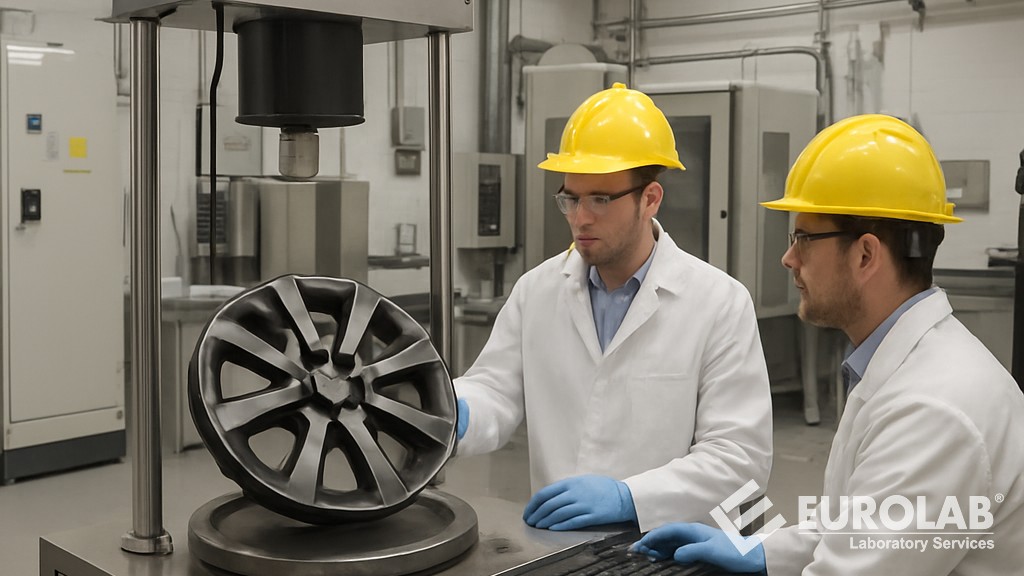
This standard defines the requirements, performance, and testing method for resin wheel covers (full covers, half covers, wheel covers, and similar). If the drawing instructions differ from this specification, the drawing instructions shall take precedence. This specification applies to all vehicles of Hyundai-Kia Motor Company.
All parts randomly selected and examined from the prototype and production process (including the pilot process) must meet this standard to perform the process specified in this standard. The relevant supplier must establish a reliability verification system at its own facilities to verify the design of the part with a sufficient number of samples.
In the drawing, the types and markings are shown in the table given in the standard:
General requirements have been defined as follows:
The test must be performed according to the test method specified in this standard and must meet the requirements listed in the table.
In the ever-evolving world of advanced materials science, resins that combine exceptional heat resistance with thermoplastic-like plasticity are revolutionizing numerous fields, from 3D printing to aerospace engineering. At the forefront of this innovation is the Hyundai Kia ES52960-02 standard. This type of heat-plastic resin addresses long-standing challenges in high-temperature applications, offering unparalleled flexibility without compromising structural integrity. As global demand for sustainable and high-performance materials increases, this standard creates a new product by combining the moldability of traditional plastics with the durability of thermoset resins.
Unlike traditional thermoset resins, which harden irreversibly during curing, heat-plastic resins exhibit thermoplastic behavior, softening when heated and regaining their hardness upon cooling. This duality allows for repeated shaping, reduces waste, and enables complex manufacturing processes such as injection molding and 3D printing.
The Hyundai Kia ES52960-02 standard is based on copolymer technologies incorporating a novel blend of ethylene vinyl alcohol derivatives and ceramic-modified photopolymers. This hybrid structure achieves a heat deflection temperature exceeding 250 degrees at 0,45 MPa, far surpassing standard resins which soften at approximately 100-150 degrees. The resin's low shrinkage rate of less than 0,5% ensures high precision, while its chemical resistance provides protection against solvents and oils commonly encountered in industrial environments.
This innovative component combines the heat-resistant properties of resin bonding with the protective versatility of a wheel cover, making it ideal for cutting discs, grinding applications, and even automotive hub protection.
ES52960-02 incorporates proprietary thermoplastic advancements inspired by high-plasticity resins. This hybrid design not only protects the wheels from environmental hazards but also enables seamless integration in high-speed operations where temperatures can exceed 400 degrees.
The ES52960-02 standard essentially uses a system similar to resistoid bonding, but is optimized for dual use: as a protective coating for automotive wheels and as an integrated bonding layer for industrial abrasives. This duality stems from AI-powered simulations that fine-tune the resin's molecular structure to be compatible with both marine and automotive environments.
The ES52960-02 standard is designed for precision and reliability with features that meet demanding standards. Its adaptability makes it an ideal choice for various industries where rim integrity directly impacts productivity.
Similar to original equipment manufacturer parts such as Hyundai wheel cover assemblies, the ES52960-02 standard provides corrosion-resistant protection for alloy wheels under harsh conditions. It is particularly valuable for electric vehicles where thermal management during regenerative braking requires non-bending thermoplastic covers.
As automation accelerates, the ES52960-02 standard paves the way for intelligent wheel systems, such as embedded sensors for real-time wear monitoring and self-adjusting links. These resins are not just a coating; they are a engineered durability that is transforming the way we cut, grind, and protect in an increasingly hot industrial environment.
For many years, our organization, with its competent and experienced staff, has been understanding the needs of its customers, providing the advanced testing services they require, and assisting in the establishment, implementation, and improvement of management systems. Within this framework, we also provide testing services to businesses in accordance with the "Hyundai Kia ES52960-02 Resin wheel cover - Heat plasticity resin" standard.
To get an appointment, to get more detailed information or to request an evaluation, you can ask us to fill in our form and reach you.

