

Developed by General Motors Worldwide (GMW), the “GMW 14698 Scratch Resistance of Organic Coatings and Self-Adhesive Films” standard is an engineering testing standard used to evaluate the scratch resistance of organic coatings and self-adhesive films applied to metal or polymer surfaces. This standard is particularly applicable to automotive interior and exterior components where maintaining surface appearance and durability is important.
The primary purpose of the GMW 14698 standard is to determine how well a coated or film-covered surface resists scratching under specified test conditions. In automobiles, surfaces can be scratched for the following reasons:
A surface may remain structurally functional after being scratched, but it may develop visible marks, gloss changes, or other cosmetic defects. Therefore, scratch resistance is a crucial part of automotive surface quality control. The GMW 14698 standard applies to single or multi-layer systems on metallic or polymeric substrates, as well as self-adhesive films.
Typical applications of this standard include coated or film-coated automotive components such as:
Therefore, this test is particularly useful for components where visual appearance is an important quality requirement.
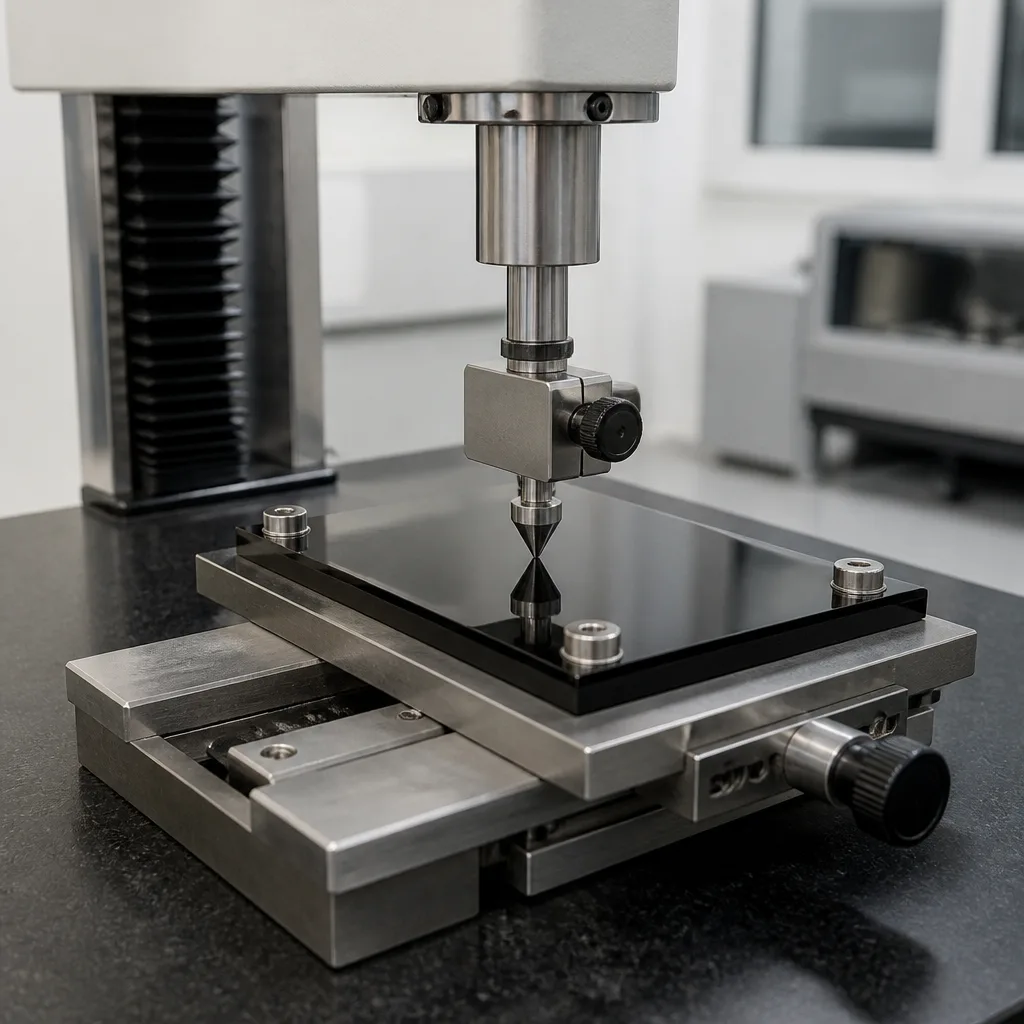
The GMW 14698 standard uses a controlled scratching process to create a defined mark on the test surface. The resulting scratch is then evaluated to determine the material's resistance to scratching. A commonly used configuration is the multi-finger/five-finger boot test, where multiple boot inserts can be loaded with varying forces. Equipment used for the GMW 14698 standard is commercially available, featuring tungsten carbide boot inserts and specified loading arrangements. The aim is not simply to determine whether a scratch exists, but to determine how the surface responds to a controlled mechanical attack.
It is useful to distinguish between scratch resistance and abrasion resistance. A scratch is a more visible surface damage that can involve penetration or permanent deformation of the coating or substrate. Abrasion, on the other hand, is generally a shallower or less severe surface alteration, but can still be quite visible as it changes the surface appearance. Both are important for automotive components. A material can have good resistance to deep scratches while still showing visible surface scratches.
The GMW 14698 standard includes multiple test methods instead of being limited to a single scratch test configuration:
This method is particularly useful for comparing automotive plastics, painted, and coated surfaces.
The GMW 14698 standard is important because automotive surfaces are subjected to repeated mechanical contact throughout their lifespan. A coating that provides poor scratch resistance can lead to:
Therefore, scratch testing is a crucial part of automotive material verification, supplier qualification, and quality control.
The GMW 14698 standard belongs to a broader family of automotive surface durability tests. For example,
The GMW 14698 standard is also listed among the automotive coating hardness/wear methods referenced in the ISO/TR 21555 standard, which provides an overview of methods for evaluating coating hardness and wear resistance.
For automotive interiors, scratch resistance is particularly important because components are frequently touched or handled. Examples include:
A material that looks perfect when new may not retain its appearance after repeated contact. The GMW 14698 standard provides a standardized method for evaluating this aspect of surface durability.
In conclusion, the GMW 14698 standard includes a test procedure designed to evaluate the scratch resistance of coated metallic or polymeric surfaces and self-adhesive films. Its importance extends beyond simply measuring whether a surface can be scratched. The test supports material selection, coating development, supplier qualification, manufacturing quality control, and automotive appearance durability.
This standard is also historically significant because it replaced the GMN 3943 standard for new General Motors programs and integrated the assessment of scratch resistance into the newer GMW procedure.
For many years, our organization, with its competent and experienced staff, has been understanding the needs of its clients, providing the advanced testing services they require, and assisting them in the establishment, implementation, and improvement of management systems. Within this framework, we also provide testing services in accordance with the GMW 14698 standard.
To get an appointment, to get more detailed information or to request an evaluation, you can ask us to fill in our form and reach you.

