Fiat 50440 Mass Determination - Fabrics, Waterproof Fabrics, Leather, Artificial Leather and Vinyl Sheets
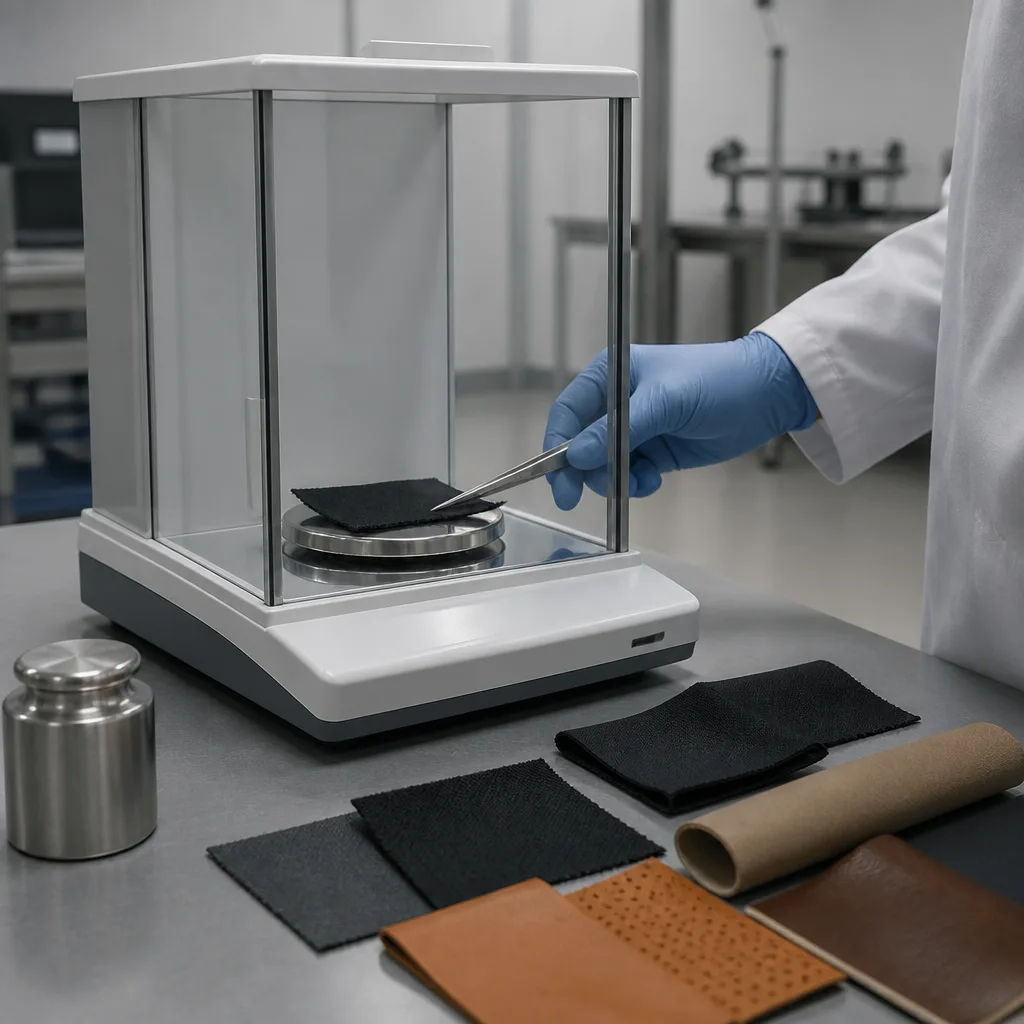
Developed by Fiat Chrysler Automobiles (FCA) (now Stellantis), an Italian-American automotive company, the “Fiat 50440 Mass Determination - Fabrics, waterproof fabrics, leather, artificial leather and vinyl sheets” standard is a material testing specification used in the automotive industry to determine the mass per unit area (surface density) of flexible interior and upholstery materials such as:
- Textile fabrics
- Waterproof fabrics
- Natural leather
- Artificial leather (imitation leather)
- Vinyl sheets and coated materials
This testing method is important because the weight of interior materials directly affects the following:
- Product quality consistency
- Vehicle mass optimization
- Mechanical behavior
- Lamination and shaping processes
- Acoustic and comfort features
The Fiat 50440 standard is generally applied in the following cases:
- Material qualification
- Supplier approval
- Incoming quality control
- Production validation
The primary purpose of this standard is to measure mass per unit area. Typically expressed in g/m² (grams per square meter). This specification helps engineers verify whether a material conforms to design specifications and manufacturing tolerances.
Mass determination is important from several perspectives:
- Vehicle weight control: Modern automotive engineering places great emphasis on reducing vehicle weight to improve the following:
- Fuel efficiency
- Electric vehicle battery range
- Carbon dioxide emissions
- Overall performance
In large-scale production, even small variations in upholstery material weight can significantly affect the overall vehicle mass.
- Material consistency: Mass variation may indicate the following:
- Incorrect coating thickness
- Changes in foam density
- Fabric texture irregularities
- Excessive adhesive application
- Manufacturing defects
Testing ensures consistent production quality across batches.
- Correlation between mechanical performance and surface density: Surface density is generally related to:
- Wear resistance
- Tensile strength
- Tear resistance
- Acoustic damping
- Soft touch sensation
Heavier or lighter materials may behave differently during vehicle use.
- Process control: The following types of manufacturing processes depend on predictable material mass and thickness:
- Thermoforming
- Vacuum forming
- lamination
- Seam
- Airbag deployment design
The test method described is relatively simple:
- A sample of known dimensions is cut.
- The sample is conditioned under controlled climatic conditions.
- The sample is weighed using a precision balance.
- Mass is calculated per unit area.
- The result represents the average weight of the material over a defined surface area.
Typical test equipment includes:
- Cutting tools: Used to prepare samples with precise dimensions. Common sample shapes are square and circular.
- Precision balance: A high-resolution laboratory balance is capable of making measurements with an accuracy of milligrams or 0,001 g.
- Conditioning chamber: Materials are conditioned to achieve specific temperature and humidity conditions before testing. Typical conditioning requires a temperature of 23 degrees Celsius and 50 percent relative humidity.
This standard typically requires samples of the following types:
- Flat samples
- There should be no folds or wrinkles.
- Representative sampling of production materials.
Multiple samples are usually tested to obtain an average value.
Surface density is calculated according to the formula given in the standard:
Commonly tested materials include:
- Textile fabrics: Used in seat covers, door panels, and headliners.
- Waterproof fabrics: Used in protective covers, sunroof systems, and luggage compartment linings.
- Leather: Natural automotive leather is used on seats, steering wheels, and armrests.
- Faux leather: Synthetic materials coated with PVC or polyurethane are widely used as cost-effective alternatives to leather.
- Vinyl sheets: Used in instrument panels, door trims, and decorative applications.
There are several variables that can affect the measured mass:
- Moisture content: Textiles and leather can absorb moisture.
- Coating thickness: Variations in PVC or polyurethane coatings alter the total mass.
- Foam backing: Laminated foam significantly increases surface density.
- Production variability: Differences in weaving, coating, embossing, and adhesive application can alter the results.
The Fiat 50440 standard is generally used in conjunction with the following:
- Thickness measurement tests
- Wear resistance tests
- Tensile strength tests
- Flexural strength tests
- Aging and climate resilience tests
- Flammability tests
Together, these tests provide a complete characterization of interior materials.
The Fiat 50440 standard supports quality control for the following:
- Seats: Fabric, leather, faux leather
- Door panels: Vinyl sheets, textiles
- Instrument panels: PVC coatings
- Ceiling coverings: Laminated fabrics
- Armrests: Polyurethane or PVC coated materials.
- Column coverings: Non-woven fabrics
The Fiat 50440 standard test method has the following advantages:
- Simple and fast: The method is simple and inexpensive.
- High repeatability: Provides reliable quantitative data.
- Essential for quality control: The main areas of application for this standard are as follows:
- Supplier comparison
- Party verification
- Production tracking
- It supports lightweight engineering: Important for modern vehicle optimization.
However, this test method cannot predict the following:
- Durability
- Comfort
- Aging resistance
- Structural performance
Therefore, this method should be used in conjunction with other physical and environmental tests.
In conclusion, the Fiat 50440 standard is a crucial automotive material testing method used to determine the mass per unit area of fabrics, leather, synthetic leather, waterproof fabrics, and vinyl sheets. This method plays a critical role in:
- Material specification compliance
- Production consistency
- Lightweight vehicle development
- Interior quality assurance.
Despite its simplicity, this method provides fundamental engineering data for automotive interior design and production control.
For many years, our organization, with its competent and experienced staff, has been understanding the needs of its customers, providing the advanced testing services they require, and assisting them in the establishment, implementation, and improvement of management systems. Within this framework, we also provide testing services in accordance with the Fiat 50440 standard.



