Nissan H7300 NADS0 Kit-Seat Cover
In the “Nissan H7300 NADS0 Kit-Seat Cover” standard developed by Nissan automobile company, the features of car seat covers for dealer option are described.
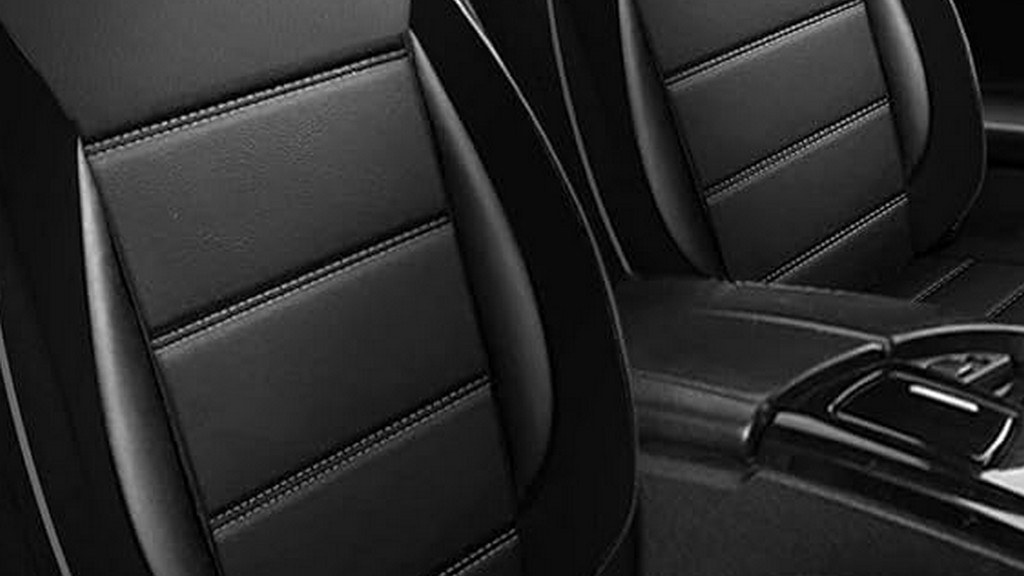
The seat cover will have one or more of the following functions:
- Improving the appearance of the vehicle
- Protecting seats and preventing dirt
For the purposes of this standard,
- Additional seat covers refer to covers that are installed over existing original equipment seat covers.
- Replacement seat covers refer to covers that are installed in place of the original equipment seat covers.
Nissan Automobiles has established general reliability targets for parts or systems according to the table in the standard. However, the failure degrees in the table are based on the company's understanding of the expected possible failure modes of the parts or systems. The supplier determines the possible failure modes of the parts or systems known to it and reports them to Nissan. The supplier is responsible for fulfilling all requirements (including additional failure modes) described in this table.
The table contains the description of the faults, typical fault examples, their useful life and the reliability target to be guaranteed.
In the Nissan H7300 NADS0 standard, the requirements are specified as follows:
- The seat cover must meet all regulatory and code of practice requirements in all regions and countries where it is used.
- It is the responsibility of the supplier company to ensure compliance with legal regulations in all regions and countries of use.
- The seat cover must meet all the requirements of the Automobile Manufacturers Association's regulations and codes of practice in all regions and countries where it is used.
- The seat cover should not in any way have a negative impact on the vehicle's Australian Asian New Car Assessment Program safety ratings.
The general design and layout requirements in the standard are specified as follows:
- Connection to seats
- Installation of seat covers and sub-components that may require pre-assembly must be done with poke sleeves.
- Removal of seats, armrests and similar vehicle components should be avoided.
- Removal of critical characteristic attachment points (e.g. seat belts and components) should be avoided.
- The number of individual hardware components (hooks, springs, etc.) should be kept to a minimum.
- All parts should be free of burrs or sharp edges.
- Any elastic bands etc. must maintain sufficient tension to hold the seat cover in place under all conditions throughout the life of the seat cover.
- Required tools
- Installation of the complete seat cover should not require any special tools. If this cannot be avoided, the tools should be provided as part of the kit.
- Any component subassemblies that can be completed without a vehicle must be completed by the supplier.
- Vehicle standard features and equipment
- The seat cover must not adversely affect any features and equipment of the vehicle. This includes but is not limited to airbags, seat heating and ventilation, lumbar support, etc.
- The seat cover must not obstruct the full movement of the seat or operating levers/buttons.
- Customer abuse requirements
- The seat cover must be able to withstand any customer-acceptable misuse while installed.
- Original accessories of the vehicle
- The seat cover should not adversely affect any of the vehicle's original accessories.
- Service parts
- Parts of the seat cover that may wear or break during normal use should be ordered using unique service part numbers.
- Marking
- When the seat cover is installed in the vehicle, a permanent label must be attached in an area that is easily visible, containing the following information: Nissan brand, manufacturer brand, part number, batch number including month and year of manufacture, total installed weight and maintenance details.
- Adhesive labels must also comply with standard 99099 NDS00.
- The supplier must ensure that the maintenance instructions are appropriate to the accessory, adequate and understandable.
- Substance use restrictions
- All materials used in the production process and in the final product must comply with the NES M0301 standard.
- For additives added to the material surface, only those registered in the Nissan additive registration system should be used. The following additives are also prohibited: glycerin, chlorine-based flame retardant and betaine-type amphoteric activator.
- The supplier must submit relevant IMDS records to Nissan to demonstrate material compliance.
- Ventilation
- Seat covers should allow adequate ventilation between the cover and the seat to prevent moisture from accumulating between the seat and the seat cover.
- Airbag stitching
- Recommended airbag stitching parameters are given in the table.
- The supplier is allowed to use airbag stitching parameters different from the above under the Nissan agreement, but the airbag performance test must be fully met.
- For each seat cover development, it is the supplier's responsibility to request and approve the original equipment seat airbag stitching type, length and pitch prior to design freezing and testing.
- Each airbag stitch of the part must have an airbag stitch manufacturing process label that provides at least the following information: sewing machine ID, thread details (batch, supplier etc.), sewing operator, total stitch length, stitch length, pitch and tension, date and time of airbag stitching, and sewing program ID.
- The airbag stitching production process is the choice of the label official supplier. However, the information contained herein must be reported to Nissan before the design is frozen.
Among the numerous tests, measurements, analyses and evaluation studies carried out for businesses in various sectors, our organization also provides testing services defined in the “Nissan H7300 NADS0 Kit-Seat Cover” standard with its trained and expert staff and advanced technological equipment.



