

The “TPJLR.52.205 Susceptibility to Amine Staining” standard, published by Jaguar Land Rover Limited (JLR), describes methods for evaluating the susceptibility of interior upholstery materials (such as leather, PVC, polymer films, textiles, and other coating materials) to amine staining (amine discoloration or amine migration staining).
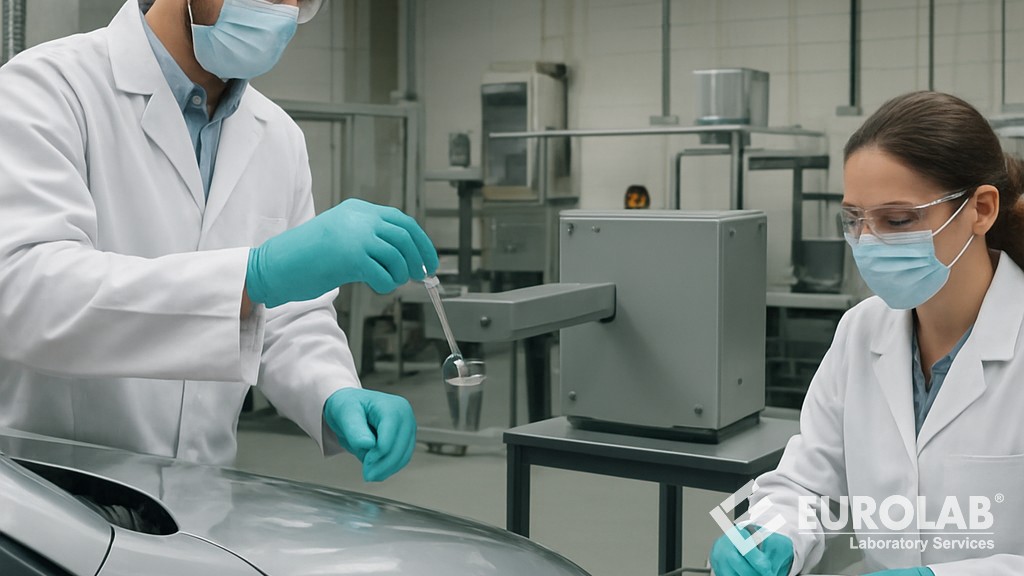
Amine staining appears as a yellowish or brownish discoloration on light-colored surfaces. It occurs when volatile amines (from polyurethane foam, adhesives, or other interior components) migrate and react with certain dyes, pigments, or coatings in upholstery materials under heat and humidity. This is a common problem, particularly in automotive interiors with light-colored leather or vinyl near foam-backed components.
The TPJLR.52.205 standard ensures that JLR-approved seats, instrument panels, door panels, and other upholstery materials are resistant to this type of staining for the entire lifespan of the vehicle. It helps prevent visible defects that could affect perceived quality and customer satisfaction.
This standard includes several variants with slightly different installations or exposure conditions:
Samples are typically exposed to amine sources (such as PU foam blocks) in a heated chamber or oven for a specific period (e.g., several days at a high temperature) in direct contact. Following exposure, staining is assessed visually (color change, density) and sometimes instrumentally (e.g., colorimetry/color value measurement). Acceptance criteria depend on the material type and the JLR performance specification.
This test method is valid for the following:
This is part of JLR’s broader material approval process (often referenced alongside standards such as the STJLR series for performance requirements). Advanced laboratories offer accredited testing according to the TPJLR.52.205 standard. This standard is critical for material qualification in indoor applications.
In short, the TPJLR.52.205 standard is an original equipment manufacturer (OEM) testing standard that defines how to assess the susceptibility of interior flooring materials to amine staining. This test helps manufacturers and suppliers ensure that interior components do not develop visible discoloration from amines. Amines are chemical compounds that can migrate from other materials (such as some foams, adhesives, or coatings) to flooring surfaces, causing unwanted staining.
The testing area consists of upholstery and interior surface tests. The focus of the tests is on the susceptibility of upholstery materials to amine-induced staining during and after vehicle use.
The TPJLR.52.205 standard is not a single method, but a set of related procedures that check how automotive interior upholstery reacts under conditions that could lead to amine staining. This standard includes multiple test methods. It divides the test into several methods, generally labeled A, B, and C, to evaluate upholstery materials under different conditions.
Each method targets different materials and exposure types, helping original equipment manufacturer quality engineers determine whether flooring components will change color due to amine contact in real-world use.
Amine staining can be caused by:
This type of staining affects visual quality, customer satisfaction, and perceived premium value, especially for luxury brands like Jaguar and Land Rover. The TPJLR.52.205 standard provides a controlled, repeatable method for identifying and resolving these issues early in manufacturing or material selection.
Advanced testing laboratories and automotive materials laboratories offer TPJLR.52.205 standard testing services by applying JLR protocols to evaluate components from suppliers. These tests become part of the qualification, acceptance, or conformity checks of parts before they are assembled into vehicles.
The TPJLR.52.205 standard is part of a larger set of trim and finish standards from Jaguar Land Rover that covers many aspects of material performance, including stain resistance, cleanability, moisture resistance, and dimensional stability.
Here are some relevant examples:
Each standard plays a specific role in ensuring the high quality and durability of automotive components under various service conditions.
In short, the TPJLR.52.205 standard is a materials testing standard focusing on the susceptibility of Jaguar Land Rover interior trim materials to amine staining. It helps manufacturers understand and prevent color degradation issues that can affect automotive interior quality and appearance.
For many years, our organization, with its competent and experienced staff, has been understanding the needs of its clients, providing the advanced testing services they require, and assisting in the establishment, implementation, and improvement of management systems. Within this framework, we also provide testing services to businesses in accordance with the "TPJLR.52.205 Susceptibility to Amine Staining" standard.
To get an appointment, to get more detailed information or to request an evaluation, you can ask us to fill in our form and reach you.

