GMN 10033 Resistance of Interior Coatings to Sunscreen
The “GMN 10033 Resistance of Interior Coatings to Sunscreen” standard, developed by General Motors North America (GMNA), is a materials testing standard. This standard defines a laboratory procedure for evaluating the resistance of painted plastic parts, coated interior components, plates, and coated roll materials to degradation caused by sunscreens.
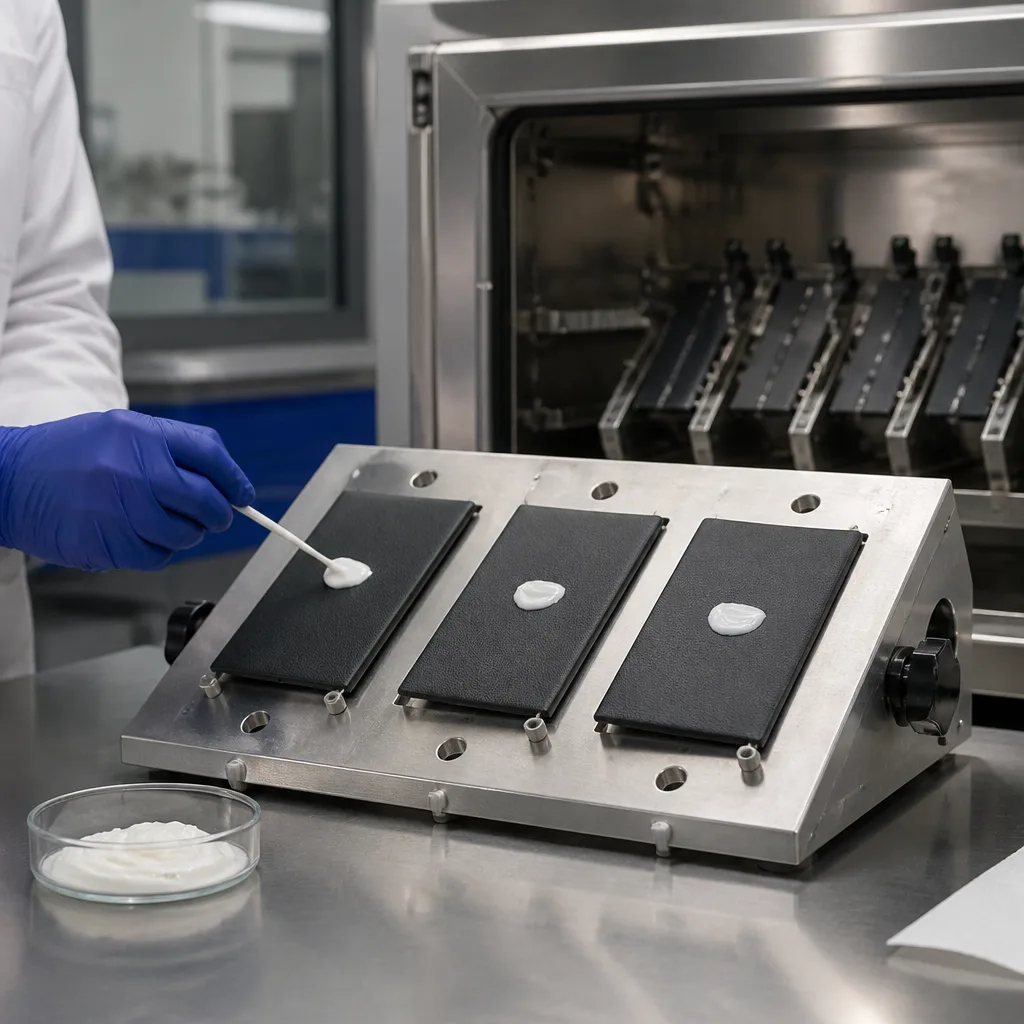
As consumers increasingly use sunscreens containing oils, UV absorbers, and organic solvents, automotive manufacturers must ensure that interior coatings maintain their appearance and performance throughout the vehicle's lifespan. The GMN 10033 standard provides a repeatable method for assessing this durability.
The primary purpose of the GMN 10033 standard is to determine whether automotive interior coatings can withstand prolonged sunscreen exposure without experiencing unacceptable cosmetic or functional damage. This standard helps engineers evaluate the following:
- Stain resistance
- Surface discoloration
- Brightness changes
- Softening of the coating
- Surface adhesion
- Peeling or blistering
- Loss of adhesion
- Chemical attack on decorative surfaces.
These assessments help ensure that internal components retain their original appearance even after repeated consumer use.
Modern sunscreen formulations contain ingredients that can be aggressive towards polymer coatings. These include, but are notably:
- Organic UV filters
- Oils and esters
- alcohols
- Softeners
- Silicon compounds
These chemicals can remain on vehicle surfaces after passengers touch the steering wheel, instrument panel, center console, door panels, armrests, and other frequently used components. Coatings that lack adequate chemical resistance can cause:
- Permanent staining
- Loss of brightness
- Sticky feeling
- Cracking or blistering
- Detachment from the surface
- Formation of visible fingerprints or marks
The GMN 10033 standard helps to identify coatings resistant to these effects before vehicles go into production.
This standard applies to numerous coated interior parts, including:
- instrument panels
- Door trim panels
- Center consoles
- steering wheel cover
- Decorative frames
- Painted plastic components
- Interior slats
- Armrests
- Pole coverings
- Coated vinyl or flexible roll materials
This standard is suitable for both rigid and flexible coated surfaces.
In general, the method described in the GMN 10033 standard follows these steps:
- Preparation of coated test specimens.
- Apply the recommended amount of sunscreen.
- Maintaining controlled environmental conditions for a specific exposure period.
- Removing the cream according to the specified cleaning procedure.
- Examination of samples in terms of cosmetic and physical changes.
- Comparing the results with the established General Motors acceptance criteria.
The use of controlled conditions ensures reproducible results between laboratories and suppliers.
Following exposure, auditors assess various characteristics, including:
- color change
- Surface staining
- Maintaining brightness
- Softening
- Stickiness
- Swelling
- blistering
- Peeling
- Loss of adhesion
- Surface texture changes
Only materials that meet the acceptance limits specified by General Motors are considered suitable for production.
The GMN 10033 standard offers several important advantages for automotive manufacturers:
- Improved customer satisfaction: Vehicle interiors remain attractive despite frequent contact with sunscreen products.
- Improved material selection: Materials engineers can compare coating systems and choose those that offer superior chemical resistance.
- Reduced warranty costs: Early detection of coating weaknesses minimizes field failures and costly warranty claims.
- Consistent supplier quality: This standard establishes a common qualification procedure for suppliers worldwide.
- Faster product development: Laboratory screening allows engineers to eliminate unsuitable coating formulations before production.
The GMN 10033 standard is one of several laboratory standards used to evaluate the durability of interior coatings. It is often used in conjunction with other standards, particularly when considering sunscreen resistance.
- Scratch resistance
- Wear resistance
- Hand lotion resistance
- Insect repellent resistance
- Chemical resistance
- Wear resistance
- Environmental aging
- UV weather resistance
Together, these standards provide a comprehensive assessment of coating performance under real-world conditions.
Although developed for General Motors, the GMN 10033 standard is also valuable in the following areas:
- Automotive interior manufacturing
- Coating development
- Plastic component manufacturing
- Decorative flooring manufacturing
- First-tier automotive suppliers
- Materials qualification laboratories
- Quality assurance laboratories
The GMN 10033 standard is important because it ensures that automotive interior trim can withstand sunscreen exposure without cosmetic or functional damage. As sunscreen use becomes increasingly common, especially in hot climates, vehicle interiors are more frequently exposed to chemical residues from passengers' hands, arms, and clothing. The GMN 10033 standard helps manufacturers verify that interior materials maintain their appearance and performance under these real-world conditions. This standard is considered important for the following reasons:
- Maintaining the Interior Appearance: Modern vehicle interiors are expected to maintain a superior appearance throughout the vehicle's lifespan. Sunscreens often contain oils, UV filters, esters, silicones, and other components that can damage painted or coated surfaces. Without adequate resistance, interior components may experience permanent staining, discoloration, loss of gloss, sticky or rough surfaces, surface softening, and blistering or peeling of coatings. This standard helps preserve the original appearance of interior components by identifying materials that can withstand these effects.
- Improving customer satisfaction: Visible damage to the interior upholstery can negatively impact a customer's perception of vehicle quality. Even if the vehicle functions perfectly, worn or damaged surfaces can lead owners to believe that substandard materials have been used. This standard reduces the likelihood of cosmetic defects occurring during normal vehicle use.
- Simulating real-world chemical exposure: Unlike general chemical resistance tests, this standard focuses specifically on sunscreen lotion, one of the most common substances to contaminate automotive interiors during daily use. Tests conducted under controlled laboratory conditions provide confidence that the materials will perform reliably in real-world use.
- Supporting material selection: Automotive manufacturers evaluate numerous coating systems before selecting one for production. This standard provides a consistent method for comparing the chemical resistance of different materials.
- Reducing warranty claims: Internal coating failures can lead to customer complaints, repairs, or replacement of affected components. Such problems increase warranty costs and can damage a manufacturer's reputation. This standard helps manufacturers prevent these failures before vehicles reach customers by identifying sensitive coatings during product development.
- Supplier quality standardization: General Motors sources coated components from suppliers around the world. This standard establishes a uniform testing procedure that ensures all suppliers evaluate their products under the same conditions.
- Supporting product development: Material developers are constantly introducing new coating technologies to improve durability while meeting environmental and regulatory requirements. This standard provides an objective benchmark for validating these new formulations.
For many years, our organization, with its competent and experienced staff, has been understanding the needs of its clients, providing the advanced testing services they require, and assisting them in the establishment, implementation, and improvement of management systems. Within this framework, we also provide testing services in accordance with the GMN 10033 standard.



