

Developed by General Motors International (GMI), the “GMI 60267 Impact Resistance of Plastic Components” standard is a test standard used to evaluate the impact resistance of plastic components used in automotive applications. The purpose of this standard is to determine whether plastic parts can withstand sudden mechanical impacts that may occur during vehicle operation, assembly, or customer use.
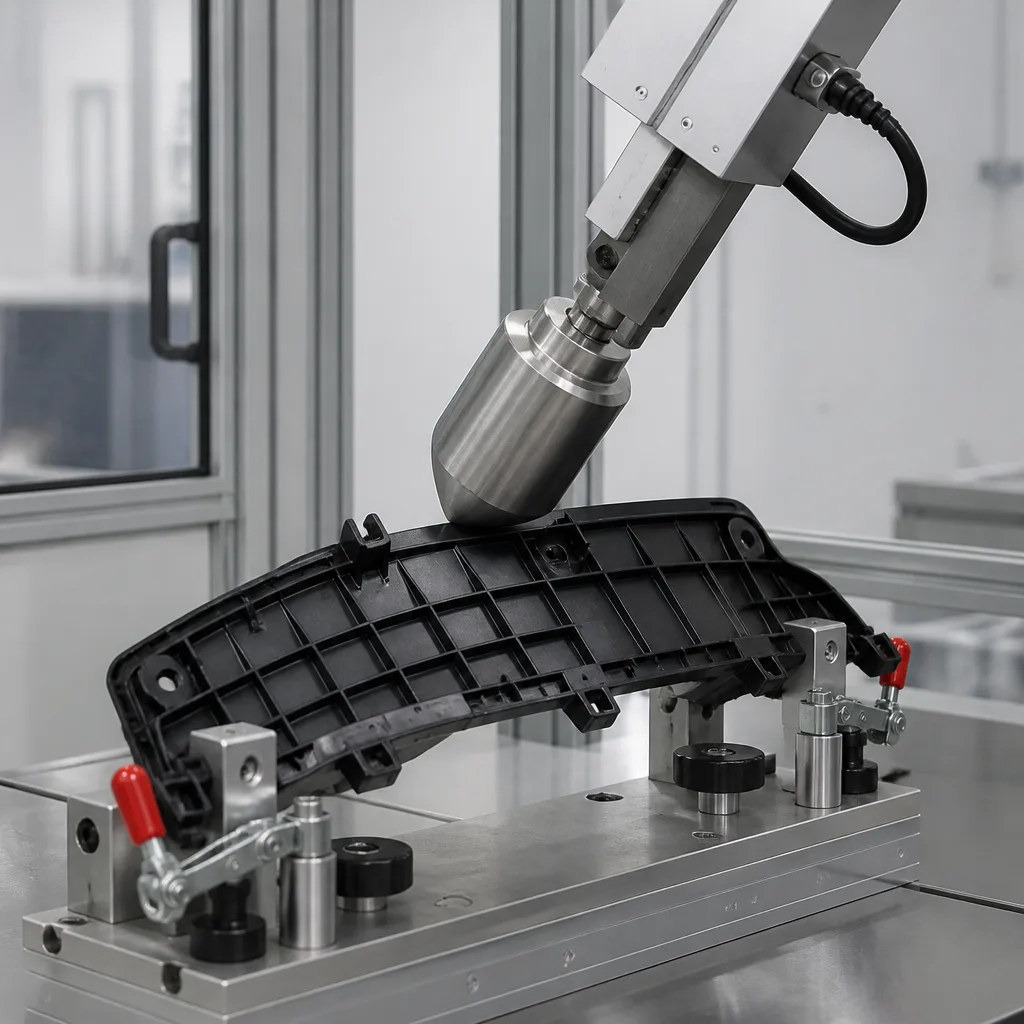
This standard was initially developed within General Motors Europe and later replaced by the “GMW 14093 Determination of impact resistance of plastic components” standard for new vehicle programs. The GMI 60267 standard remains valid only for specific projects and some existing programs.
Automotive plastic components are subjected to numerous impact loads throughout their service life. For example,
The GMI 60267 standard provides a controlled laboratory method for measuring the resistance of plastic components to cracking, fracture, or permanent damage after impact. This standard helps manufacturers ensure that plastic components protect against:
The GMI 60267 standard applies primarily to automotive plastic components such as:
The described test method is particularly important for plastics that may become brittle for the following reasons:
The principle of this testing method is to apply a controlled impact force to a plastic sample and evaluate the resulting damage. Typical test variables include:
This test determines whether the component does the following:
The GMI 60267 standard includes different test configurations depending on the required application. A commonly used configuration is the steel ball impact test. Different applications of this test are as follows:
In Device C's steel ball method, a steel ball is dropped or launched at a plastic component under controlled conditions.
Low-temperature testing is important because many polymers lose toughness and become more brittle when exposed to cold environments.
After impact, the sample is examined from specific angles. Typical test evaluation criteria are as follows:
Typical automotive polymers tested under these requirements include:
This test is particularly important for engineering plastics used in safety-related or visible components.
In automotive engineering, the GMI 60267 standard is considered important for the following reasons:
Impact testing confirms that the materials retain sufficient toughness throughout their service life.
The GMI 60267 standard belongs to a family of General Motors material durability standards that includes the following:
Together, these standards assess the resistance of automotive materials to mechanical, environmental, and chemical stresses.
In conclusion, the GMI 60267 standard is a key automotive materials testing standard used to evaluate the impact resistance of plastic components. It ensures that polymer parts used in vehicles can withstand mechanical impacts without cracking or failing. Although largely superseded by the GMW 14093 standard, it remains valid for older General Motors vehicle programs and continues to represent an important methodology in evaluating automotive plastic durability.
For many years, our organization, with its competent and experienced team, has been understanding the needs of its clients, providing the advanced testing services they require, and assisting them in the establishment, implementation, and improvement of management systems. Within this framework, we also provide testing services compliant with the GMI 60267 standard.
To get an appointment, to get more detailed information or to request an evaluation, you can ask us to fill in our form and reach you.

