

Major challenges for materials in automotive drive technology include high temperatures, humidity and vibrations. In order for a car to withstand these environments throughout its service life, the plastics often used must be specially equipped. This also applies to thermoplastic polyesters such as polybutylene terephthalate used under the hood. Contact with water, even in the form of atmospheric moisture, causes hydrolytic cleavage of polymer chains in polyesters and therefore weakens the material, especially at high temperatures.
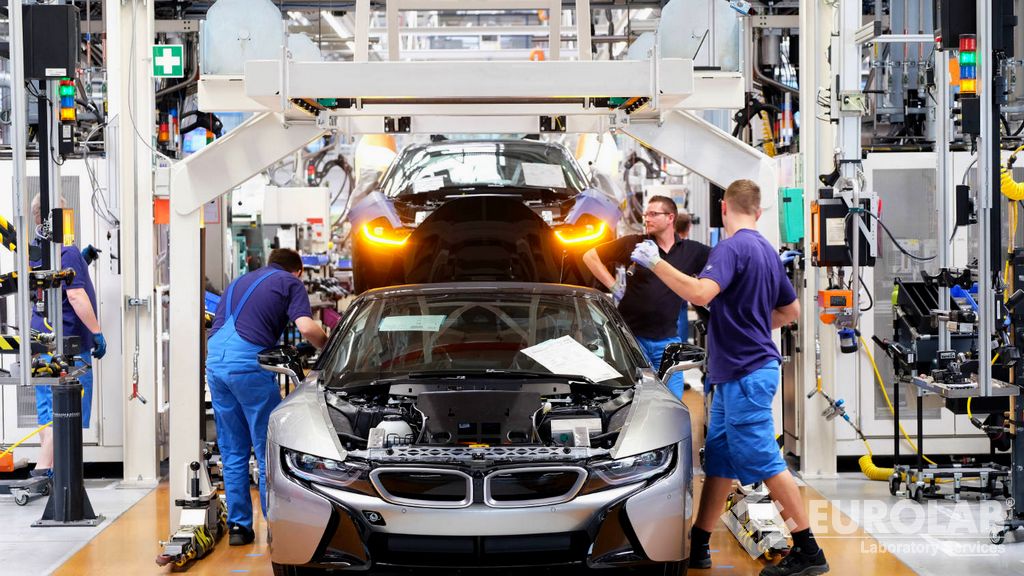
In the automotive industry, suppliers provide thermoplastic polyester materials such as polybutylene terephthalate, which can withstand hydrolysis in humid environmental conditions. As a result, this material is particularly suitable for the manufacture of components with a long service life and withstand operation under intense conditions. These are materials that combine high hydrolysis resistance with integrated flame retardancy and laser transparency, respectively, thus helping to develop numerous new applications.
Such materials are subjected to some hydrolysis tests in advanced laboratories. In this context, a hydrolysis test method for the automotive industry is defined in the BMW AA-0203 standard, developed by BMW, a multinational vehicle manufacturer headquartered in Germany.
Test methods with constant climatic conditions are generally used to verify hydrolysis resistance. Common conditions to speed up testing are, for example, a temperature of 85 degrees and a relative humidity of 85 percent. Test samples are typically stored in this climate for up to 3 hours and are examined at fixed intervals.
Another type of hydrolysis test is the rigorous climate cycle test. The key difference in this test is that the heat and humidity load acts cyclically, not statically, on the test specimens. The specimens are subjected to various defined temperatures and atmospheric humidity levels over an eight-hour cycle. Generally, this test cycle is repeated 40 times before the specimens undergo detailed examination. The tensile strength of a material not stabilized by hydrolysis decreases significantly after 20 cycles, while the tensile strength of a hydrolyzed material remains almost constant even after 40 cycles.
Our organization also provides hydrolysis testing services within the scope of BMW AA-0203 standard, with its trained and expert staff and advanced technological equipment, among the numerous test, measurement, analysis and evaluation studies it provides for businesses in various sectors.
To get an appointment, to get more detailed information or to request an evaluation, you can ask us to fill in our form and reach you.

