

Developed by BMW, a leading German multinational company in the automotive sector, the “BMW QV 32020 / AK-LV 01 § 8.3.6 Airbag module (mounting location steering wheel, instrument panel) - Salt spray test” standard is a quality standard. This standard is an internal BMW test standard relating to salt spray testing (salt mist corrosion testing) for airbag systems and modules.
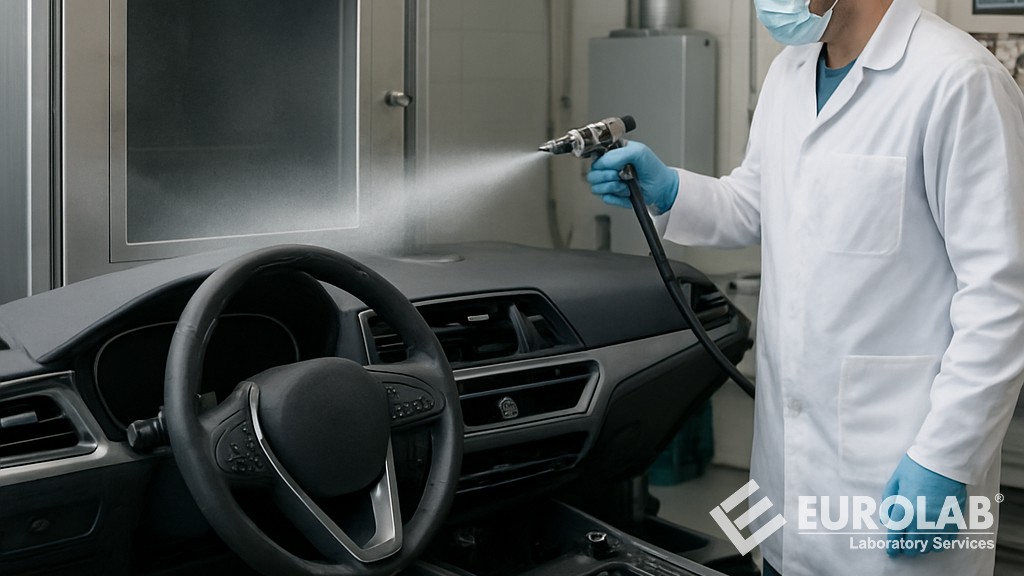
This standard falls under BMW's quality guidelines for airbag components, such as those mounted on the steering wheel or instrument panel. The test assesses corrosion resistance in salty environments, ensuring the long-term reliability and safety of airbag modules under harsh conditions (e.g., exposure to road salt or coastal humidity).
This standard falls under BMW's quality guidelines for airbag components, such as those mounted on the steering wheel or instrument panel. The test assesses corrosion resistance in salty environments, ensuring the long-term reliability and safety of airbag modules under harsh conditions (e.g., exposure to road salt or coastal humidity).
The BMW QV 32020 / AK-LV 01 § 8.3.6 standard defines the mandatory salt spray (salt mist) corrosion test that airbag modules must pass before being approved for use in BMW production vehicles. Airbag modules tested under this standard are those fitted to:
This testing method simulates harsh environmental conditions, such as exposure to road salt, coastal moisture, or other corrosive environments, which are common, especially in winter conditions. It ensures that the airbag's metal components, electrical connections, inflator body, and overall assembly are corrosion-resistant for the vehicle's lifespan. Otherwise, corrosion could compromise deployment reliability, structural integrity, or electrical functionality—unacceptable issues for a safety-critical system like airbags.
The exact parameters (duration, salt concentration, temperature, evaluation criteria) are specific to BMW, but the salt spray test generally follows standards such as ISO 9227, ASTM B117 or DIN 50021, adapted to BMW's more stringent requirements. Common elements include:
BMW's Quality References (QV) series is binding for first-tier suppliers. Compliance with the QV 32020 standard is required for part approval (production part approval process) and ongoing quality audits. Failure in this test can lead to component rejection, redesigns, or supply chain problems.
This standard reflects BMW's commitment to long-term reliability in safety systems, particularly in areas with heavy road salting. It is crucial because airbags are life-saving safety systems that must remain fully functional for the entire lifespan of a vehicle (typically 10-20 years or more). Even minor corrosion can lead to a catastrophic failure when an airbag is needed in the event of an accident.
The main reasons why this standard is considered necessary are as follows:
Any of these could lead to the airbag failing to deploy, partially deploying, deploying late, or even dangerously disintegrating. All of these are unacceptable situations for a passive safety system.
For many years, our organization, with its competent and experienced staff, has been understanding the needs of its customers, providing the advanced testing services they require, and assisting them in the establishment, implementation, and improvement of management systems. Within this framework, we also provide testing services to businesses in accordance with the “BMW QV 32020 / AK-LV 01 § 8.3.6” standard.
To get an appointment, to get more detailed information or to request an evaluation, you can ask us to fill in our form and reach you.

