

The “BMW PR 364 Water Capillarity Test for Threads” standard, developed by BMW, a leading German multinational company in the automotive sector, describes an internal test method for evaluating the water capillarity behavior of threads in automotive components, particularly textiles, sewing threads, or stitched parts used in vehicle interiors.
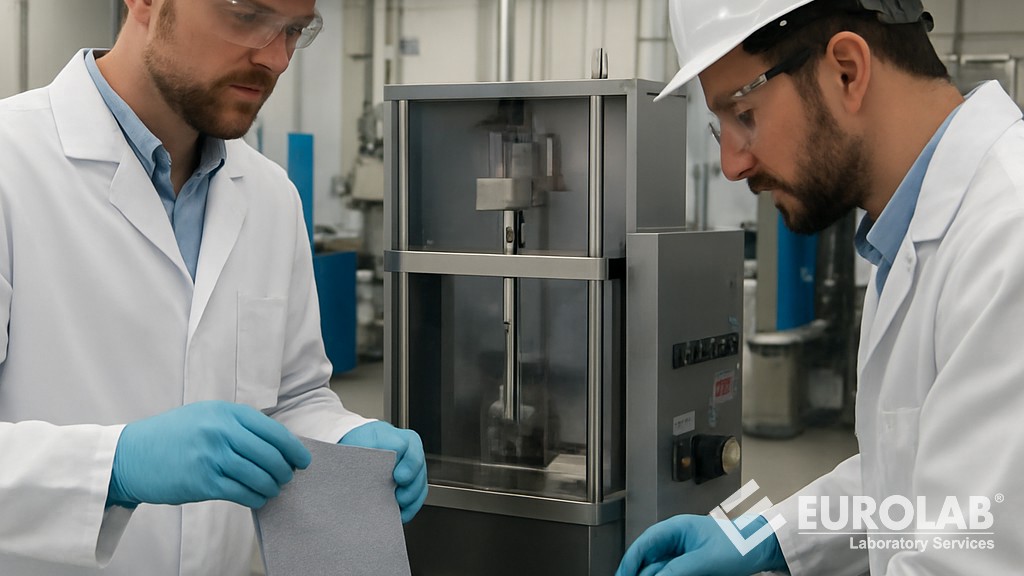
Water capillarity refers to a liquid's ability to flow through narrow spaces without external forces, usually against gravity, due to surface tension and adhesive forces between the liquid and the material. In an automotive context, this test evaluates how easily water is absorbed through threads or seams. Excessive capillarity can lead to problems such as:
This test ensures that the threads and stitched joints meet BMW's stringent requirements for moisture resistance, helping to maintain long-term appearance, hygiene, and structural integrity in premium vehicle interiors.
The BMW PR 364 standard is grouped together with related interior material tests, such as:
These standards are part of BMW’s broader quality assurance for interior textiles, plastics and assemblies, ensuring compliance with requirements for durability, environmental resistance and aesthetics.
Similar capillarity tests in the automotive and textile industries typically follow these steps:
Yarns with low capillarity (non-moisture or minimal moisture absorption) are preferred. This is usually achieved through special finishes, hydrophobic coatings, or fiber selection (e.g., certain polyesters).
This test helps verify that the fibers do not promote unwanted water dispersion, which could compromise interior quality over the vehicle's lifespan.
Suppliers providing seats, upholstery, trim, or stitching materials to BMW must demonstrate compliance with the BMW PR 364 standard during the parts approval process. This standard reflects BMW's commitment to superior material performance. Here, even small details such as thread behavior contribute to overall vehicle quality and customer satisfaction.
Water capillarity for yarns is a specialized material testing method, primarily used in the automotive industry, to assess how much water a sewing thread or stitched seam absorbs (and carries) along its length via capillary action. Capillary action is the ability of a liquid to flow through narrow spaces, such as small gaps and channels between yarn fibers, without any external force and usually against gravity. This is due to:
In everyday examples, this is why water climbs upwards on a paper towel. In yarns, the high capillarity means that water can move rapidly along the seams.
Seams in vehicle interiors (seats, door panels, instrument panels, upholstery, sunroofs) are exposed to the following:
If a yarn has high water permeability,
Therefore, car manufacturers set strict limits on how much or how little water a thread can absorb.
The main reasons why the BMW PR 364 standard is important are as follows:
Controlling capillary action helps welded components withstand the entire lifecycle of the vehicle without visible or functional deterioration.
For many years, our organization, with its competent and experienced team, has been understanding the needs of its clients, providing the advanced testing services they require, and assisting them in the establishment, implementation, and improvement of management systems. Within this framework, we also provide testing services in accordance with the BMW PR 364 standard.
To get an appointment, to get more detailed information or to request an evaluation, you can ask us to fill in our form and reach you.

