

In the high-risk automotive manufacturing world, where vehicles must withstand harsh environmental conditions, rigorous testing protocols are essential to ensure durability and safety. One of these critical standards is the FCA LP-463PB-52-01 standard, developed by Fiat Chrysler Automobiles (FCA), now part of Stellantis, and used to evaluate the chip corrosion resistance of paint systems.
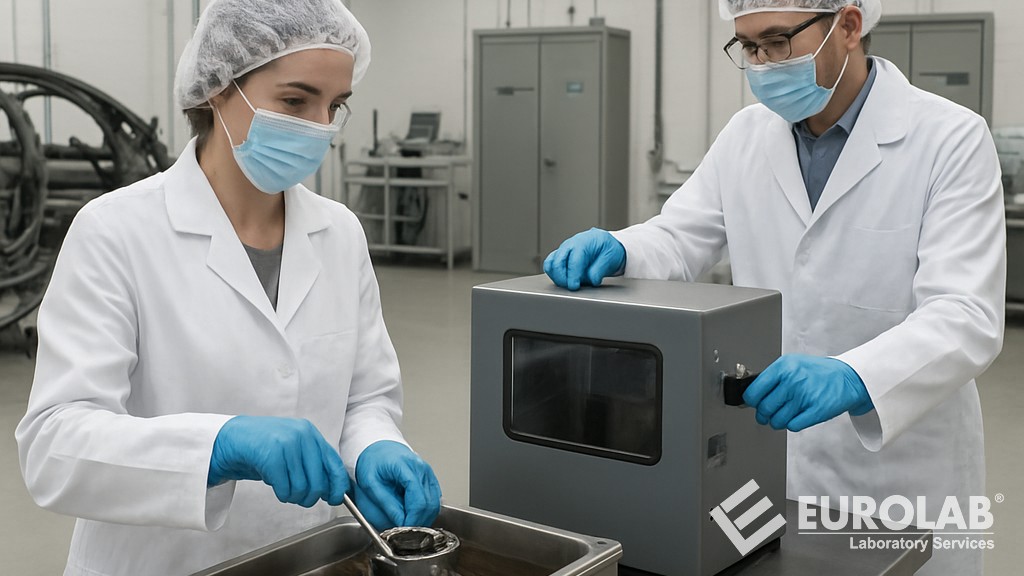
The test method described in the “FCA LP-463PB-52-01 Determination of Chip Corrosion Resistance” standard evaluates how well coatings protect the underlying metal from corrosion by simulating real-world impacts such as road debris and gravel to which vehicle exterior surfaces are exposed. As electric vehicles and advanced materials become more widespread, standards like FCA LP-463PB-52-01 remain fundamental to maintaining quality in global supply chains.
The FCA LP-463PB series of standards incorporates laboratory procedures for paint and body engineering with a focus on environmental durability. These standards are part of a broader ecosystem that includes adhesion, gloss retention, and chemical resistance testing, ensuring automotive coatings not only look attractive but also perform under stress.
The LP-463PB-52-01 standard specifically targets chip corrosion, a phenomenon where small impacts penetrate the paint layer, exposing the metal to moisture and salts that accelerate rust. This is particularly relevant for underbody components, fenders, and bonnets exposed to salty winter roads or highway debris. Compliance with the FCA LP-463PB-52-01 standard is mandatory for suppliers aiming to certify parts for vehicles, affecting everything from off-road vehicles to heavy-duty trucks.
At the heart of the FCA LP-463PB-52-01 standard test is the use of a gravel gauge, a device that fires standardized projectiles at paint panels to simulate stone impacts. The method generally consists of the following steps:
This methodology is compliant with the SAE J400 standard in terms of chip resistance, but adds FCA-specific corrosion cycles for climates where road salt is prevalent.
The FCA LP-463PB-52-01 standard test provides suppliers with assurance against costly recalls and warranty claims. Corrosion-related problems contribute significantly to global automotive repair costs.
Furthermore, as the industry shifts towards lightweight materials, the testing method is also evolving. Recent revisions include e-coating primers and multilayer systems to combat galvanic corrosion.
There are some obstacles in conducting chip corrosion testing. Variability in the particle environment can distort results, which has led FCA to standardize suppliers. Environmental concerns also arise. Traditional salt sprays produce waste, leading to more environmentally friendly alternatives such as calcium magnesium acetate solutions in updated protocols.
Innovations include automated gravometers with laser velocity measurement for precision and AI-powered image analysis for leakage detection, reducing human error. Looking ahead, as autonomous vehicles demand longer service lives, this standard could integrate UV aging or electric field simulations to address emerging threats such as battery-related corrosion. In short, the FCA LP-463PB-52-01 standard transforms potential vulnerabilities into robust defenses.
For many years, our organization, with its competent and experienced staff, has been understanding the needs of its customers, providing the advanced testing services they require, and assisting in the establishment, implementation, and improvement of management systems. Within this framework, we also provide testing services to businesses in accordance with the "FCA LP-463PB-52-01 Determination of Chip Corrosion Resistance" standard.
To get an appointment, to get more detailed information or to request an evaluation, you can ask us to fill in our form and reach you.

