

The “Ford FLTM BO 116-01 Interior Weather Resistance” standard, developed by Ford Motor Company (Ford), describes a test method used to evaluate the weather resistance of vehicle interior materials to exposure to sunlight. This standard assesses how interior upholstery materials such as fabrics, plastics, vinyls, carpets, seat covers, and decorative surfaces respond to prolonged exposure to simulated solar radiation.
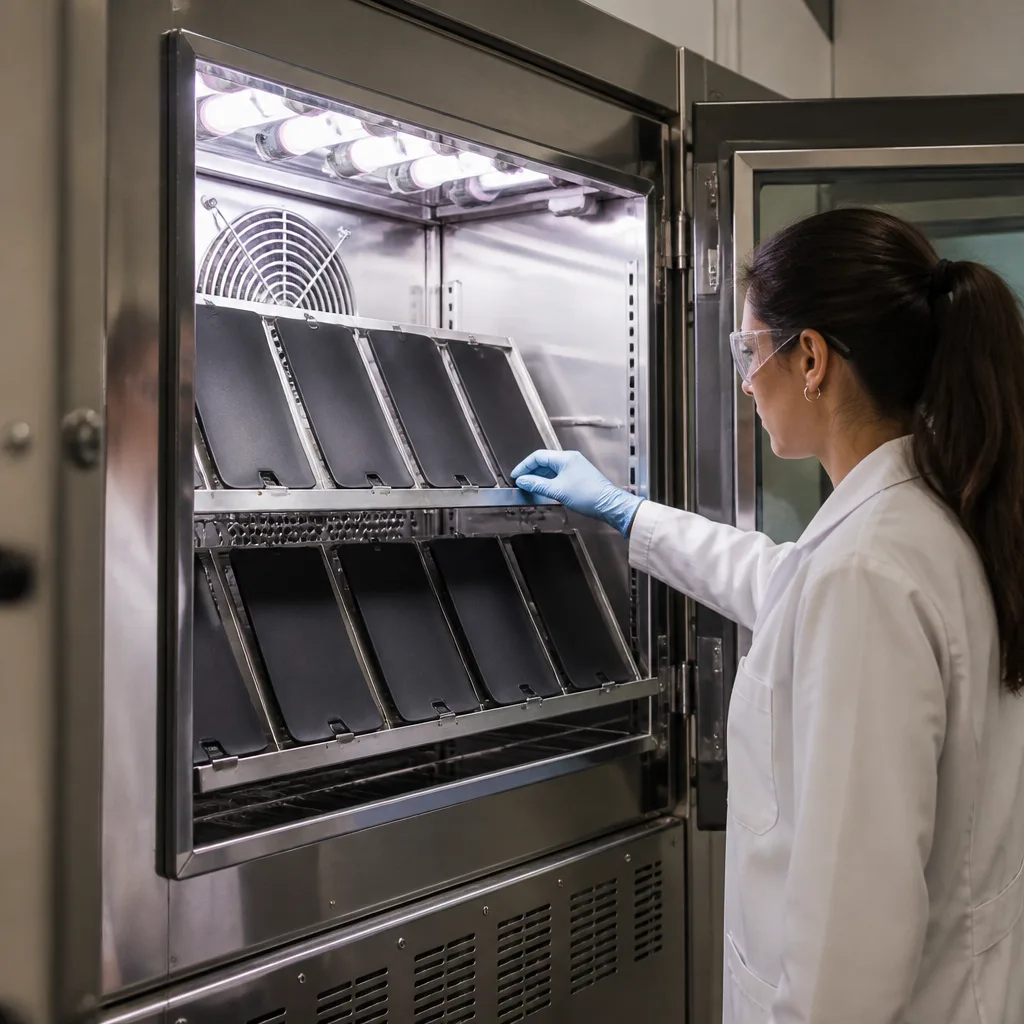
Because vehicle interiors are constantly exposed to sunlight through windows and windshields, materials can experience fading, discoloration, brittleness, cracking, gloss changes, and other forms of deterioration. The Ford FLTM BO 116-01 standard defines an accelerated method for predicting these long-term effects.
The primary purpose of this standard is to define the following:
This standard helps ensure that materials maintain their intended appearance and functionality throughout the vehicle's lifespan.
In principle, this testing method uses a controlled-radiation xenon arc weather exposure device equipped with special optical filters and an auxiliary lamp system. Xenon arc technology closely reproduces the entire spectrum of natural sunlight, including visible and ultraviolet wavelengths.
During testing, samples are exposed to the following:
The changes that occur are evaluated through visual inspection and, where necessary, instrumental measurements such as color difference and brightness retention.
c is not an entirely independent procedure. In addition to the “SAE J 2412 Accelerated exposure of automotive interior trim components using a controlled irradiation xenon arc device” standard, it includes Ford-specific requirements for interior weather resistance assessment. Ford’s method incorporates specific filter requirements and exposure conditions designed to better simulate the solar environment inside Ford vehicles.
Materials frequently tested according to the Ford FLTM BO 116-01 standard include:
These materials are particularly susceptible to degradation from prolonged exposure to sunlight.
During testing, materials are examined from the following perspectives:
Any significant deterioration may indicate that the material is unsuitable for long-term automotive interior use.
Using the Ford FLTM BO 116-standard 01, manufacturers can do the following:
Accelerated testing provides valuable information within weeks, instead of waiting years for results that depend on natural weather conditions.
The Ford FLTM BO 116-01 standard is important because it helps ensure that automotive interior materials can withstand years of exposure to sunlight, heat, and ultraviolet (UV) radiation without experiencing unacceptable degradation. This standard is considered important for the following reasons:
This standard helps identify materials that may spoil prematurely before being approved for production.
This helps engineers select the most durable materials for vehicle interiors.
In conclusion, the Ford FLTM BO 116-01 standard is a critical durability standard for automotive interior materials. By using controlled xenon arc exposure to simulate years of sun exposure, the method helps engineers predict how interior components will perform over the life of a vehicle. This standard plays a vital role in maintaining the appearance, durability, and customer-perceived quality of Ford vehicle interiors.
For many years, our organization, with its competent and experienced staff, has been understanding the needs of its customers, providing the advanced testing services they require, and assisting them in the establishment, implementation, and improvement of management systems. Within this framework, we also provide testing services to businesses in accordance with the Ford FLTM BO 116-03 standard.
To get an appointment, to get more detailed information or to request an evaluation, you can ask us to fill in our form and reach you.

