Fiat 50444 Genuine Leather, Artificial Leather and Vinyl Coating Color Fastness and Aging Test
Fiat 50444 Genuine Leather, Artificial Leather and Vinyl Upholstery: Color Fastness and Aging Test
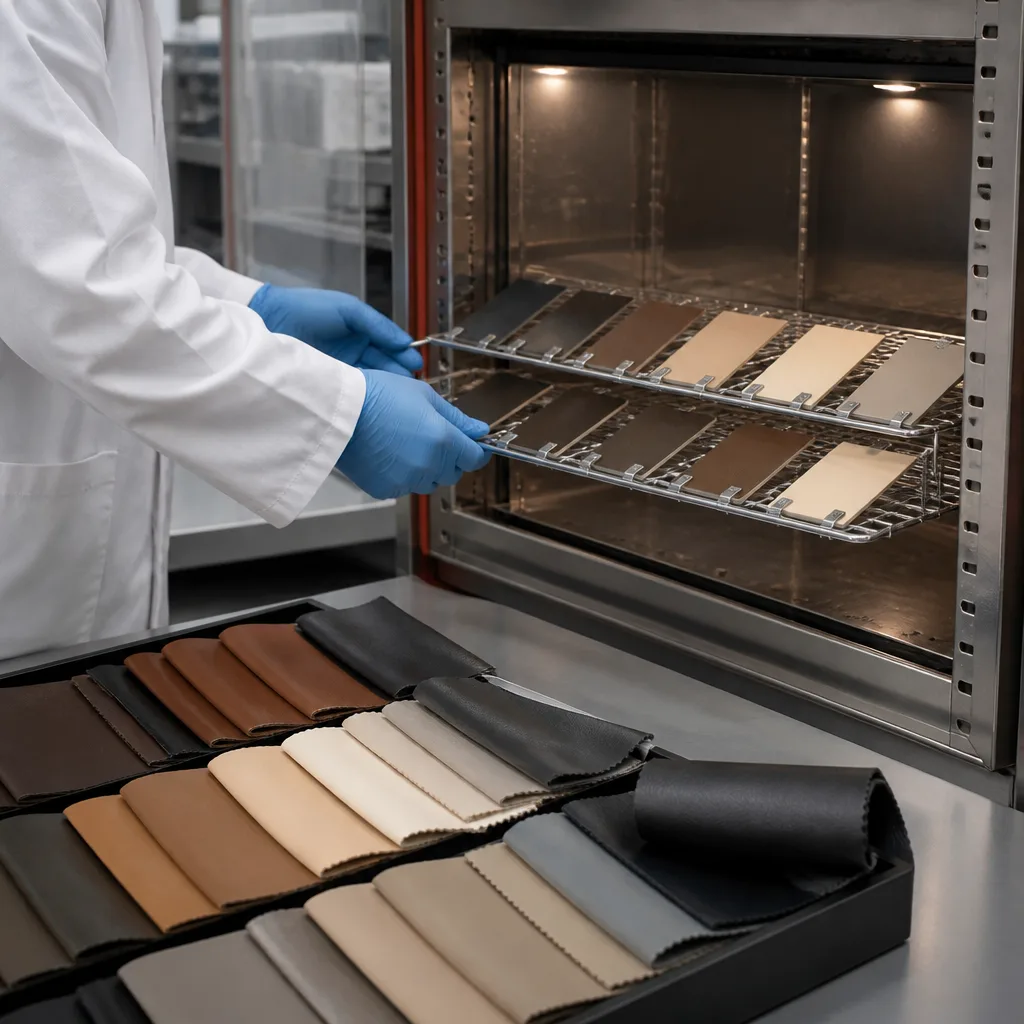
Developed by Fiat Chrysler Automobiles (FCA) (now Stellantis), an Italian-American automotive company, the “Fiat 50444 Genuine leather, artificial leather and vinyl upholstery: color fastness and aging test” standard is an automotive material testing standard used to evaluate the color fastness, aging resistance and appearance durability of interior upholstery materials of the following types:
- Genuine Leather
- Artificial leather (polyurethane / PVC synthetic leather)
- Vinyl laminates
- Coated flooring materials
This standard is primarily used in the following in-vehicle applications:
- Seats
- Door panels
- Steering wheel covers
- Armrests
- Instrument panel trims
- Gear lever gaiters
- Interior trim accessories
This standard specifically addresses the colorfastness and aging issues of genuine leather, artificial leather, and vinyl laminates.
Vehicle interiors are constantly exposed to the following:
- UV radiation
- Heat
- Gender
- Sweating
- Passenger friction
- Cleaning chemicals
- Long-term oxidation
Without sufficient resistance, materials can cause the following:
- Fading
- Cracking
- Becoming sticky
- Color changing
- Losing its brightness
- Excessive hardening or softening
- Getting paint on clothes
The Fiat 50444 standard ensures that interior materials retain the following throughout the expected vehicle lifespan:
- Visual quality
- Mechanical stability
- Color consistency
- Passenger comfort
- Long-lasting durability
The main performance characteristics assessed by this standard are as follows:
- Color fastness (tone resistance): This standard measures a material's ability to retain its original color when exposed to environmental factors. Typical assessments include:
- Resistance to friction
- Sweat resistance
- Resistance to light exposure
- Resistance to heat aging
- Migration/staining resistance
A bad outcome can lead to the following:
- Fading of the seat color
- Paint transfer to clothing
- Irregular color change
- Whitening or yellowing
Resistance to artificial aging: Accelerated aging simulates prolonged vehicle use in a shorter laboratory time. During testing, materials are exposed to the following combinations:
- High temperature
- UV light
- Gender
- condensation
- Air oxidation
After aging, auditors assess the following:
- color change
- Cracking
- Surface adhesion
- Brightness change
- Layer separation
- Fragility
Surface appearance stability: The test also checks whether the decorative surface retains the following:
- Uniform texture
- Grain definition
- Soft touch features
- Surface adhesion
This is especially important for premium automotive interiors.
Tests generally follow these steps:
- Sample conditioning: Materials stabilized in a controlled temperature and humidity environment.
- Initial inspection: Basic color and surface assessment.
- Accelerated exposure: Exposure to heat, humidity, UV rays, or an aging chamber.
- Mechanical assessment: Assessment of flex or friction.
- Final review: Color change and physical deterioration analysis.
- Rating: Comparison according to Fiat acceptance criteria.
These tests generally use the following equipment:
- Xenon arc weather exposure chambers
- UV aging booths
- Climate chambers
- Crocmeters for friction tests.
- Spectrophotometers
- Brightness meters
- Visual grayscale comparison systems
Additional variants of this standard address chemical interaction with consumer products. For example, variant Fiat 50444/02 assesses the resistance of the leather surface to sunscreen products. This is important because sunscreens can chemically damage leather coatings and dyes.
The Fiat 50444/03 variant evaluates the leather's surface resistance to insect repellents. Some insect repellents contain aggressive solvents that can damage coatings or discolor surfaces.
The Fiat 50444 standard is considered important for the following reasons:
- Customer perception: Interior appearance greatly influences perceived vehicle quality. Even minor fading or cracking can create a poor impression of ownership.
- Durability verification: This standard helps manufacturers predict long-term material behavior before mass production begins. This reduces the following:
- Warranty claims
- Failures caused by premature aging
- Supplier quality issues
- Supplier qualification: Material suppliers must generally demonstrate compliance with the Fiat 50444 standard before receiving approval for production schedules. This ensures:
- Consistent material quality.
- Comparability between suppliers
- Reliable verification procedures
- Safety and comfort: Deteriorated interior materials can cause the following:
- It becomes sticky.
- It emits a scent.
- Excessive cracking
- It loses its protective coatings.
In short, this standard helps maintain safe and comfortable cabin conditions.
Although the Fiat 50444 standard was developed for Fiat automotive applications, similar assessments are widely used in the following areas:
- Automotive original equipment manufacturers
- Leather manufacturers
- Synthetic leather manufacturers
- Interior trim suppliers
- Seat manufacturers
- First-tier automotive suppliers
- Testing laboratories
The Fiat 50444 standard is often associated with other automotive obsolescence and interior durability standards:
- ISO weather resistance standards
- SAE International Standards for Interior Materials
- Daimler interior obsolescence standards
- Volkswagen material specifications
- FCA interior trim performance standards
In conclusion, the Fiat 50444 standard is a significant durability standard for automotive interior materials and focuses on the following characteristics:
- Paint resistance
- Color fastness
- Aging behavior
- Surface stability
This standard helps ensure that automotive interiors remain visually appealing, durable, and functional despite years of exposure to sunlight, heat, humidity, and daily wear and tear. It plays a critical role in automotive quality assurance and long-term customer satisfaction.
For many years, our organization, with its competent and experienced staff, has been understanding the needs of its customers, providing the advanced testing services they require, and assisting them in the establishment, implementation, and improvement of management systems. Within this framework, we also provide testing services in accordance with the Fiat 50444 standard.



