

The “BMW AA 0055 Chemical Resistance Test of Surfaces” standard, developed by BMW, a multinational vehicle manufacturer, describes a test method used to evaluate the chemical resistance of surfaces in vehicles. This standard assesses how well materials (specifically paints, coatings, plastics, and interior and exterior surfaces) withstand exposure to various chemicals commonly encountered in automotive use.
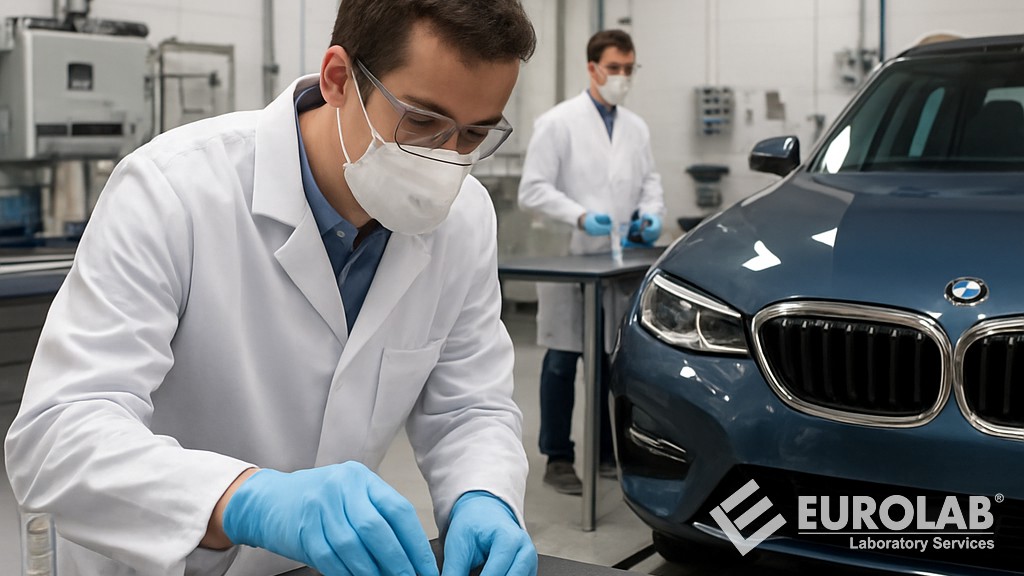
This standard is part of BMW’s broader suite of material approval tests to ensure components meet stringent durability and quality requirements. It is widely referenced by accredited testing laboratories for BMW supplier approvals.
Modern cars are exposed to a wide variety of substances over time that can degrade their surfaces:
Failure to meet the required resistance can lead to discoloration, swelling, cracking, blistering, or loss of gloss. These problems affect aesthetics, safety, and long-term reliability. Rigorous standards like BMW AA 0055 help prevent these issues and reinforce the brand's reputation for superior manufacturing quality.
This testing method generally follows these steps:
The methods described in this standard differ in application technique, exposure time, temperature, and sometimes mechanical stress, depending on the type of chemical and surface being tested. Common chemicals include cleaning agents, fuels (e.g., diesel, gasoline), tree resin solutions, sunscreen, insect residues, and other real-world substances. The main test methods include:
In short, the BMW AA 0055 standard is a key standard that outlines procedures for evaluating the chemical resistance of surfaces in automotive components, particularly interior and exterior plastics, coatings, paints, and other materials. It involves exposing test surfaces to a variety of chemicals (e.g., cleaning agents, sunscreens, insect repellents, tree resin, fuels, oils, acids, and other substances commonly encountered in the real world).
For manufacturers and suppliers, passing this standard is typically required for part approval in BMW vehicles and ensures compatibility for real-world use. Indirectly, it guarantees that the interior instrument panel, exterior paint, or upholstery will not be easily damaged by everyday spills or cleaning.
This standard is considered important in automotive manufacturing and quality assurance for the following reasons:
In conclusion, the BMW AA 0055 standard is a critical part of BMW's rigorous materials validation process to deliver vehicles that can withstand everyday chemical exposures without visible or structural degradation, thus upholding the brand's standards of reliability and superior feel. While other similar tests exist in the automotive industry, the BMW AA 0055 standard has been tailored to BMW's specific requirements.
For many years, our organization, with its competent and experienced team, has been understanding the needs of its clients, providing the advanced testing services they require, and assisting them in the establishment, implementation, and improvement of management systems. Within this framework, we also provide testing services in accordance with the BMW AA 0055 standard.
To get an appointment, to get more detailed information or to request an evaluation, you can ask us to fill in our form and reach you.

