DBL 5307 Flame Retardant Properties - Interior Trim Parts - Requirements and Test Specifications
Developed by Daimler, the parent company of the Mercedes-Benz brand, the “DBL 5307 Flame Retardant Properties - Interior Trim Parts - Requirements and Test Specifications” standard is a key procurement specification that defines the requirements and test methods for the flame retardant (combustible) behavior of materials and components used in vehicle interiors. This standard ensures that interior trim parts meet stringent safety criteria to minimize fire risks in passenger compartments, complying with global automotive safety regulations and including Mercedes-Benz-specific requirements.
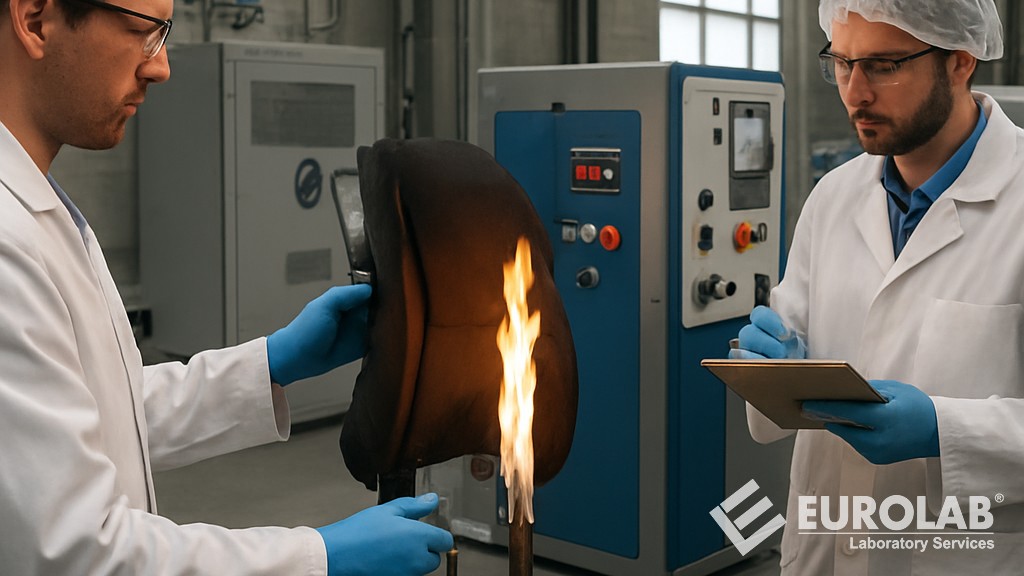
The DBL 5307 standard applies to a wide variety of interior materials and components used in Mercedes-Benz vehicles. These include:
- Passenger cars
- Multipurpose passenger vehicles
- Commercial vehicles (trucks)
- Buses
It also includes the following materials:
- Fiber materials
- Coatings
- Adhesives
- foams
- Compressed materials
- Textiles
- Plastics
- Composites
For buses with more than 22 seats, additional components such as seat accessories, side and rear panel trims, thermal and acoustic materials, floor coverings, luggage racks, heating and ventilation hoses, upholstery panels, and lighting elements are also included.
The focus of this standard is on interior trim components that could contribute to the spread of fire in the passenger compartment.
The primary aim of the DBL 5307 standard is to ensure that materials exhibit limited combustion behavior. Materials should not ignite easily, spread flames rapidly, or cause excessive dripping or melting that could worsen a fire. This enhances occupant safety in the event of an indoor fire (e.g., due to electrical failures, smoking, or accidents).
This standard generally refers to various test procedures based on or adapted from international norms such as “FMVSS 302 U.S. federal standard for the flammability safety of interior materials for motor vehicles”. This is also reflected in DIN 75200 and other original equipment manufacturer specifications (e.g., VW TL 1010, BMW GS 97038).
The sub-sections of the DBL 5307 standard are as follows:
- DBL 5307 § 6.1 covers surface appearance and cosmetic quality criteria. The aim is to ensure that the interior surfaces of the vehicle have a flawless and homogeneous appearance, in line with the expectations of premium brands.
- DBL 5307 § 6.2 focuses on verifying the interlayer bond strength in multilayer surface systems (e.g., plastic + primer + lacquer/decorative film + adhesive + carrier). The aim is to prevent delamination, verify bond stability after heat, humidity and aging, and guarantee long-term cosmetic and functional durability.
- DBL 5307 § 6.3 generally covers the surface's resistance to mechanical stress. The aim is to verify the surface performance against scratches, abrasions, and impacts that may occur during daily use.
- DBL 5307 § 6.4 primarily covers the resistance of the surface to chemical substances. The aim is to verify the resistance of vehicle interior surfaces to liquids and cleaning agents to which they may be exposed during daily use.
- DBL 5307 § 6.5 generally covers resistance to heat, humidity, and climatic aging conditions. The aim is to verify surface performance by simulating the environmental conditions to which the part will be exposed throughout the vehicle's lifespan.
- DBL 5307 § 6.6 covers color change and surface stability under the influence of light. The aim is to ensure that vehicle interior parts do not fade, yellow, or change tone when exposed to sunlight.
- DBL 5307 § 6.7 covers volatile compound (VOC) emissions, fogging, and odor behavior. The aim is to prevent materials inside the vehicle from releasing volatile substances at high temperatures, thus preventing fogging on windows or the emission of unpleasant odors.
- DBL 5307 § 6.8 covers the combustion behavior and flame spread rate of interior materials. The aim is to ensure controlled combustion and limited flame spread of interior coatings and surface systems in the event of a fire.
- DBL 5307 § 6.9 covers deformation, shrinkage, and dimensional stability under heat and climate conditions. The aim is to ensure that the part maintains its shape under high temperatures and humidity inside the vehicle.
- DBL 5307 § 6.10 generally covers the chemical and mechanical stability of materials under high temperature and high humidity conditions. The aim is to pre-verify any deterioration that may occur due to prolonged exposure to moisture, especially in PU-based coatings, adhesive systems, and lamination structures.
- DBL 5307 § 6.11 covers mechanical behavior and surface integrity at low temperatures. The aim is to verify that the material does not become brittle, crack, or lose adhesion when the vehicle is used in very cold climatic conditions (minus 20 degrees to minus 40 degrees).
- DBL 5307 § 6.12 is generally a more comprehensive or specific continuation of § 6.4 and covers the resistance of interior surfaces to special chemicals and cleaning agents. The aim is to verify that premium interior trim surfaces maintain their visual and structural integrity after prolonged chemical exposure.
- DBL 5307 § 6.13 covers the resistance of a surface to repeated friction and contact effects. The aim is to verify whether hand contact, textile friction, cleaning processes, or contact with objects during daily use cause permanent damage to the surface.
- DBL 5307 § 6.14 covers the tendency of surfaces to adhere to each other under pressure and temperature. The aim is to ensure that, in particular, lacquered or soft-touch surfaces do not adhere to each other when they come into contact with each other during storage and transport.
- DBL 5307 § 6.15 covers the cleanability of surfaces after soiling and their resistance to permanent stains. The aim is to ensure that vehicle interior surfaces are easy to clean after soiling during daily use and do not leave permanent marks.
- DBL 5307 § 6.16 covers the tactile properties of surfaces and the quality felt during use. The aim is to ensure that surfaces in premium segment vehicles offer a high quality perception not only visually but also tactilely.
- DBL 5307 § 6.17 covers the light reflection characteristics of surfaces and glare control in terms of driving safety. The aim is to prevent sunlight from reflecting off the windshield, particularly from the instrument panel and upper trim parts, and negatively affecting the driver's visibility.
- DBL 5307 § 6.18 covers surface stability under a combination of UV radiation, temperature, and humidity. This clause evaluates combined aging behavior, as opposed to UV or humidity testing alone. The aim is to better simulate real in-vehicle environmental conditions.
- DBL 5307 § 6.19 covers the topic of surface electrical resistance and static charge accumulation behavior. The aim is to control static electricity buildup on vehicle interior trim surfaces, reduce dust attraction, and limit ESD (electrostatic discharge) risks.
- DBL 5307 § 6.20 defines the quality and durability requirements for Mercedes-Benz interior trim surface systems. It evaluates the odor levels that materials may generate in the vehicle interior. The aim is to maintain interior air quality, ensure customer comfort, and prevent unpleasant odors caused by VOCs.
- DBL 5307 § 6.21 defines the performance requirements for Mercedes-Benz interior trim surface systems. It evaluates the resistance of the surfaces to chemicals they may encounter in daily use. The aim is to ensure that the surface is not damaged by contact with cleaning products, hand cream, sunscreen, beverages, etc., and to prevent discoloration, dulling, blistering or stickiness.
- DBL 5307 § 6.22 defines the long-term durability requirements for Mercedes-Benz interior trim surface systems. In particular, it evaluates the resistance of PU (polyurethane) based coatings and soft-touch systems to hydrolytic degradation under humidity and temperature conditions. The aim is to verify surface stability under high temperature and high humidity conditions, to prevent sticking, softening, cracking or peeling, and to simulate tropical climates.
For many years, our organization, with its competent and experienced team, has been understanding the needs of its clients, providing the advanced testing services they require, and assisting them in the establishment, implementation, and improvement of management systems. Within this framework, we also provide testing services compliant with the DBL 5307 standard.



