

The “Ford DVM-0039 Insect Repellent Resistance Test” standard, developed by Ford Motor Company (Ford), is a materials testing specification used to evaluate the resistance of automotive interior and exterior materials to insect repellents. This standard primarily applies to plastics, coated surfaces, painted components, synthetic leather, textiles, and decorative trim pieces that may come into contact with insect repellent products during normal vehicle use.
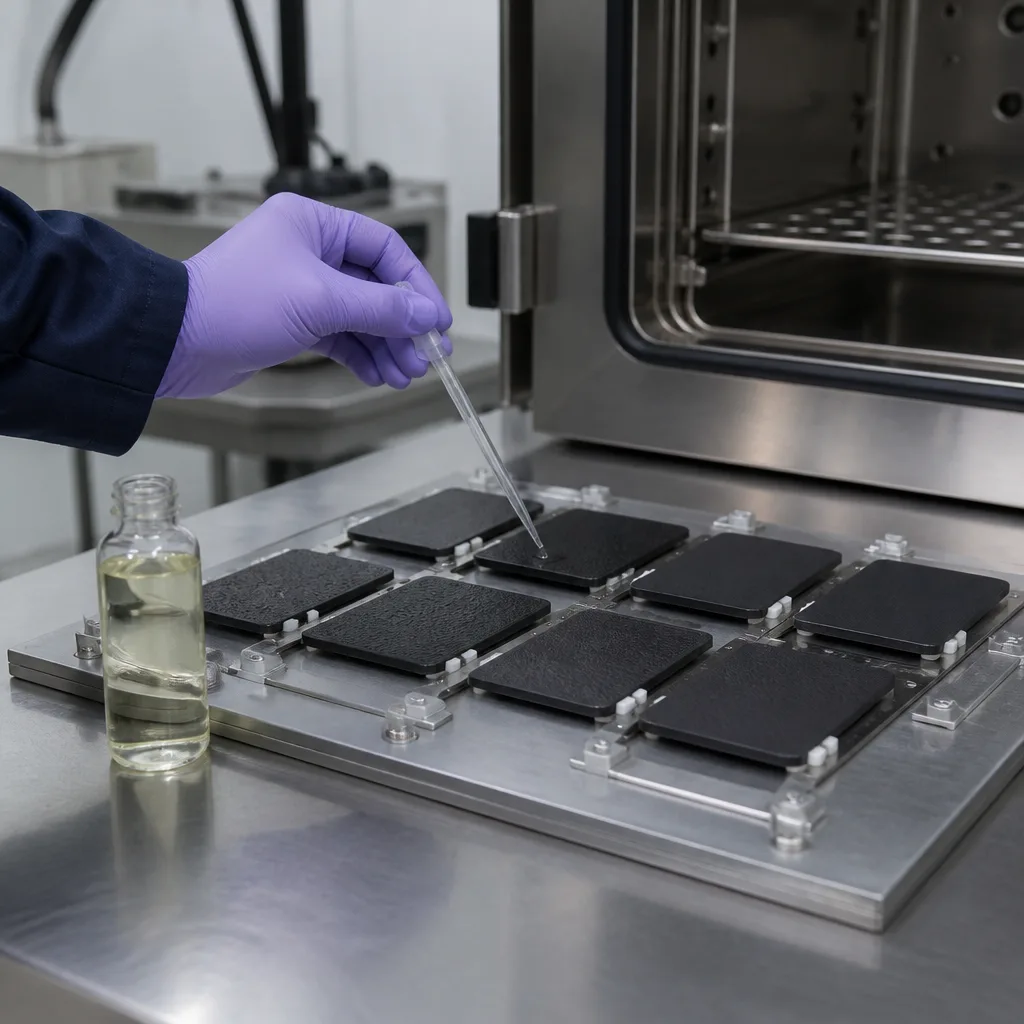
This test belongs to Ford’s family of chemical resistance standards and complements the “Ford DVM-0036 Sunscreen Resistance Test” standard. Both standards are frequently required to verify interior upholstery materials because consumers often use sunscreen and insect repellent while driving or traveling.
The purpose of the Ford DVM-0039 standard is to determine whether a material can withstand exposure to insect repellent chemicals without experiencing the following conditions:
Many insect repellents contain aggressive active ingredients, such as solvents, that can damage automotive plastics and coatings. If materials are not properly verified, even brief contact can cause permanent damage to sensitive surfaces.
The described test method is a chemical resistance testing method in which a defined insect repellent formulation is applied to a test sample under controlled conditions. The sample is then exposed for a specific period of time and evaluated for visual and physical changes. Typical evaluation criteria include:
The Ford DVM-0039 standard commonly applies to the following types of materials:
The Ford DVM-0039 standard is often used in conjunction with the following standards:
These standards collectively assess the ability of automotive materials to withstand real-world environmental and consumer product exposures.
Materials that do not meet the requirements of the Ford DVM-0039 standard may fail. Typical failure modes include:
Such defects can significantly affect both the appearance and perceived quality of the vehicle.
The Ford DVM-0039 standard is necessary because it verifies that automotive materials can withstand contact with insect repellents without cosmetic or functional damage. Modern insect repellents often contain strong solvents that can damage plastics, coatings, synthetic leather, and painted surfaces. This standard is considered important for the following reasons:
Supports global vehicle use: Ford vehicles are also sold in regions where insect repellent use is common, including tropical climates, coastal areas, camping and recreation markets, and areas with high mosquito populations. This standard ensures consistent material performance regardless of geographic location.
Part of real-world chemical resistance validation: Vehicle interiors are exposed to numerous consumer chemicals throughout their lifespan. This standard works in conjunction with other Ford standards that assess resistance to substances such as sunscreens, cosmetics, hand sanitizers, cleaning agents, foods and beverages, and body oils and sweat. Together, these tests simulate the realistic conditions customers encounter every day.
In short, the Ford DVM-0039 standard is important because it ensures vehicle materials remain attractive, durable, and functional even after exposure to insect repellents. This standard helps prevent staining, discoloration, softening, and coating failure, ultimately improving vehicle quality, customer satisfaction, and long-term durability.
In conclusion, the Ford DVM-0039 standard is a crucial chemical resistance standard used to ensure automotive materials can withstand accidental contact with insect repellent products. By evaluating resistance to aggressive consumer chemicals, the test helps protect the vehicle's appearance, durability, and customer satisfaction throughout its lifespan. Along with sunscreen and other environmental resistance tests, this standard forms a critical part of Ford's material validation process for interior and exterior components.
For many years, our organization, with its competent and experienced team, has been understanding the needs of its customers, providing the advanced testing services they require, and assisting them in the establishment, implementation, and improvement of management systems. Within this framework, we also provide testing services compliant with the Ford DVM-0039 standard.
To get an appointment, to get more detailed information or to request an evaluation, you can ask us to fill in our form and reach you.

