

The standard, "SAE J1742 Connections for high-voltage on-board vehicle electrical wiring installations - Test methods and general performance requirements," developed by the American Society of Automotive Engineers (SAE), describes performance tests for all phases of development, manufacturing, and field analysis of electrical terminals, connectors, and components that constitute electrical connection systems in high-power on-road vehicle applications operating at 20 volts to 600 volts, regardless of applied current, or any current greater than or equal to 80 A, regardless of applied voltage. These test methods are applicable only to terminals used for in-line, header, and device connectors and to wire sizes up to 120 mm2.
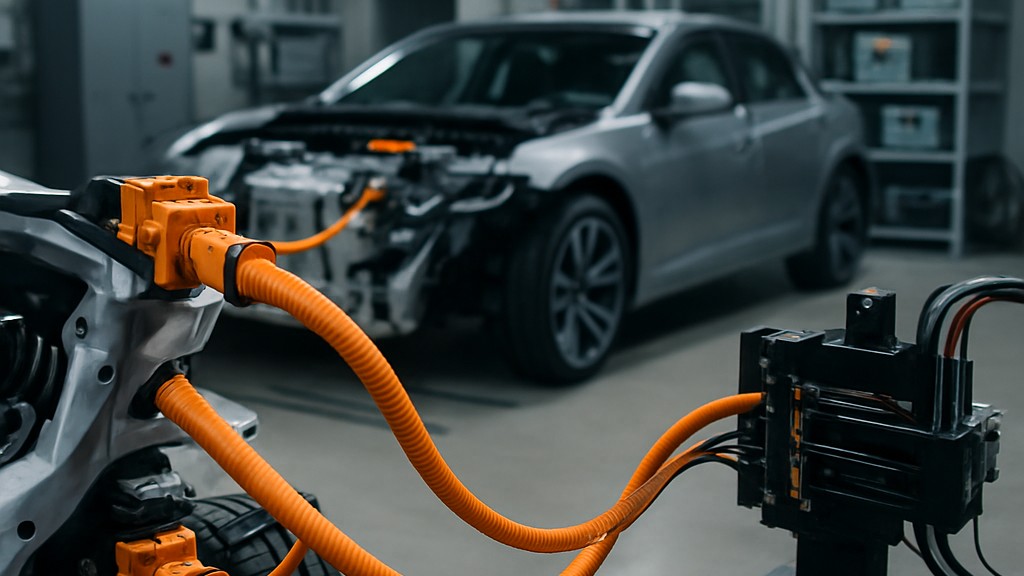
In cases where power levels are mixed in the same connector, i.e., in sensing or normal 14,5-volt system circuits with high-power contacts, the high-power contacts must meet the requirements of SAE J1742 and all other contacts must meet the requirements of SAE J2223-2. The connection system (body and high-power contacts) must meet the requirements of SAE J1742.
The requirements and procedures in this standard are not intended for connections within electrical and electronic modules or complete subassemblies.
This standard does not include testing for EMI/EMC because these parameters must be tested as a cable and connector combination. These are considered system-level requirements. Determining the need for and type of testing should be considered at this level.
In short, the SAE J1742 standard contains specifications for electrical connector systems used in on-board diagnostic interfaces, particularly those that comply with ISO 15031-3, a standard used for on-board diagnostic systems. This standard provides a detailed framework for testing and evaluating electrical terminals used in on-board vehicle wiring systems. These terminals are crucial for providing reliable electrical connections in vehicles, particularly in environments where vibration, humidity, and extreme temperatures can affect performance. The standard outlines specific test procedures and performance requirements to ensure safety, durability, and consistency across manufacturers and applications.
The SAE J1742 standard focuses on:
The primary purpose of this standard is to standardize the qualification process for electrical terminals used in automotive applications, particularly in under-hood and cabin environments that may be exposed to harsh operating conditions.
The SAE J1742 standard defines numerous test procedures designed to simulate real-world stresses that terminals may encounter. The basic test methods described in this standard include:
The SAE J1742 standard is widely applied in the following areas:
This standard serves as a common standard for both original equipment manufacturers and suppliers to evaluate terminals before they are integrated into production vehicles.
The SAE J1742 standard is critical to the automotive industry because it ensures the safety, reliability, and performance of electrical terminals used in vehicle wiring systems. These terminals form the backbone of modern automotive electrical architectures, and failures at these connection points can lead to catastrophic failures. The key reasons for this standard's importance include:
This standard helps prevent such failures by enforcing stringent performance criteria, thereby protecting vehicle occupants and critical systems.
This standard ensures that the terminals are robust enough to handle under-hood, chassis, and cabin environments without performance degradation.
This consistency reduces risk when sourcing parts from multiple suppliers.
As a result, the SAE J1742 standard plays a key role in product validation, design assurance, and supplier quality control, making it indispensable in today's automotive engineering environment.
Our organization, which has been supporting businesses across all sectors for years through a wide range of testing, measurement, analysis, and evaluation activities, has a strong team of employees who closely follow global developments in science and technology and are constantly improving themselves. In this context, we also provide testing services in accordance with the standard "SAE J1742 Connections for High-Voltage Vehicle Onboard Electrical Wiring Installations - Test Methods and General Performance Requirements."
To get an appointment, to get more detailed information or to request an evaluation, you can ask us to fill in our form and reach you.

