

The “GM 9305P Automotive Interior Trim Materials Condensation Characteristics” standard, published by General Motors (GM), is designed to evaluate the tendency of non-metallic interior trim materials to release volatile substances that condense onto cooler surfaces within the vehicle. This phenomenon is called condensation. This standard is widely used in the characterization of interior trim materials such as plastics, foams, textiles, adhesives, leather, and coatings.
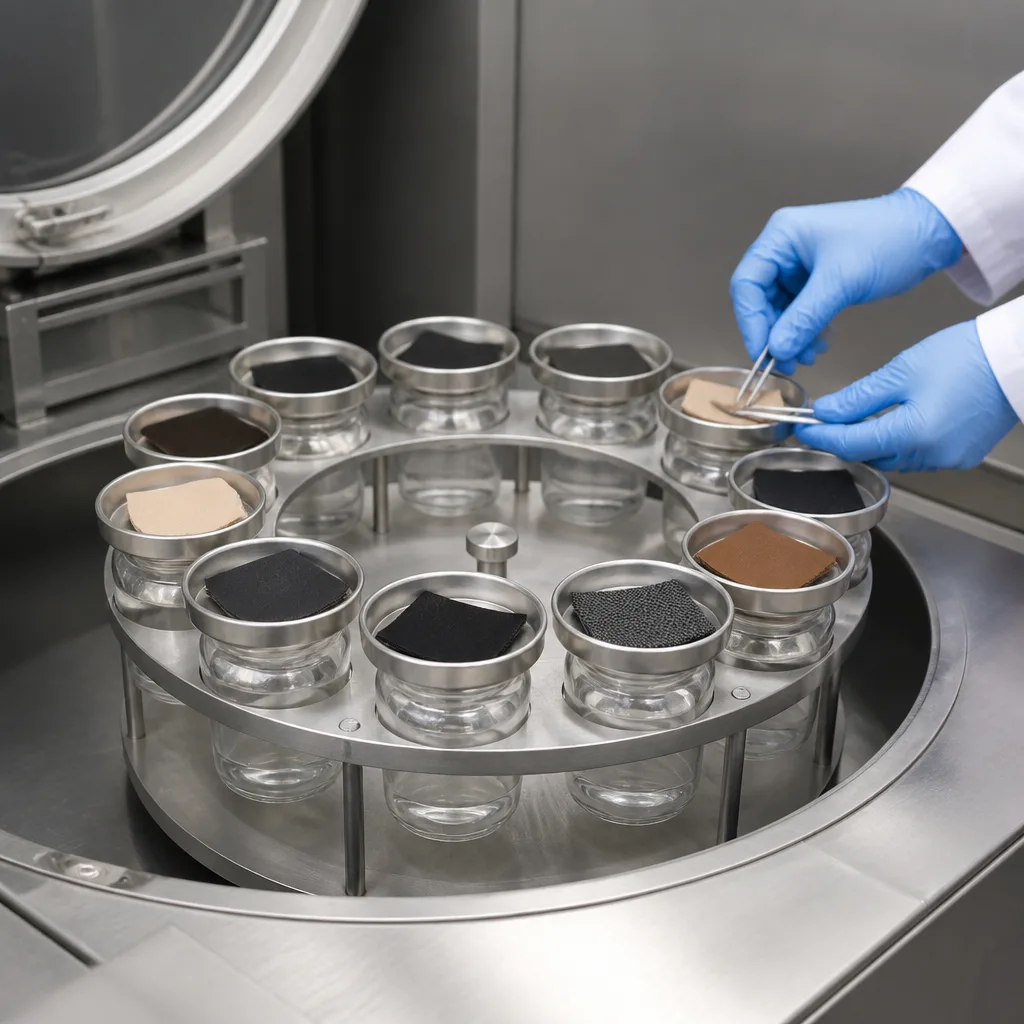
Although many GM engineering specifications have been gradually replaced by newer GMW standards, the GM 9305P standard continues to be referenced by numerous automotive testing laboratories and material suppliers as an established fogging evaluation method.
The primary purpose of the GM 9305P standard is to determine the amount of volatile organic compounds (VOCs) and semi-volatile substances released from automotive interior materials when exposed to high temperatures. This test helps manufacturers in the following areas:
Condensation occurs when volatile compounds found in polymers, adhesives, plasticizers, coatings, or foam materials evaporate under heat. These vapors move throughout the vehicle cabin and condense on cooler surfaces such as:
Thickened film can reduce transparency, create haze, attract dust, and negatively affect both appearance and safety.
The GM 9305P standard is commonly used in the following areas:
In principle, this test method simulates high temperatures inside a parked vehicle. Typically, the test follows these steps:
The resulting misting value indicates the material's tendency to emit condensable substances.
In terms of testing conditions, the procedure generally includes the following:
Consistency in sample preparation and environmental control is essential for reproducible results.
Materials are evaluated according to the following criteria:
Materials that cause excessive fogging may include the following:
The GM 9305P standard is frequently used in the following situations:
This standard is particularly important for interior materials located near the windshield, where fogging is most noticeable.
In addition to vehicle manufacturers, the GM 9305P standard is widely used by the following industries:
Tests performed according to the GM 9305P standard offer several advantages:
The GM 9305P standard belongs to a family of automotive anti-fog standards used by various vehicle manufacturers. Comparable standards include:
Many laboratories offer the GM 9305P standard, in addition to these equivalent or related methods, because original equipment manufacturers often require compliance with multiple specifications.
Modern vehicles contain hundreds of polymer-based components that are exposed to cabin temperatures exceeding 80 degrees Celsius in summer conditions. Without adequate control of volatile emissions, these materials can cause fogging, impairing visibility and degrading the interior appearance.
The GM 9305P standard provides manufacturers with a standardized method for identifying high-emission materials before they are fitted to production vehicles. This standard contributes to improving safety, passenger comfort, material quality, and compliance with General Motors' interior performance requirements by controlling fogging behavior.
In conclusion, the GM 9305P standard is a crucial engineering standard for evaluating the anti-fogging properties of automotive interior materials. By measuring the release and condensation of volatile substances at high temperatures, it helps ensure that interior components maintain optical clarity, minimize unwanted deposits on glass and upholstery, and meet the automotive industry's stringent quality expectations. Despite the introduction of newer GMW standards, this standard remains a vital reference method used by testing laboratories and suppliers involved in the development and qualification of vehicle interior materials.
For many years, our organization, with its competent and experienced staff, has been understanding the needs of its clients, providing the advanced testing services they require, and assisting them in the establishment, implementation, and improvement of management systems. Within this framework, we also provide testing services compliant with the GM 9305P standard.
To get an appointment, to get more detailed information or to request an evaluation, you can ask us to fill in our form and reach you.

