

The Ford FLTM BN 102 standard, developed by Ford Motor Company (Ford), is a series of test methods used to evaluate the flexibility and durability of automotive upholstery materials, particularly polymeric materials, coated fabrics, leather, and textiles used in vehicle interiors. This standard ensures that materials can withstand repeated bending, folding, and low-temperature exposure without cracking, delamination, or loss of functional properties.
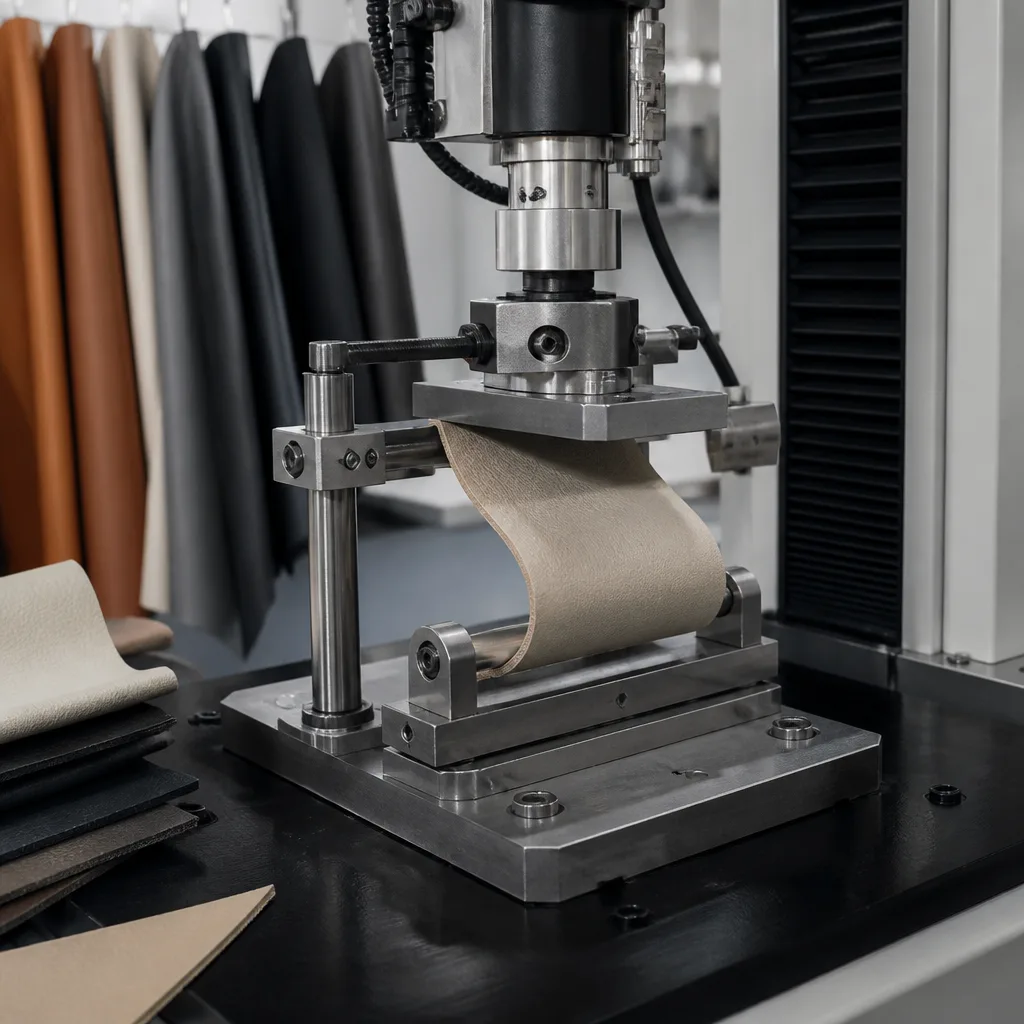
The Ford FLTM BN 102 standard series includes various test methods:
Automotive interior materials are constantly exposed to the following:
The Ford FLTM BN 102 standard series evaluates whether these materials can maintain the appearance and performance of the vehicle throughout its lifespan. The sub-sections of this standard are as follows:
The purpose of this standard is to determine whether a material retains sufficient flexibility when exposed to specified low temperatures. Materials that become brittle in cold conditions may fail during vehicle operation, assembly, or prolonged use. This test helps identify such risks before production approval.
This method is applicable to flexible polymeric materials, including:
Testing can be performed on materials as received or after aging and environmental conditioning as specified in the relevant Ford material specification.
During testing, the sample is conditioned at a specified low temperature and then bent approximately 180 degrees around a mandrel while at the test temperature to form a loop shape. After bending, the sample is examined for signs of failure.
Typical evaluation criteria include:
Materials are generally rated as pass or fail according to the requirements defined in the relevant engineering material specification.
The purpose of this standard is to determine whether a material can withstand repeated bending and compression without developing defects that could affect its appearance, durability, or performance. This method is particularly important for seat upholstery and other flexible interior trim materials.
This standard applies to:
These materials must maintain their integrity throughout the vehicle's lifespan, despite constant stretching and loading.
In principle, a sample is shaped into a cylindrical form and mounted on a stretching device. The testing machine subjects the sample to the following repeated cycles:
This repeated deformation reproduces the stresses encountered in real vehicle operation.
The test is typically performed using a tensile testing machine designed to repeatedly compress and loosen the sample under controlled conditions. The equipment ensures consistent stroke length, speed, and loading throughout the test.
After completing the necessary stretching cycles, the samples are examined for the following aspects:
Acceptance requirements are specified in the relevant Ford engineering materials specification.
The Ford FLTM BN 102-02 standard is commonly used to characterize the following materials:
These components are subjected to thousands of flex cycles over the life of a vehicle and must maintain both their appearance and functionality.
This test is designed to reveal the following durability issues:
Materials that show signs of failure may exhibit premature aging or unacceptable appearance changes during actual vehicle use.
The purpose of this standard is to evaluate the durability of textile upholstery materials when subjected to repeated bending and folding. Automotive interior materials, especially in areas that are tightly woven, compressed, or bent, undergo continuous deformation throughout their lifespan. This test helps identify materials that may crack, wrinkle, wear out, or lose their appearance prematurely.
This testing method is primarily applied in the following areas:
During testing, a sample is repeatedly folded under controlled conditions to simulate the stresses encountered during vehicle operation. The repeated folding motion creates localized stress in the material's fibers, coatings, and laminate layers. After a specific number of cycles, the sample is examined for signs of degradation.
This test method is designed to reproduce the following conditions:
After testing, the materials are examined for the following aspects:
Acceptance criteria are defined in the relevant Ford engineering materials specification.
The Ford FLTM BN 102-04 standard is frequently used for:
These materials must maintain both their structural integrity and visual appearance after repeated deformation.
Ford FLTM BN 102 standards are important because modern automotive interiors rely heavily on flexible polymers, coated fabrics, and leather-like materials that are subjected to constant bending and deformation. Without sufficient flexibility, these materials can crack, peel, or prematurely deteriorate, especially in cold climates. These standards provide a controlled method for evaluating the durability and flexibility of materials before they are approved for vehicle production. By providing resistance to low-temperature brittleness and repeated bending, it helps Ford and its suppliers deliver durable, safe, and aesthetically pleasing interior components that meet long-term customer expectations.
In short, this standard series helps manufacturers in the following areas:
Materials that pass these tests are more likely to retain their appearance and mechanical integrity throughout the vehicle's lifespan.
For many years, our organization, with its competent and experienced team, has been understanding the needs of its customers, providing the advanced testing services they require, and assisting them in the establishment, implementation, and improvement of management systems. Within this framework, we also provide testing services compliant with the Ford FLTM BN 102 standard.
To get an appointment, to get more detailed information or to request an evaluation, you can ask us to fill in our form and reach you.

