

The “PSA D47 5440 Damping behavior of porous materials” standard, developed by the French car manufacturer PSA Group (now part of Stellantis), describes a procedure for observing the evolution of the appearance (formation of spots, rings) of a part such as engine sound insulation when wet (simulation of conditions for ring formation that can be observed after passing under a tunnel or after a vehicle moves over it).
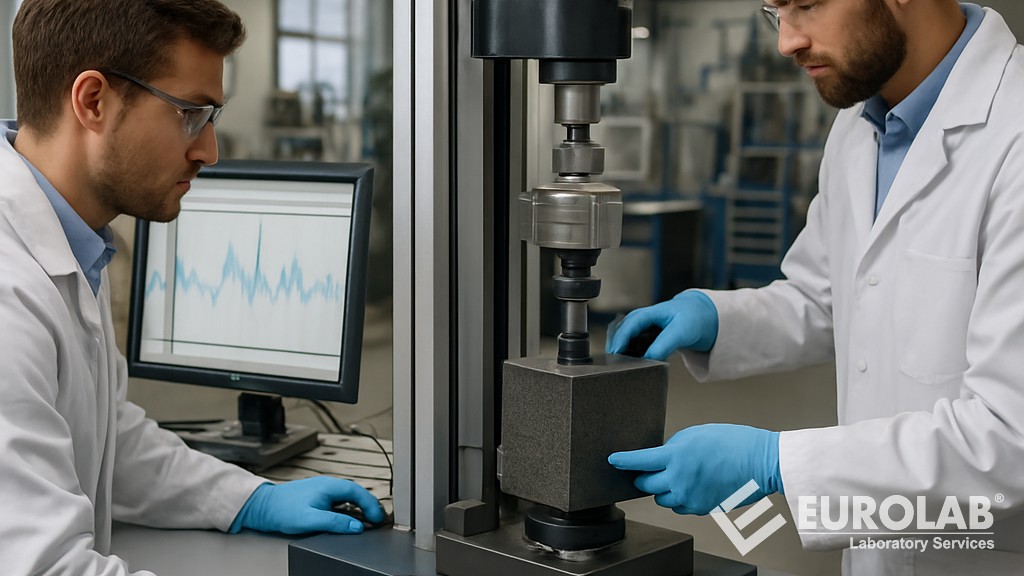
During the test, a sample of the material is poured into distilled water to allow the dissolved salts to migrate. The sample is allowed to dry, and the surface appearance is examined to note any spots or rings.
The following equipment is used in these tests:
For test specimens, 14 specimens measuring 70 mm x 200 mm are cut from highly compressed areas along the entire circumference of a part. The dimensions can be adapted for convenience and to obtain a suitable area of the part. The areas to be cut are shown as given in the standard.
The trays must be clean during testing. Distilled water is poured into the trays until it reaches a height of 20 mm.
Any blemishes, marks, or rings on the surface of the samples, and any other factors that might hinder the proper use of the method, are noted. If the dimensions of the samples differ from those specified in this method, the dimensions are noted.
In the high-risk world of automotive manufacturing, where every component must withstand the rigors of daily use, environmental impacts, and consumer expectations, the PSA D47 5440 standard plays a crucial role. This standard establishes a benchmark for testing how durable porous materials are when exposed to moisture. Today, this standard remains a cornerstone of quality assurance in vehicle interiors.
In the late 1990s, as vehicles became more sophisticated with advanced fabrics, foams, and composites, the need for rigorous testing protocols increased. Porous materials such as upholstery, carpet, headliner, and insulation present unique challenges. Unlike solid plastics or metals, they absorb liquids, leading to discoloration, warping, or deterioration over time.
Part of the broader D47 standard range, which focuses on material durability and aesthetics, the PSA D47 5440 standard is designed to simulate real-world wetting scenarios. It addresses a critical question: how do these materials maintain their appearance when exposed to water, moisture, or cleaning agents? Ultimately, a vehicle can perform flawlessly, but if the seats look faded after washing, that's an unexpected outcome.
The PSA D47 5440 standard essentially evaluates the visual and structural integrity of porous materials during and after wetting. Porous materials, by definition, possess microscopic voids that allow liquid penetration, making them susceptible to problems such as staining, swelling, or loss of color vibrancy. The test protocol employs a methodical structure that blends controlled laboratory conditions with accelerated aging, mimicking years of use within months.
The basic steps of the described method are as follows:
If a material scores below level 4 on the grayscale, it may require hydrophobic coatings or revised fiber blends.
This standard is consistent with international norms such as ISO 105-E01 (color fastness to water), but adapts them to automotive specifications such as post-wetting UV exposure, which can increase damage in sun-exposed cabins.
With the rise of electric vehicles and sustainable materials, manufacturers are facing new porosity challenges. These eco-friendly materials often absorb more moisture, leading to mold or odor problems in damp battery compartments. In this respect, compliance with the PSA D47 5440 standard is mandatory for first-tier suppliers.
For many years, our organization, with its competent and experienced team, has been understanding the needs of its clients, providing the advanced testing services they require, and assisting them in the establishment, implementation, and improvement of management systems. Within this framework, we also provide testing services compliant with the PSA D47 5440 standard.
To get an appointment, to get more detailed information or to request an evaluation, you can ask us to fill in our form and reach you.

