

The “Fiat 50180 Corrosion Tests” standard, developed by Fiat Chrysler Automobiles (FCA) (now Stellantis), an Italian-American automotive company, describes the following three methods:
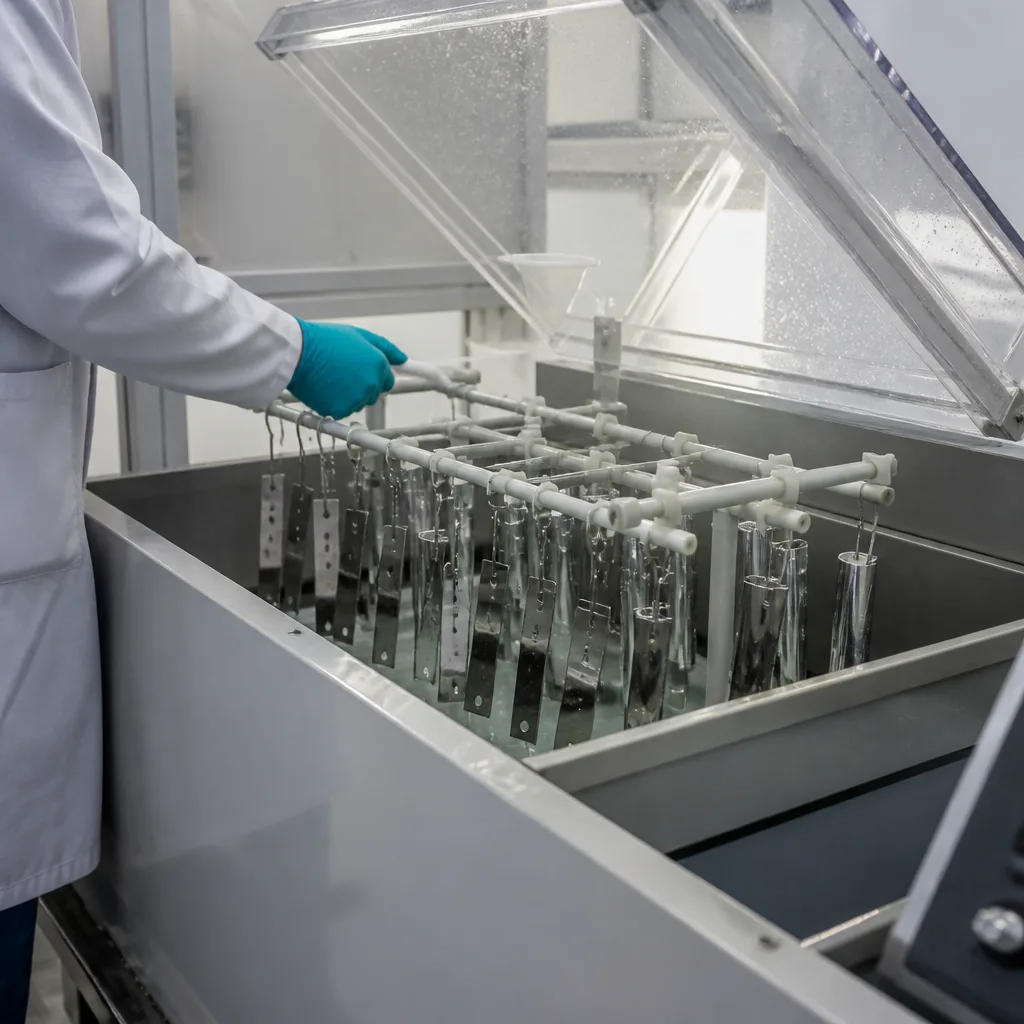
This method is a corrosion test used to evaluate the resistance of metallic coatings and coated components to highly aggressive corrosive environments. It is primarily designed for inorganic chemical coatings and electrolytic coatings such as chrome plating, zinc alloys, anodized aluminum, and decorative automotive coatings.
This method was developed to simulate the severe abrasive service conditions that automotive parts may encounter throughout their lifespan, including:
Method A3 accelerates corrosion much more aggressively than the conventional neutral salt spray test. This method has a corrosion rate approximately five times higher than method A2. This accelerated behavior allows engineers to quickly compare protective coatings and identify poor corrosion resistance before production begins.
During testing, samples are continuously exposed to a mist of the following substances: sodium chloride solution, acetic acid, and copper chloride catalyst. The addition of copper ions significantly increases corrosion activity, particularly on electroplated surfaces. Under controlled environmental conditions, the samples are placed in a sealed corrosion chamber where the atomized acidic salt solution continuously precipitates onto the test surface.
The test conditions are as follows:
This method is commonly used for the following materials:
The test generally follows these steps:
This method is the harshest of the three because copper ions accelerate electrochemical corrosion reactions.
In conclusion, the Fiat 50180 A3 method is a highly accelerated corrosion test used to evaluate the durability of metallic and electroplated automotive coatings. By exposing components to a high-temperature copper acid salt mist, the method rapidly identifies weaknesses in corrosion protection systems.
This method specifically examines how corrosion spreads beneath an organic coating after the coating surface has been deliberately scratched and damaged.
In automotive service settings, painted metal parts are often scratched during manufacturing, assembly, transportation, or vehicle operation. Once the coating is damaged, moisture and salt can penetrate beneath the paint layer, causing hidden corrosion that spreads beneath the coating film.
Method B1 is designed to simulate this failure mechanism in an accelerated laboratory environment. This test helps engineers evaluate the following:
Unlike the standard salt spray test, which primarily evaluates surface corrosion, method B1 focuses on subfilm corrosion propagation. This method is mainly applied to:
Before testing, samples are thoroughly degreased, cleaned with detergent, rinsed with water, and prepared to prevent contamination. Specifically for this method, the coating is deliberately damaged using a scratcher. The scratch simulates mechanical damage that might occur during actual vehicle use.
Method B1 uses a salt spray environment similar to the neutral salt spray test method A1. The chamber produces a continuous mist of sodium chloride solution. Typical test conditions are as follows:
Following exposure, the coating is visually inspected and measured. Typical observations include: paint blistering, undercoat abrasion, delamination, rust formation, loss of adhesion, and edge corrosion.
The B1 method is important because automotive coatings rarely fail on perfectly intact surfaces. Real-world failures begin in damaged areas where water and chloride ions penetrate beneath the coating. This test helps manufacturers in the following areas:
In summary, the Fiat 50180 B1 method is a specialized accelerated corrosion test used to evaluate the resistance of painted automotive components to subfilm corrosion after coating damage. By combining intentional scratching and salt spray exposure, this method simulates real-world coating failures resulting from scratches and mechanical wear.
This method is one of the fundamental accelerated corrosion tests used in the automotive industry for verifying coatings, electroplating processes, conversion coatings, and painted systems.
Automotive components are constantly exposed to these aggressive environmental conditions: road salt, humidity, condensation, coastal atmosphere, industrial pollution, and temperature cycling. This method was developed to recreate these corrosive conditions in a controlled laboratory environment. By accelerating corrosion processes, this test allows engineers to evaluate long-term material performance in a relatively short period of time.
This method is primarily used to evaluate the following:
Method A1 uses a neutral sodium chloride solution that is continuously atomized within a controlled corrosion chamber. The test principle is based on exposing the samples to the following:
The Fiat 50180 A1 method is technically very similar to ASTM B117 and ISO 9227 standards and SAE International automotive corrosion applications. However, Fiat defines its own parameters to meet vehicle durability requirements:
Method A1 is commonly used to test the following:
This method is especially important for components mounted in the following locations:
Maintaining the correct purity of the solution is crucial, as metallic contamination can significantly alter corrosion behavior. To ensure reproducibility, the mist must be evenly distributed over all samples.
Following exposure, samples are visually inspected for corrosion damage. Typical evaluation parameters include:
In summary, the Fiat 50180 A1 method is a neutral salt spray corrosion test used to evaluate the durability of metallic materials and protective coatings under accelerated salt water exposure conditions. This method provides a standardized laboratory approach to assess corrosion resistance in automotive applications.
For many years, our organization, with its competent and experienced staff, has been understanding the needs of its customers, providing the advanced testing services they require, and assisting them in the establishment, implementation, and improvement of management systems. Within this framework, we also provide testing services in accordance with the Fiat 50180 standard.
To get an appointment, to get more detailed information or to request an evaluation, you can ask us to fill in our form and reach you.

