

When determining the corrosion performance for a particular coating system, substrate, process, or design, the laboratory test procedure described in the “SAE J2334 Automotive Cyclic Corrosion Test” standard developed by the American Society of Automotive Engineers (SAE) should be used. This standard can be used as both a validation tool and an improvement tool, as it requires field testing. If corrosion mechanisms other than cosmetic or general corrosion are to be investigated using this test, field testing must be performed.
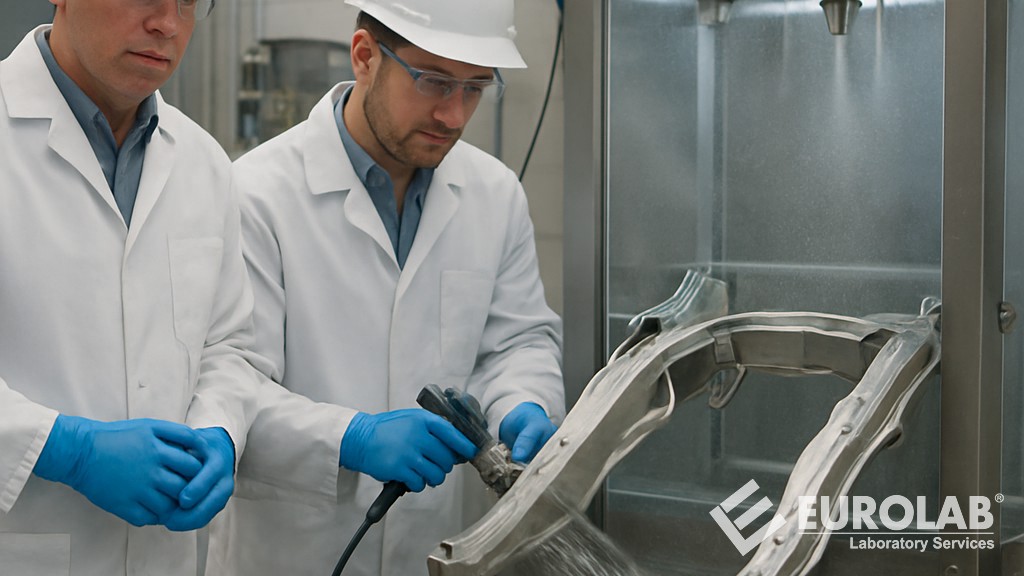
The SAE J2334 standard is used to evaluate the performance of coated automotive materials, substrates, processes, and designs. This standard provides automotive original equipment manufacturers and suppliers with a standard procedure for testing the ability of their coatings to protect against corrosion from outdoor conditions. Because this test provides better correlation with corrosive environments than typical salt spray tests, it is a great tool to aid in the development and qualification of coatings.
The solution can be applied using any of three techniques: direct spraying (shower), atomized mist, or sample immersion. Spraying is the most commonly used method.
In the high-risk automotive manufacturing world, where vehicles must withstand harsh environmental conditions ranging from coastal salt spray to freezing winters, corrosion protection is paramount. The SAE J2334 standard has become a cornerstone for evaluating the durability of automotive coatings, substrates, and designs. Unlike traditional salt spray tests that run continuously, the SAE J2334 standard provides more accurate predictions about long-term performance by mimicking real-world cyclical exposure.
The SAE J2334 standard test method is a field-dependent cyclical method, meaning it is designed to accelerate and simulate outdoor conditions in a controlled laboratory environment. This standard draws upon standards such as ASTM D2247 (humid conditions), ASTM D1735 (running coil coatings), and SAE J1563 (environmental test chambers).
The test is performed in repeating cycles, each lasting approximately 24 hours (although exact durations may vary). Generally, the cycles are as follows:
Mass loss coupons (typically uncoated carbon steel panels) are included to gauge test severity, targeting corrosion of approximately 3,0 kg Fe/m2 per year. A full test typically lasts at least 60 days (up to 4.320 hours), and assessments focus on cosmetic corrosion such as blistering, scratching (cross-scratching), and rust seepage. This cyclical approach (wet, spray, dry) involves approximately 18 percent wet surface time, which is far more realistic than the 100 percent humidity of neutral salt spray tests.
The SAE J2334 standard addresses a critical problem: continuous salt spray tests (e.g., ASTM B117 standard) often exaggerate corrosion, leading to over-engineered and costly coatings. Closely correlated with field data, the SAE J2334 standard provides better validation during development and quality control. It is particularly vital for galvanized steels (electrogalvanized, hot-dip galvanized, annealed galvanized) used in automotive bodies. Even the slightest coating defects in these types of steel can lead to punctures or aesthetic flaws.
Major original equipment manufacturers have made this mandatory, making it an industry staple. Ongoing updates increase precision for emerging materials such as aluminum panels.
The SAE J2334 standard applies not only to vehicles but also to all coated metals requiring outdoor durability assessment.
In short, the SAE J2334 standard is not just a test; it ensures vehicles are protected from corrosion for longer periods. As electric vehicles and advanced materials become more common, this standard is expected to evolve further to address new challenges, such as those faced by battery housings.
For many years, our organization, with its competent and experienced staff, has been understanding the needs of its customers, providing the advanced testing services they require, and assisting in the establishment, implementation, and improvement of management systems. Within this framework, we also provide testing services in accordance with the "SAE J2334 Automotive Cyclic Corrosion Test" standard.
To get an appointment, to get more detailed information or to request an evaluation, you can ask us to fill in our form and reach you.

