Fiat PF-90045 Flocking on Non-Metallic Materials for Automotive Interior Surfaces
Developed by Fiat Chrysler Automobiles (FCA) (now Stellantis), an Italian-American automotive company, the “Fiat PF-90045 Flocking on Nonmetallic Materials for Automotive Interior Surfaces” standard is an automotive material specification used to evaluate flocked interior components installed in vehicle cabins. This standard focuses on flock coatings applied to nonmetallic substrates such as plastics, composite panels, glove box interiors, and trim pieces. The primary goal of this standard is to ensure that flocked surfaces maintain their appearance, adhesion, durability, and safety throughout the vehicle's lifespan.
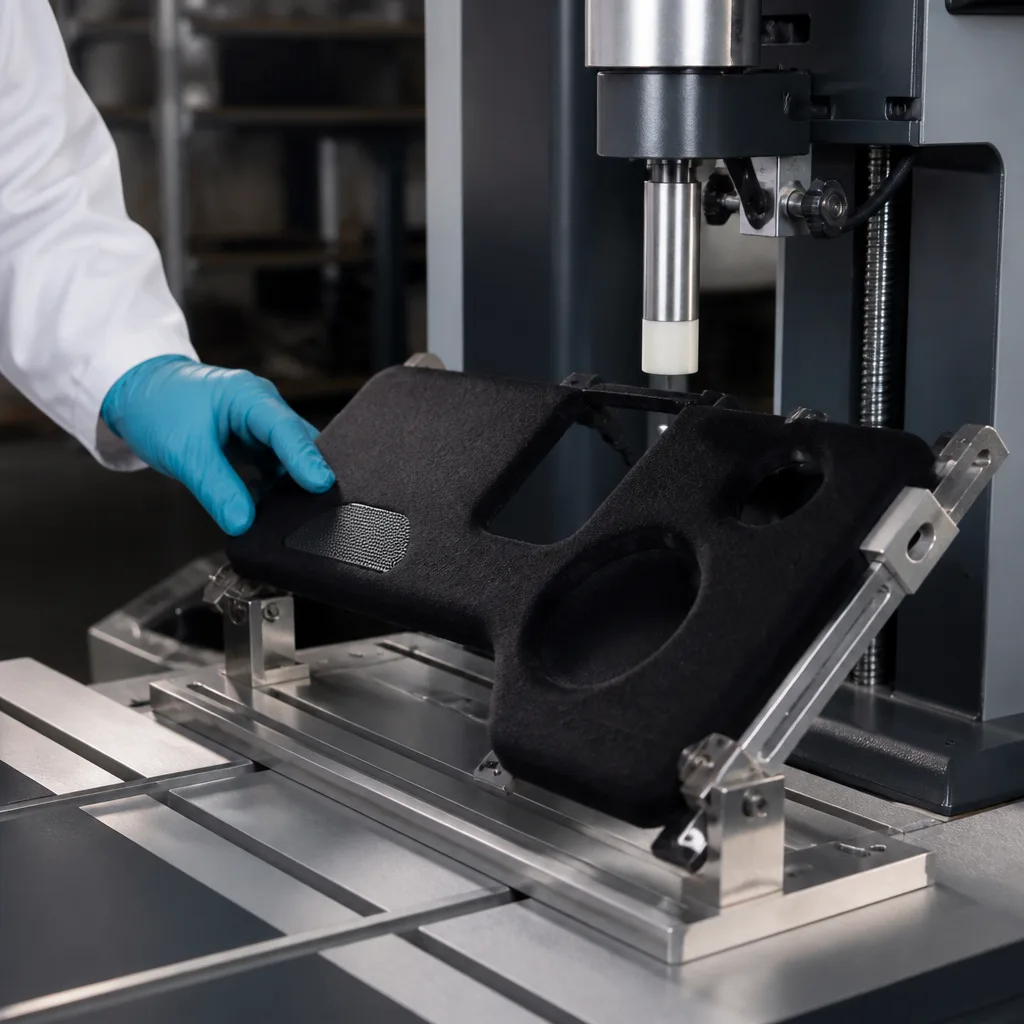
Flock coating is a surface treatment process in which very short textile fibers are electrostatically applied to an adhesive-coated substrate. The result is a soft, velvety surface, which...
- It reduces noise and rattling.
- Increases scratch resistance.
- Improves perceived indoor quality.
- It prevents items from sliding around in the storage compartments.
- It improves the sense of touch.
Typical automotive applications include:
- Inside the glove compartments
- glove compartment lids
- Storage compartments
- Door pockets
- Console compartments
- Interior trim accessories
The Fiat PF-90045 standard specifically addresses these velvet-covered interior parts. This standard defines the qualification requirements to verify that velvet-covered interior materials can withstand:
- Mechanical wear
- Exposure to heat
- moisture aging
- Thermal cycle
- Adhesion stress
- Chemical exposure
- Flammability requirements
Without such testing, velvet layers can peel, fade, wear out, or stain vehicle interiors with prolonged use.
The basic test categories defined in the Fiat PF-90045 standard are as follows:
- Adhesion test: Adhesion tests determine whether flock fibers remain firmly adhered to the substrate after environmental aging. Examples include:
- Adhesion after moisture aging
- Adhesion after thermal cycling.
- Friction adhesion resistance
This standard includes the following procedures:
- Adhesion after moisture exposure.
- Adhesion after thermal cycling exposure.
- Friction adhesion test
These tests help ensure that the flock material does not separate during years of vehicle use.
- Abrasion resistance test: Abrasion resistance is one of the most critical assessments in the standard. This standard addresses resistance to wear or tear under load conditions. The velvet surface is mechanically rubbed to simulate the following repeated consumer interactions:
- Opening and closing of the compartments
- Shifting the stored items
- hand contact
- Cleaning procedures
The aim is to evaluate the following:
- Fiber retention
- Surface appearance
- Color stability
- Tissue breakdown
This standard explicitly refers to wear resistance testing under load.
- Climate and thermal aging: This standard incorporates environmental durability tests to simulate real automotive cabin conditions. These assessments include:
- High temperature storage
- Moisture exposure
- climate cycle
- Thermal shock conditions
This standard includes the following sections:
- heat aging
- Climate storage
- Climate change / thermal cycle
These tests are very important because automotive interiors can be exposed to temperatures exceeding 80 degrees Celsius when exposed to sunlight.
- Flammability requirements: Vehicle interior materials must comply with fire safety regulations. The following standards are referenced in this regard:
- FMVSS 302 flammability test
- GB 8410 combustion behavior test
These tests evaluate:
- Flame propagation speed
- Spontaneous extinguishing behavior
- Passenger compartment fire safety
The sectors and suppliers using the Fiat PF-90045 standard are as follows:
- Automotive interior suppliers
- Plastic injection molding companies
- Flocking process suppliers
- Adhesive manufacturers
- Original equipment manufacturer material laboratories
- Automotive testing laboratories
Tests are typically performed by accredited automotive laboratories specializing in original equipment manufacturer standards.
Typical characteristics evaluated according to the Fiat PF-90045 standard include:
- Adhesion strength: Prevents fiber separation.
- Abrasion resistance: Maintains its appearance during use.
- Heat resistance: Prevents deterioration at high cabinet temperatures.
- Moisture resistance: Providing stability in humid environments.
- Chemical resistance: Resistance to cleaners and pollutants.
- Flammability: Compliance with automotive fire safety regulations.
- Visual appearance: Maintaining superior interior aesthetics.
The Fiat PF-90045 standard is necessary because velvet-covered interior components are subjected to continuous mechanical, environmental, and safety stresses throughout a vehicle's lifespan. Without specific specifications, the quality and durability of velvet-covered surfaces can vary significantly between suppliers, leading to premature failures and customer complaints. This standard is considered important for the following reasons:
- It ensures long-lasting fiber adhesion: Its spectrum consists of thousands of short fibers bonded to a substrate using adhesive. If the adhesive system is inadequate, the fibers...
- Detachable during normal use.
- It can spill into the passenger compartment.
- It can create a worn or patched appearance.
This standard verifies that the fibers remain tightly bonded after exposure to heat, moisture, and thermal cycling.
- Prevents premature wear: Many fiber-coated components are frequently touched or used, including:
- glove compartments
- Door pockets
- Storage compartments
- Center console compartments
Repeated contact with hands, keys, cell phones, and other objects can cause wear. This standard evaluates wear resistance to ensure the surface maintains its appearance and functionality over time.
- It simulates real vehicle environmental conditions: Vehicle interiors are subjected to extreme conditions such as:
- Summer temperatures exceeding 80 degrees in direct sunlight.
- High humidity in tropical climates
- Cold winter temperatures
- Rapid temperature changes
This standard helps ensure long-term performance by subjecting materials to environmental aging tests that simulate these conditions.
- It preserves the interior appearance and perceived quality: Velvet surfaces are often used to create a superior look and feel with a soft touch. Deterioration of velvet can lead to:
- Visible bald spots
- Color changes
- Irregular tissue
- Surface contamination caused by loose fibers.
This standard helps maintain the aesthetic quality that vehicle customers expect throughout the product's lifespan.
- Reduces noise and rattling problems: One reason velvet lining is used in storage compartments is to reduce the noise created by objects rubbing against hard plastic surfaces. If the velvet lining wears out,
- Noise levels may increase.
- Clicking sounds may occur.
- Customer satisfaction may decrease.
This standard helps ensure that the velvet layer remains effective at noise reduction over time.
For many years, our organization, with its competent and experienced staff, has been understanding the needs of its customers, providing the advanced testing services they require, and assisting them in the establishment, implementation, and improvement of management systems. Within this framework, we also provide testing services in accordance with the Fiat PF-90045 standard.



