

The “GMW 6992 Visual Appearance Assessment” standard, developed by General Motors Worldwide (GMW), is an engineering standard used to create a controlled and consistent method for evaluating the visual appearance of vehicle components and materials. This standard is particularly important for assessing whether parts meet General Motors’ intended requirements for appearance, color, surface, texture, gloss, and overall visual quality.
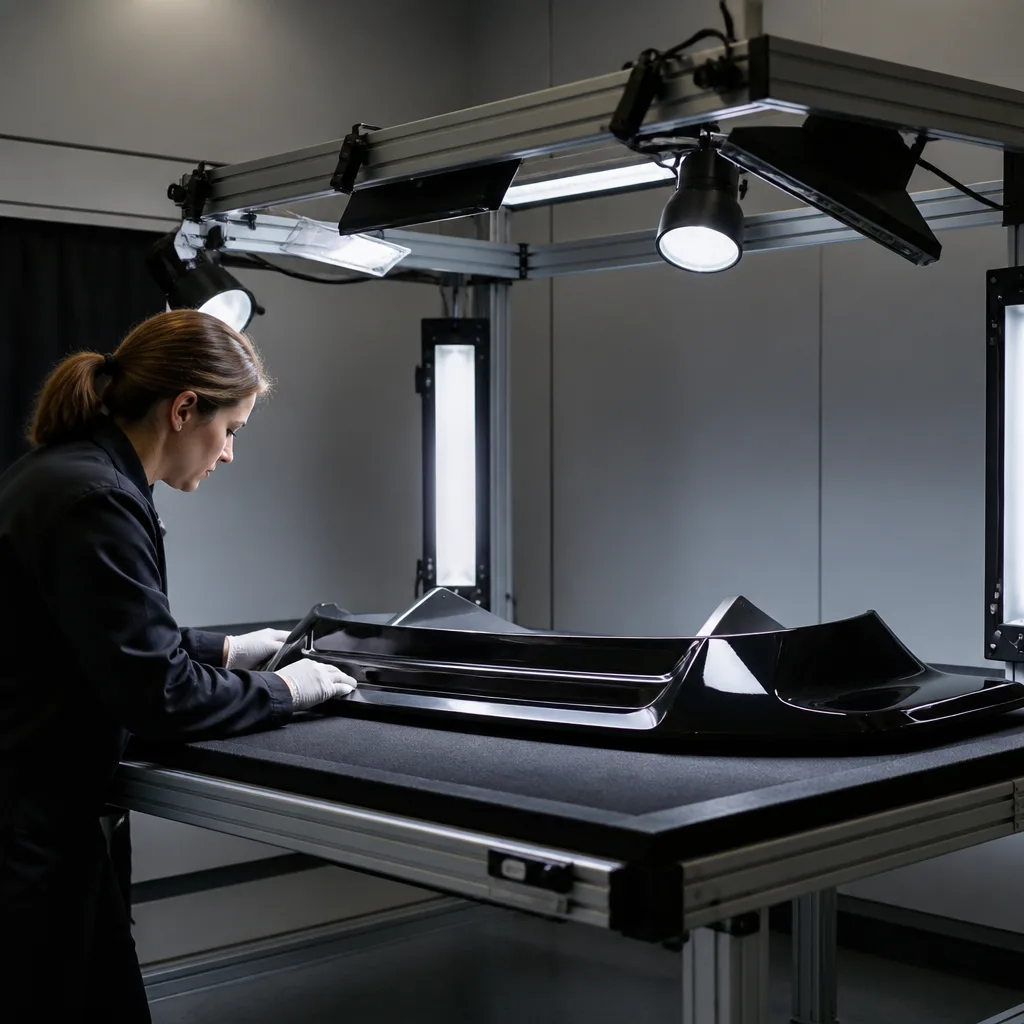
The primary goal of the GMW 6992 standard is to make visual assessments repeatable and consistent. Visual appearance can be subjective. Two inspectors might examine the same automotive component under different lighting conditions and arrive at different conclusions. Therefore, the GMW 6992 standard specifies controlled conditions for the following:
This standard is designed for components with appearance requirements and supports General Motors’ goal of achieving consistent appearance quality across its vehicles.
The GMW 6992 standard is applicable to a wide range of automotive components. Specifically, it defines applications involving interior, exterior, under-the-hood, and other components with appearance requirements. Examples include:
The GMW 6992 standard is not just a color measurement standard. It can encompass various features related to overall visual appearance.
Color measurement can also be supported by instrumental methods. For example, accredited laboratories list this standard for color measurement along with ASTM D2244, SAE J1545, and ISO 3668 standards.
This is especially important for molded plastics, synthetic leather, and other textured automotive surfaces.
A key concept in the GMW 6992 standard is comparison with an approved baseline or target. A component isn't necessarily judged simply as good or bad. Instead, its appearance is compared to a defined reference. This approach is important because automotive components often need to visually function within a vehicle. For example, an instrument panel component and an adjacent trim component might be made from different materials.
Lighting is one of the most important elements in visual appearance assessment. A material may appear different under the following conditions:
In conclusion, the GMW 6992 standard specifies controlled viewing conditions so that different inspectors and facilities can obtain more comparable results. This standard includes references to lighting such as D65 daylight and cool white fluorescent (CWF). This is particularly important for materials with metameric behavior, where two colors match under one light source but appear different under another.
Meanwhile, the evaluator's skill is also important. This standard includes an appendix regarding color perception ability for personnel performing color evaluations for material color development and part appearance approval. This demonstrates an important principle: visual inspection depends not only on equipment and lighting, but also on the skill of the person performing the evaluation.
The GMW 6992 standard can also be used to evaluate changes in appearance between control and exposed samples. For example, a material might be exposed to:
The exposed sample can then be compared to an unexposed control sample to determine if its visual appearance has changed.
The evaluation process generally follows these steps:
The exact equipment, lighting configuration, acceptance criteria, and evaluation requirements are included in the GMW 6992 standard.
It is important to distinguish visual evaluation from purely instrumental color measurement. A spectrophotometer can provide numerical color data, but a numerical result does not always describe the complete visual impression of an automotive component. For example, two parts may have similar measured color values but appear different due to gloss, grain structure, texture, orientation, or special effect behavior. Therefore, GMW 6992 provides a framework for controlled visual appearance evaluation, while instrumental methods provide quantitative supporting data.
The GMW 6992 standard is important because appearance is a quality attribute visible to the customer. A component may meet dimensional and mechanical requirements, but still be unacceptable if it looks different from surrounding components. This standard helps suppliers in the following areas:
In conclusion, the GMW 6992 standard is particularly valuable for automotive suppliers because it provides a common basis for determining whether a component visually meets its intended appearance and whether different components meet the required vehicle compatibility.
For many years, our organization, with its competent and experienced staff, has been understanding the needs of its clients, providing the advanced testing services they require, and assisting them in the establishment, implementation, and improvement of management systems. Within this framework, we also provide testing services in accordance with the GMW 6992 standard.
To get an appointment, to get more detailed information or to request an evaluation, you can ask us to fill in our form and reach you.

