

Ford FLTM BN 024-02 Flammability Test for Automotive Interior Materials
The “Ford FLTM BN 024-02 Combustion Test for Automotive Interior Materials” standard, developed by Ford Motor Company (Ford), describes a test method used to evaluate the flammability properties of automotive interior materials. This standard is designed to determine the combustion rate of materials used in vehicle passenger compartments and to verify compliance with applicable fire safety requirements for automotive interiors.
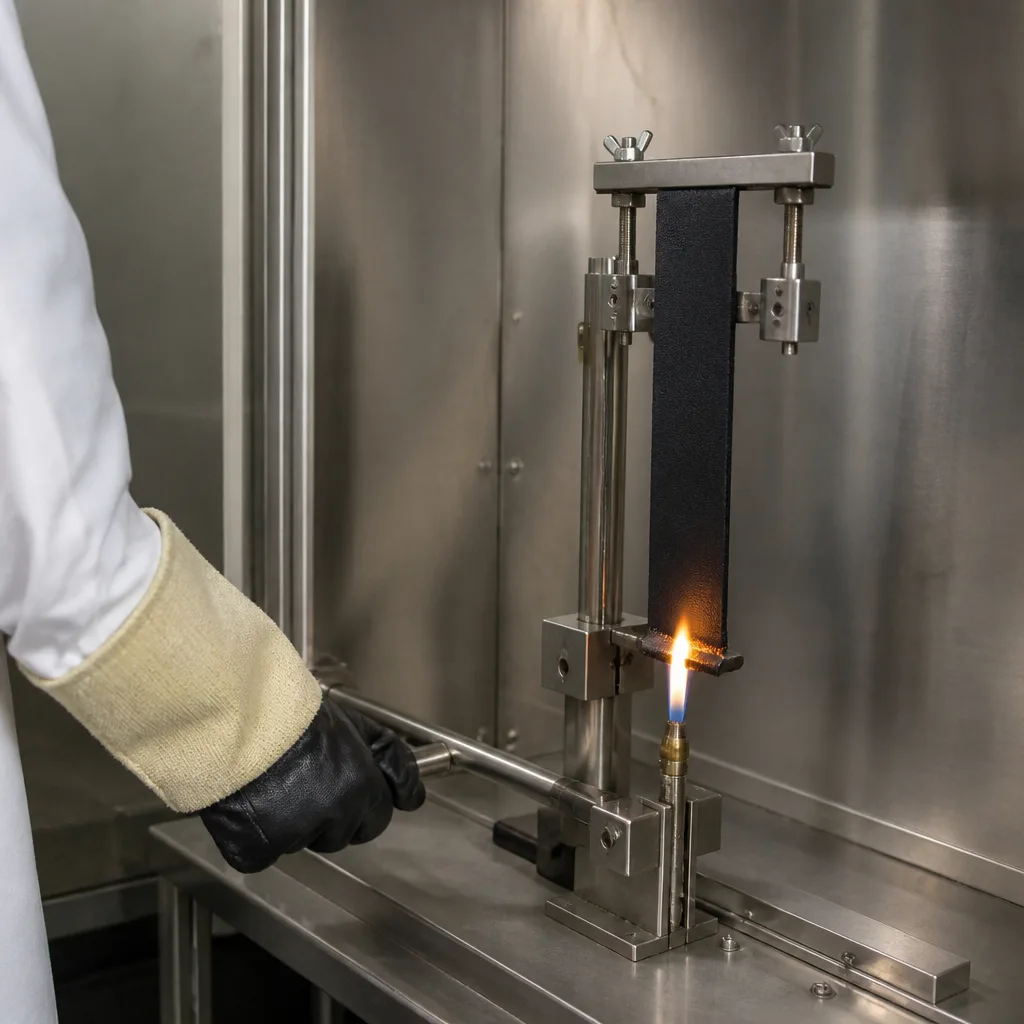
The primary purpose of the Ford FLTM BN 024-02 standard is to measure how quickly a material burns when exposed to a specific ignition source. This test method is applicable to:
- Interior furnishing materials
- Textile fabrics
- Vinyl coatings
- Foam components
- plastic parts
- Composite structures
- Finished components and assemblies
- Proxy test plates representing production materials.
This method supports compliance with automotive fire safety regulations, including requirements similar to the US Federal Motor Vehicle Safety Standard, FMVSS 302.
The Ford FLTM BN 024-02 standard applies to materials used in the following vehicles:
- Passenger cars
- Multi-purpose passenger vehicles
- Trucks
- Buses
This standard evaluates whether materials meet Ford's flammability performance criteria. These criteria also include stricter internal requirements for specific applications where ignition resistance is critical.
The described test method essentially follows these steps:
- A test sample of specific dimensions is prepared.
- The sample is conditioned under controlled environmental conditions.
- The sample is placed horizontally in a test chamber.
- A standardized flame is applied for a specific period of time.
- Flame spread distance and burning speed are measured.
- The following properties of the material are recorded:
- Whether it continues to burn
- Whether it extinguished itself or not
- Whether it meets the specified combustion rate requirement.
The resulting combustion rate is usually expressed in millimeters per minute. Materials that exhibit slower flame spread are considered safer for vehicle occupants.
Materials commonly tested under this standard include:
- Upholstery fabrics
- Leather and synthetic leather
- Ceiling tiles
- Carpets
- mats
- Door trim panels
- Instrument panel trims
- Interior insulation materials
- Polymeric decorative films
- Foam cushions
These materials must demonstrate acceptable flame spread resistance before being approved for vehicle production.
The Ford FLTM BN 024-02 standard generally evaluates the following:
- Burning rate: The rate at which a flame spreads.
- Spontaneous extinction behavior: The ability to stop burning without a sustained flame.
- Flame spread distance: The extent of combustion along the sample.
- Ignition resistance: Sensitivity to ignition.
- Compliance status: Pass/fail according to Ford requirements.
The main benefits of this standard are as follows:
- Consistent testing across suppliers and laboratories.
- Verification of compliance with legal regulations.
- Improved passenger safety
- Reducing the risk of fire inside the vehicle.
- Improved material qualification procedures
- Support for global vehicle certification programs
The FLTM BN 024-02 standard is closely aligned with automotive flammability regulations and is commonly used in conjunction with:
- FMVSS 302 standard
- CMVSS 302 standard
- Ford interior material specifications
- Vehicle component qualification requirements
In short, this testing method provides a controlled laboratory procedure to ensure that materials meet both legal regulations and Ford's specific fire performance expectations.
The Ford FLTM BN 024-02 standard is important because it evaluates the flammability performance of materials used in a vehicle's passenger compartment. Vehicle interiors contain numerous flammable materials such as fabrics, foams, plastics, carpets, and upholstery components. If these materials ignite, they can cause a fire to spread rapidly, increase smoke production, and shorten the evacuation time for passengers. The main reasons why this standard is considered necessary are as follows:
- Enhances passenger safety: The primary goal of this standard is to ensure that interior materials do not support rapid flame spread. Slow-burning or self-extinguishing materials provide passengers with extra time to react and exit the vehicle in the event of a fire.
- It supports compliance with regulations: Many countries require vehicle interior materials to meet flammability requirements such as FMVSS 302 (United States) and CMVSS 302 (Canada). The Ford FLTM BN 024-02 standard helps Ford verify that materials meet these regulatory requirements before being approved for production.
- It reduces the spread of fire within the cabin: A small ignition source, such as an electrical short circuit, an overheated component, a cigarette, or an external flame, can ignite interior materials. This standard ensures that the materials resist flame spread and prevent a localized fire from rapidly engulfing the passenger compartment.
- It ensures consistent material availability: Ford sources materials from suppliers around the world. This standard defines a uniform testing method that allows all suppliers to evaluate materials under the same conditions. This consistency improves material quality and simplifies approval processes.
- It helps with material development: Material manufacturers use test results to make improvements in the following areas:
- Polymer formulations
- Flame retardant systems
- Foam structures
- Textile structures
- Composite materials
This encourages the development of safer automotive materials that exhibit higher fire resistance.
- It preserves vehicle integrity: Flame-resistant materials help limit secondary damage in the following areas:
- Cable harnesses
- Electronic modules
- Interior trim systems
- Safety equipment
Reducing the spread of fire can minimize vehicle damage and improve post-incident safety.
- Supporting Ford’s global quality requirements: Ford implements internal standards that may be stricter than minimum legal requirements. The Ford FLTM BN 024-02 standard helps ensure that materials meet Ford’s expectations for safety, durability, and quality across all vehicle programs and production sites.
In conclusion, the Ford FLTM BN 024-02 standard is a critical safety standard as it verifies that automotive interior materials possess acceptable flammability characteristics. By controlling flame spread and combustion rate, this standard helps protect vehicle occupants, supports regulatory compliance, ensures consistent supplier qualification, and contributes to the overall fire safety performance of Ford vehicles.
For many years, our organization, with its competent and experienced staff, has been understanding the needs of its customers, providing the advanced testing services they require, and assisting them in the establishment, implementation, and improvement of management systems. Within this framework, we also provide testing services to businesses in accordance with the Ford FLTM BN 024-02 standard.

