

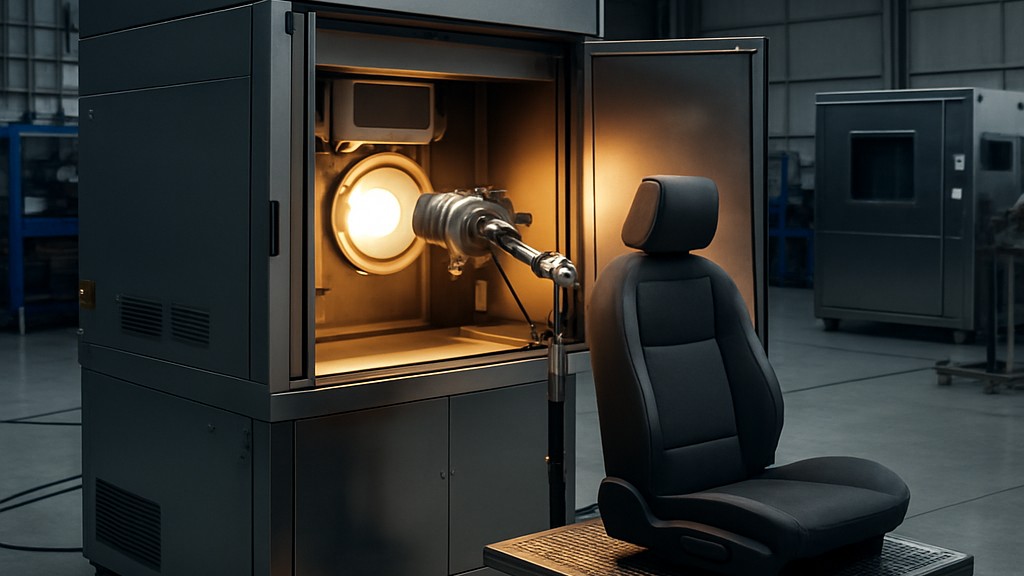
The standard “SAE J2412 Accelerated exposure of automotive interior trim components using controlled-beam xenon arc apparatus,” developed by the American Society of Automotive Engineers (SAE), describes the operating procedures for controlled-beam, xenon arc apparatus used for accelerated exposure of various automotive interior trim components.
Any exceptions to the test duration and sample preparation and performance evaluation procedures in this standard are addressed in the material specifications of the individual automotive manufacturers. Any deviations from this test method, such as filter combinations, must be agreed upon between the contracting parties.
This standard replaces the previously published standard “SAE J1885 Accelerated exposure of automotive interior trim components using a controlled radiation water-cooled xenon arc apparatus.”
SAE J2412 is a performance-based standard for accelerated weathering that uses a xenon arc as a light source to simulate indoor sunlight exposure. This standard invokes ASTM G155 when specifying specific testing and monitoring conditions. Testing against ASTM G155 using an appropriate combination of filters reproduces the effects of weathering when materials are exposed to sunlight through window glass, heat, and humidity.
Unlike ASTM G155, which requires the specification of many parameters, the SAE J2412 standard is quite specific about which test conditions should be used. It also differs from SAE J2527 in that it simulates indoor conditions rather than outdoor conditions. The operating parameters are as follows:
The SAE J2412 standard requires the use of reference polystyrene chips to monitor test performance. The chips are exposed for a specified time interval. The chip color is monitored on the b-axis according to ASTM D2244, and the color change is monitored for each time interval. The measured color change must be within the acceptable range specified by the reference polystyrene chip supplier.
In short, SAE J2412 is a widely recognized standard developed to evaluate the durability of automotive interior trim materials under accelerated weathering. Specifically, it defines test procedures for simulating the effects of sunlight, heat, and humidity using a xenon arc light source. This standard plays a key role in automotive materials development and quality assurance.
The primary purpose of the SAE J2412 standard is to predict the long-term performance of interior materials such as plastics, fabrics, leather, and veneers when exposed to sunlight and environmental stressors. This allows manufacturers to evaluate colorfastness, fading, cracking, brittleness, and other forms of deterioration before the materials are installed in vehicles.
The key elements of this standard are:
The SAE J2412 standard is typically used in:
SAE J2412 is often used in conjunction with SAE J1885, which specifies post-exposure performance requirements. SAE J2412 outlines the exposure method, while SAE J1885 focuses on pass-fail criteria, making them complementary standards.
The SAE J2412 standard is important because it provides a standardized and reliable method for evaluating how automotive interior materials will perform over time when exposed to sunlight and environmental stresses. Key reasons for this standard's importance include:
In short, the SAE J2412 standard is important because it helps the automotive industry ensure that interior materials are durable, reliable, and aesthetically consistent over time. It's a crucial tool in product development, supplier validation, and maintaining high standards for consumer vehicles.
Our organization, which has been supporting businesses across all sectors for years through a wide range of testing, measurement, analysis, and evaluation activities, boasts a strong team of employees who closely follow global developments in science and technology and are constantly improving themselves. In this context, we also provide testing services in accordance with the standard "SAE J2412 Accelerated Exposure of Automotive Interior Trim Components Using Controlled Irradiation Xenon Arc Apparatus."
To get an appointment, to get more detailed information or to request an evaluation, you can ask us to fill in our form and reach you.

