

The “Renault D27 1911 Rubber and plastic paint coatings - Artificial aging using an air gauge” standard, developed by the French automobile company Renault, describes the conditions that must be followed to determine the resistance of a material to the effects of an artificial light source under specific wetting and temperature conditions. This method is an attempt to simulate the aging of materials when exposed to light and harsh weather conditions. This method is applicable to paint coatings and all other exterior parts made of rubber or plastic, fully colored, painted or unpainted. It is also applicable to sealants, tarpaulins and windows.
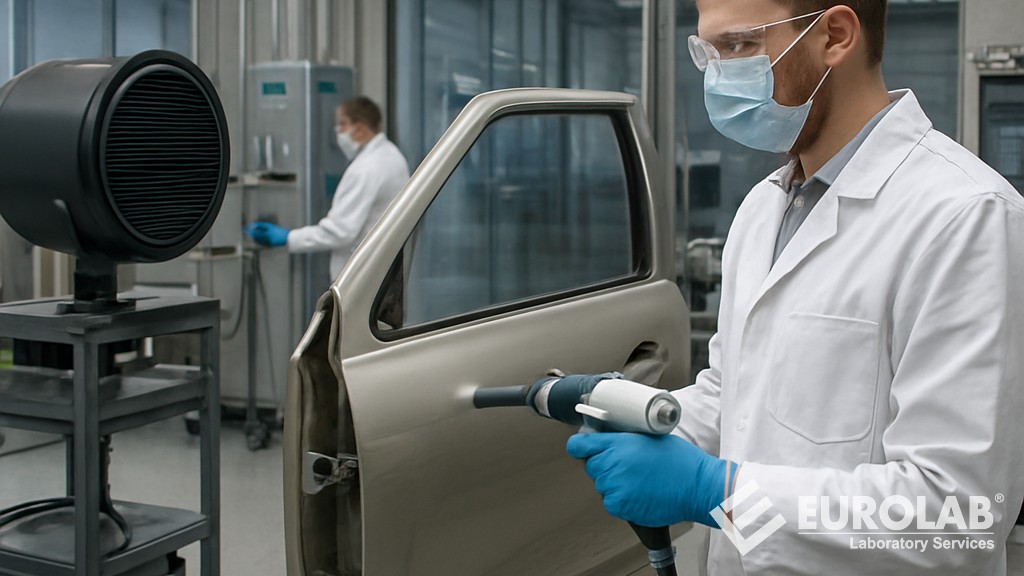
This testing method consists of subjecting one or more material samples to a cycle of sunlight simulation combined with a filtered xenon lamp and intermittent rain simulation. Damage is then assessed visually by comparison with an unexposed reference piece, or using colorimetric or other tests.
The Renault D27 1911 standard is a key specification in the automotive industry's quality assurance protocols, particularly for evaluating the durability of paint coatings applied to rubber and plastic components. The described test method focuses on simulating long-term environmental exposure through accelerated artificial aging in a controlled laboratory environment using a weather gauge. It ensures that coatings on flexible surfaces, common in modern vehicle interiors, exteriors, and seals, can withstand real-world degradation without cracking, fading, or losing adhesion.
The Renault D27 1911 standard targets coatings on non-rigid materials that are prone to unique types of failure due to substrate flexibility. The primary aim is to determine how these coatings will perform over years of service life by compressing natural wear, which typically occurs over months or years, into days or weeks. This is critical for automotive suppliers, as failures in rubber and plastic coatings can lead to aesthetic issues (e.g., chalking or discoloration) or functional problems (e.g., reduced sealing in air strips).
A weather meter (or weather-ometer) is an accelerated weather testing device that mimics outdoor conditions indoors. Popular models include xenon arc weather meters and QUV fluorescent UV testers. These devices expose samples to:
Xenon arc lamps are ideal for automotive coatings, providing the closest spectrum to natural sunlight. Testing shows that degradation is accelerated 10-100 times compared to outdoor exposure.
The described test method generally involves the following steps:
Passing criteria are defined in the standard and generally require minimal change after equivalent years of simulated exposure.
Rubber and plastic surfaces stretch, expand/contract with heat, which puts more stress on paint films than metal. Artificial aging introduces problems such as:
This standard complements other standards such as Renault D47 1431 (filiform corrosion) or ISO 11341 (xenon arc test).
The Renault D27 1911 standard is mandatory for suppliers. In an era dominated by extended warranties and sustainable materials, such testing helps manufacturers create longer-lasting coatings, reduce recalls, and minimize environmental impact. This standard is a fully modern engineering protocol to improve vehicle reliability through rigorous materials science.
The Renault D27 1911 standard is considered important for the following reasons:
In short, this standard is a crucial quality assurance standard used to ensure that automotive coatings are long-lasting, reliable, and aesthetically stable.
For many years, our organization, with its competent and experienced staff, has been understanding the needs of its customers, providing the advanced testing services they require, and assisting in the establishment, implementation, and improvement of management systems. Within this framework, we also provide testing services to businesses in accordance with the "Renault D27 1911 Rubber and plastic paint coatings - Artificial aging using air gauges" standard.
To get an appointment, to get more detailed information or to request an evaluation, you can ask us to fill in our form and reach you.

