

GMW 16449 Electrical Component Fluid Compatibility
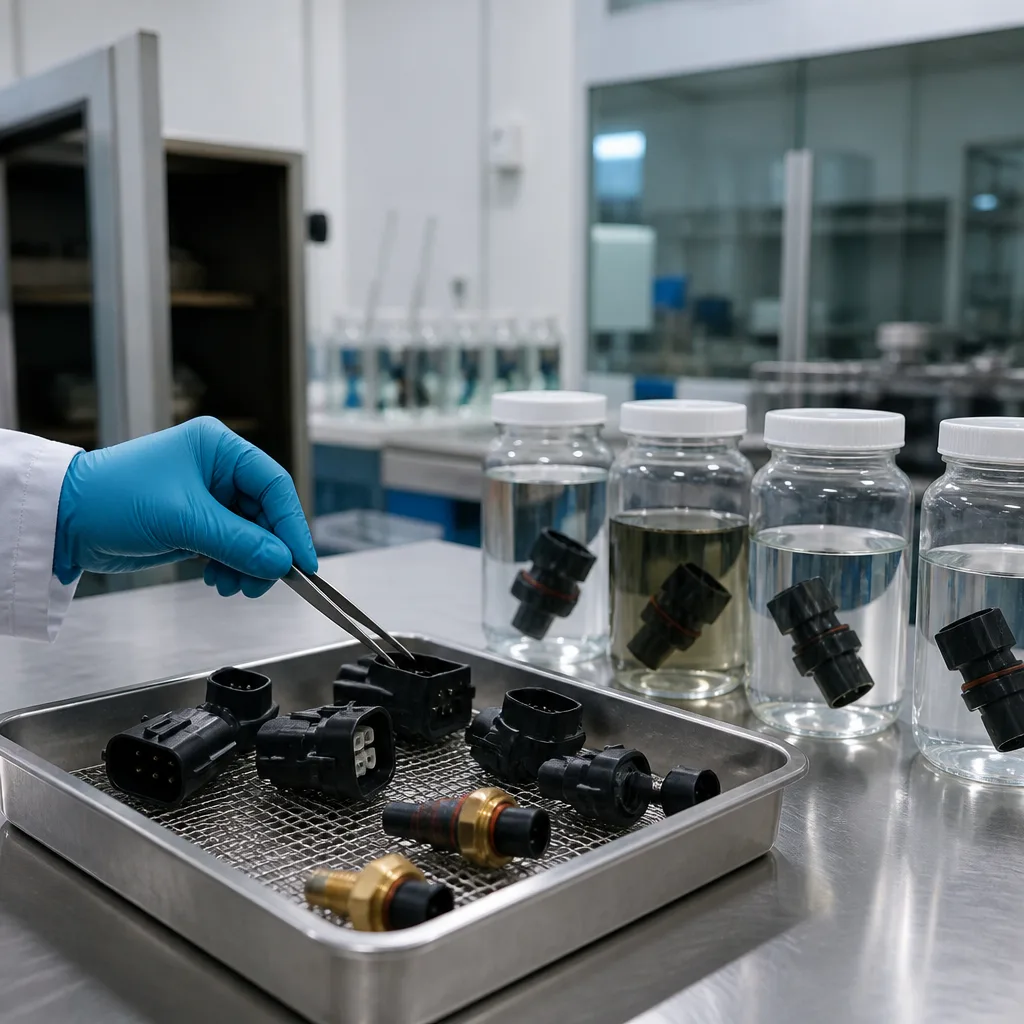
Developed by General Motors Worldwide (GMW), the “GMW 16449 Electrical Component Fluid Compatibility” standard is a specification used to evaluate the resistance of automotive electrical and electronic components to fluids and chemicals they may encounter during vehicle operation, maintenance, cleaning, or normal use.
Automotive electrical and electronic components can come into contact with many different liquids. These liquids can damage plastics, coatings, labels, gaskets, adhesives, electrical contacts, or other materials used in a component.
The GMW 16449 standard provides fluid compatibility tests aimed at determining whether exposure to specified vehicle operating fluids, chemicals, and oils causes deterioration in the following:
Therefore, this standard helps ensure that an electrical component continues to function correctly after exposure to potentially aggressive automotive fluids.
The GMW 16449 standard applies broadly to electrical and electronic components used in vehicles. Specifically, this standard states that Method A applies only to component parts visible to occupants of the vehicle.
The fluids used, procedures, and acceptance criteria may be modified according to the following characteristics of the component:
An electrical component may appear satisfactory under normal conditions, but may fail after coming into contact with chemicals or automotive fluids. For example, exposure to fluids can cause:
Therefore, the GMW 16449 standard is not just a cosmetic inspection, but also a compliance test.
This standard defines the following test methods:
The GMW 16449 standard uses a selected group of fluids representing substances that electrical/electronic components may encounter in automotive applications. The selection is based on the probability and severity of exposure, with the aim of representing relatively aggressive fluids that may come into contact with the component. A complete list of fluids and test requirements is included within this standard. The specification allows responsible providers to add, remove, or modify fluids and acceptance criteria depending on the application.
A typical GMW 16449 standard evaluation follows this path: component preparation, liquid exposure, cleaning/mechanical processing (if applicable), inspection, functional evaluation, and acceptance decision. Unless otherwise specified, the component is evaluated under manufacturing-intended stresses. This is important because the test aims to represent the condition of a real manufacturing component, rather than an artificially optimized laboratory sample.
Following exposure, the component is examined for changes such as those listed below:
Functional performance is also evaluated when component-specific requirements necessitate it.
GMW 16449 standard should not normally be evaluated in isolation. It should be considered in conjunction with GMW 3172 and GMW 3431 standards. This is important because while GMW 16449 establishes a general fluid compatibility framework, component-specific documentation can determine which fluids, methods, exposure conditions, and acceptance criteria are truly applicable.
For automotive suppliers, the GMW 16449 standard is particularly important in the development of components such as the following:
Successful testing provides proof that the component's materials and structure are suitable for the intended vehicle environment.
In conclusion, the GMW 16449 standard is a key General Motors verification specification for determining whether automotive electrical and electronic components can withstand exposure to potentially aggressive liquids and cleaning chemicals. Its primary purpose is to prevent chemical exposure from compromising the materials' appearance, identification, sealing, or electrical functionality.
For many years, our organization, with its competent and experienced staff, has been understanding the needs of its clients, providing the advanced testing services they require, and assisting them in the establishment, implementation, and improvement of management systems. Within this framework, we also provide testing services in accordance with the GMW 16449 standard.
To get an appointment, to get more detailed information or to request an evaluation, you can ask us to fill in our form and reach you.

