Ford FLTM BU 112-02 Pressure Sensitive Adhesive Tape Peel Adhesion Strength
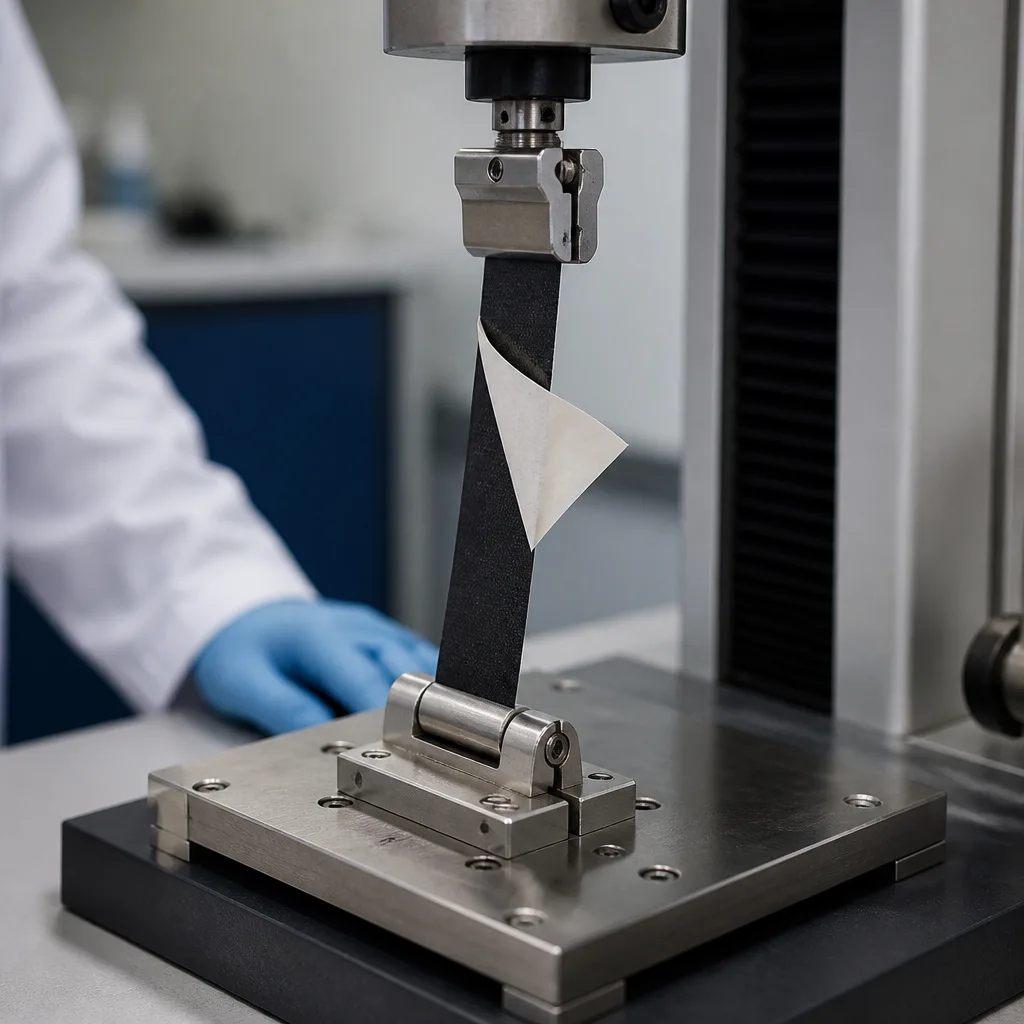
The “Ford FLTM BU 112-02 Peel Strength of Pressure-Sensitive Adhesive Tapes” standard, developed by Ford Motor Company (Ford), describes a laboratory test method used to determine the peel strength of pressure-sensitive adhesive tapes, particularly double-sided adhesive tapes used in automotive applications. This standard provides a quantitative measurement of adhesion performance by evaluating the force required to peel the adhesive tape from a bonded surface.
In modern vehicles, pressure-sensitive tapes are commonly used for the following purposes:
- Interior trim connection
- Emblems and nameplates
- Decorative moldings
- Cable harness holder
- Noise and vibration damping components
- Exterior wall sconces
The Ford FLTM BU 112-02 standard ensures that these tapes maintain adequate adhesion throughout the vehicle's lifespan under a variety of environmental and mechanical conditions. This standard applies to pressure-sensitive adhesive tapes bonded to different substrates, such as:
- Painted steel
- Aluminum
- Plastics
- Composite materials
- Interior furnishing materials
The described method provides an indication of adhesion quality and durability by determining the peel force required for the tape to separate from the substrate.
The testing method essentially follows these steps:
- Preparation of standardized test samples.
- Applying adhesive tape to a specified substrate.
- Conditioning of samples under controlled laboratory conditions.
- Pulling the tape from the substrate at a predetermined angle and speed.
- Recording the peeling force throughout the test.
- Calculation of average peel-adhesion values.
Several variables can affect peel-adhesion performance, including:
- Surface cleaning
- Surface energy of the substrate
- Band thickness
- Adhesive formulation
- Application pressure
- Waiting time after application
- Temperature
- Gender
- Aging conditions
Therefore, rigorous sample preparation and conditioning procedures are necessary to obtain reproducible results.
The failure modes evaluated during testing typically include the following:
- Adhesive failure: The adhesive separates cleanly from the substrate.
- Cohesion failure: The adhesive layer tears from the inside.
- Substrate failure: The substrate itself is damaged before the bond separates.
- Tape backing failure: The tape carrier tears during peeling.
Each failure mode provides valuable information about the overall performance of the adhesive system.
The Ford FLTM BU 112-02 standard is typically used in the following situations:
- New material approval
- Supplier verification
- Production quality control
- Engineering development programs
- Durability research
- Warranty fault analysis
This method helps ensure consistent bonding performance for both interior and exterior vehicle components.
This standard provides:
- Quantitative adhesion measurements
- Excellent repeatability.
- Comparison of different adhesive systems.
- Verification of supplier compliance.
- Predicting field performance
- Improving vehicle quality and durability.
This standard includes different methods depending on the component geometry, application requirements, and band structure:
- 180-degree peeling configuration:
- The tape is applied to a rigid test panel.
- The free end of the tape folds back on itself.
- The tape is peeled off at a 180-degree angle to the substrate.
- It is commonly used for single-sided and double-sided pressure-sensitive adhesive tapes.
- It satisfies the maximum peeling stress condition.
Typical applications include:
- Interior trim strips
- Electrical tapes
- Double-sided adhesive tapes
90-degree peeling configuration:
- The tape is peeled off perpendicular (90°) to the substrate surface.
- It is typically used in vehicle applications when a vertical lift force is generated.
- Compared to peeling 180 degrees, it reduces the effects of supplement support.
Typical applications include:
- Decorative flooring attachments
- Emblems
- Surface-mounted components
T-peeling configuration:
- Two flexible substrates are bonded together with tape.
- The glued-together components are separated to form a "T" shape.
- It measures the adhesion between two flexible materials.
Typical applications include:
- Flexible laminates
- Foam tape structures
- Fabric-to-fabric assemblies
Single-sided tape peel-off test:
- One adhesive side is attached to a designated test panel.
- Peeling force is measured directly.
- It is commonly used for electrical insulation tapes and masking tapes.
Double-sided tape peel test:
- One adhesive side is bonded to a substrate.
- The second side can be bonded to another substrate or reinforcement layer.
- Peel strength is evaluated after the specified waiting and conditioning periods.
Typical applications include:
- Automotive exterior molding lines
- Airtight sealing strips and adhesive tapes.
- Interior trim retaining tapes
Substrate-specific configurations: Ford specifications often require testing on representative vehicle materials such as:
- Painted steel
- E-coated steel
- Aluminum
- Acrylonitrile butadiene styrene (ABS)
- Polycarbonate/ABS)
- Polypropylene (PP)
- Polyvinyl chloride (PVC)
- Thermoplastic polyolefin (TPO) trim materials
The peel configuration remains the same, but adhesion is measured in multiple substrate combinations to verify production performance.
Typical test parameters for the Ford FLTM BU 112-02 standard are as follows:
- Controlled peeling angle (90 degrees or 180 degrees).
- Constant crosshead speed.
- Measurement of average peeling force.
- The beginning and ending sections of the peeling strip are generally excluded from the calculations.
- Results are reported as force per unit width.
For automotive pressure-sensitive tapes, the 180-degree peel configuration is often the primary testing method because it provides a rigorous and repeatable measurement of adhesive bond strength and correlates well with many trim bonding applications. This standard is frequently referenced by Ford tape material specifications and weather strip bonding requirements.
In conclusion, the Ford FLTM BU 112-02 standard is a crucial adhesive performance testing standard that measures the peel adhesion strength of pressure-sensitive tapes used in automotive assemblies. By quantifying the force required to remove bonded tapes from various substrates, the method helps Ford and its suppliers ensure durable, reliable, and long-lasting adhesive bonds in vehicle applications.
For many years, our organization, with its competent and experienced staff, has been understanding the needs of its customers, providing the advanced testing services they require, and assisting them in the establishment, implementation, and improvement of management systems. Within this framework, we also provide testing services to businesses in accordance with the Ford FLTM BU 112-02 standard.



