

The standard, "SAE J2020 Accelerated Exposure of Automotive Exterior Materials Using a Fluorescent UV and Condensation Apparatus," developed by the American Society of Automotive Engineers (SAE), describes the operating conditions of a fluorescent ultraviolet (UV) and condensation apparatus used in the accelerated exposure of various automotive exterior components. This standard, sample preparation, test duration, and performance evaluation procedures are addressed in each automotive manufacturer's material specifications. This standard may cover hazardous materials, processes, and equipment. This standard does not purport to address all safety issues associated with its use. It is the responsibility of the user of this standard to review and determine appropriate and sound practices before use and to determine the applicability of any legal limitations.
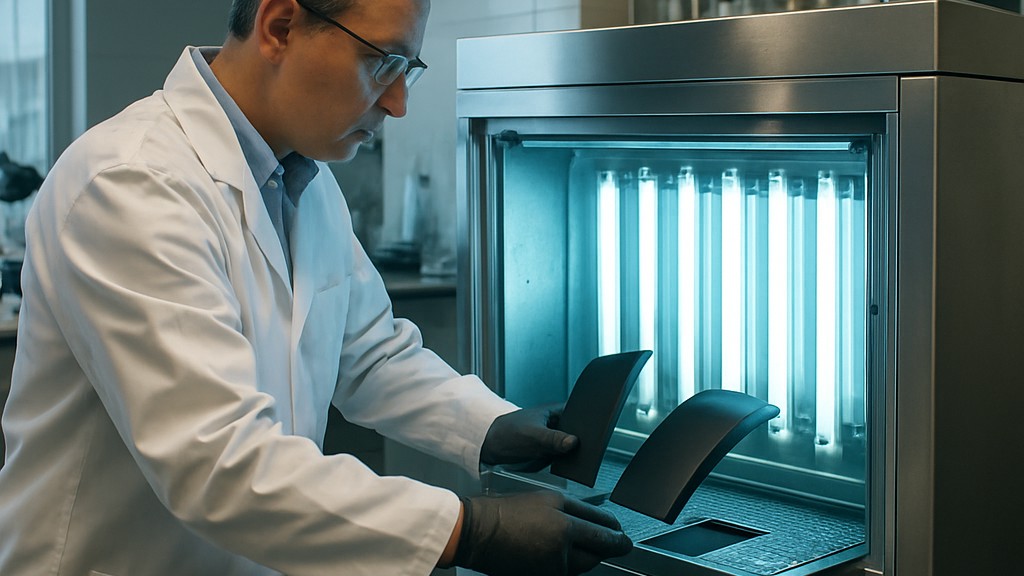
This test method is designed to simulate the extreme environmental conditions encountered on an automobile exterior due to sunlight and heat, and to provide accelerated exposure for the purpose of predicting the performance of exterior automotive materials. All dimensions reported in this method are nominal unless otherwise noted.
In the fast-paced automotive industry, ensuring the longevity and durability of exterior components is paramount. Vehicles are constantly exposed to harsh environmental conditions such as intense sunlight, fluctuating temperatures, humidity, and moisture, which can cause materials to deteriorate over time. Engineers rely on accelerated weathering tests to effectively simulate these effects without waiting years for real-world data. One of the key standards in this field is SAE J2020. This standard describes procedures for using fluorescent ultraviolet (UV) and condensation devices to mimic outdoor exposure, helping manufacturers predict and prevent material failures such as fading, cracking, or chalking.
The SAE J2020 standard focuses specifically on automotive exterior materials, such as paints, plastics, coatings, and textiles used in bumpers, hoods, and trim parts. By standardizing testing conditions, this standard ensures consistency across the industry and allows automakers to reliably compare results and meet regulatory and customer expectations for vehicle longevity.
The primary goal of the SAE J2020 standard is to accelerate the aging process of materials under controlled laboratory conditions, providing a cost-effective alternative to outdoor exposure testing. Traditional field testing can take months or years, delaying product development cycles. In contrast, this standard compresses years of environmental stress into weeks or months, enabling rapid iterations in material formulations.
This standard is particularly vital for addressing UV-induced degradation, which accounts for up to 90 percent of visible weathering in vehicles. It helps identify weaknesses in polymers, pigments, and stabilizers early in the design phase, reducing warranty claims and strengthening brand reputation. For example, a poorly performing headlight lens could crack after two years in sunny climates. The testing methods described in this standard could detect this early, saving millions of dollars in recalls.
Beyond compliance, this standard also supports innovation. As electric vehicles become more widespread, increasingly lightweight composite materials are being used in outdoor applications to increase range and efficiency. The SAE J2020 standard ensures that these next-generation plastics are as durable as traditional metals.
The SAE J2020 standard uses a fluorescent UV/condensation chamber, a sophisticated piece of equipment that mimics harmful wavelengths of the solar spectrum while adding humidity cycles to simulate rain and dew. The process is cyclical, alternating between UV exposure and condensation phases to create a realistic "wet-dry" environment.
Tests use a chamber equipped with fluorescent lamps emitting either UVA (340 nm) or UVB (313 nm) light. UVA is preferred because it is closer to sunlight, but UVB speeds up testing in harsh conditions.
Samples (e.g., 75 mm x 150 mm panels) are mounted on racks at a 45-degree angle to simulate vertical vehicle surfaces. They should represent the manufacturing materials, including primers or topcoats. Consistent energy transmission is ensured by maintaining a light intensity of 0,68 W/m² at 340 nm . Black-panel thermometers monitor the temperature to prevent overheating.
This standard defines a repeating 4-hour cycle:
A complete test can take 1.000 hours (approximately 42 days), equivalent to 2-3 years of outdoor exposure in temperate climates. Samples are examined weekly during condensation to verify moisture formation.
Automakers use this method to:
Our organization, with its competent and experienced team, has been understanding the needs of its customers for years, providing them with the advanced testing services they need, and assisting them in the establishment, implementation, and improvement of management systems. In this context, we also provide testing services in accordance with the SAE J2020 Fluorescent UV and condensation apparatus for accelerated exposure of automotive exterior materials.
To get an appointment, to get more detailed information or to request an evaluation, you can ask us to fill in our form and reach you.

