Ford FLTM AN 101-01 Resistance of Textile Products to Color Fading, Sweating and Water Stains
The “Ford FLTM AN 101-01 Resistance of Textiles to Colorfastness, Perspiration and Water Stains” standard, developed by Ford Motor Company (Ford), describes a test method used to evaluate the colorfastness and stain resistance of automotive textile materials. This standard assesses the textile's resistance to three common conditions encountered during vehicle use:
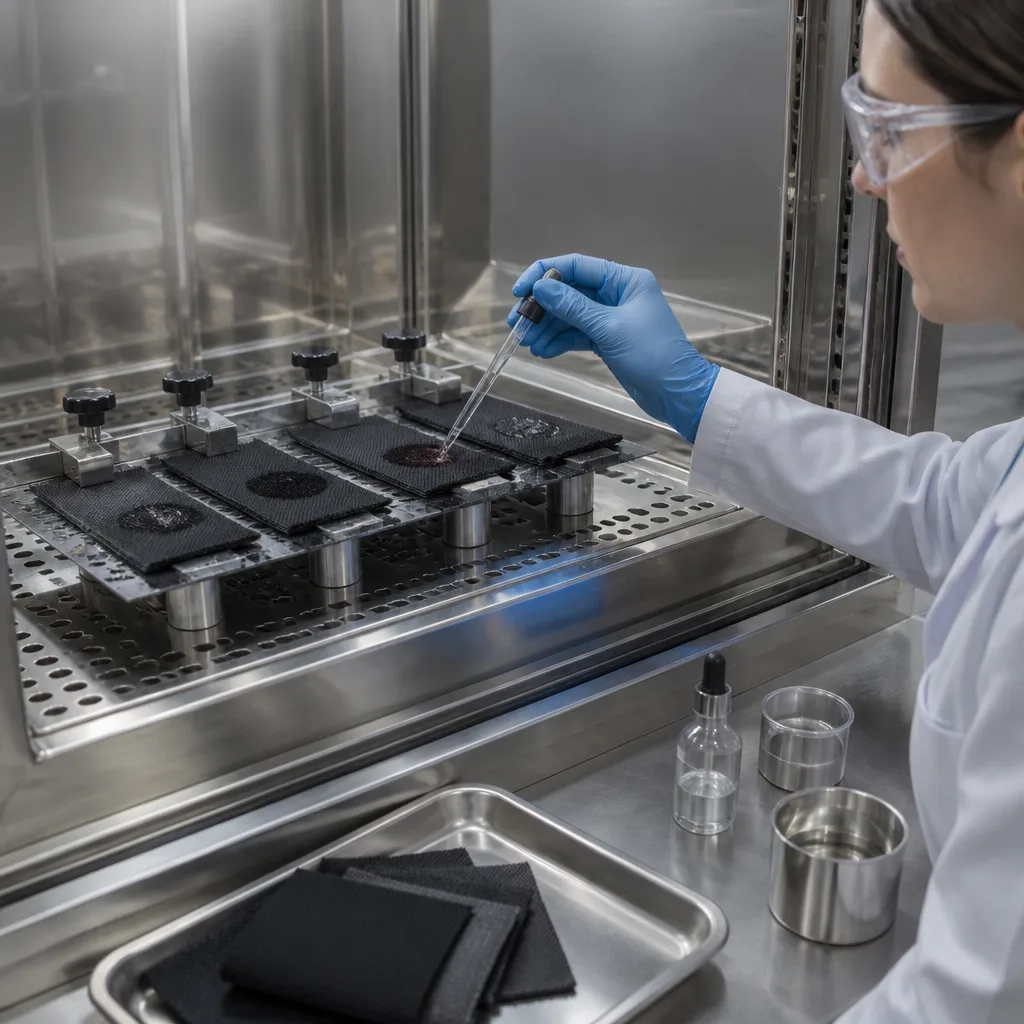
- Color bleeding (color transfer): The transfer of dyes from one material to another.
- Sweat resistance: The material's ability to withstand exposure to human sweat without discoloration or staining.
- Water stain resistance: Resistance to permanent marks or discoloration caused by water droplets and moisture exposure.
The described method is widely used for automotive interior fabrics, seat covers, headliners, door trim materials, and other textile components where appearance and durability are critical to customer satisfaction.
Vehicle interiors are regularly exposed to moisture, humidity, condensation, and accidental liquid contact. These conditions can cause:
- Paint transfer between adjacent materials.
- Permanent staining
- Color fading or deterioration
- Water spots and mottling
- Decreased aesthetic quality
The Ford FLTM AN 101-01 standard helps ensure that interior textiles maintain their appearance throughout the vehicle's lifespan. This standard generally applies to:
- Woven fabrics
- Knitted textiles
- Automotive seat fabrics
- Decorative upholstery fabrics
- Ceiling flooring materials
- Textile laminates
- Interior textile components and yarns
This method generally follows these steps:
- Dye bleeding assessment: A textile sample is brought into contact with an adjacent fabric under controlled pressure and ambient conditions. Dye or color transfer is evaluated after exposure.
- Sweat resistance test: Samples are exposed to a synthetic sweat solution that simulates human sweat. The material is then evaluated in terms of the following aspects:
- color change
- Staining
- Paint migration
- Deterioration in surface appearance
- Water stain test: Water droplets or moisture are applied to the textile surface. After drying, inspectors evaluate the following:
- Visible staining
- Ring formation
- Color changes
- Surface deterioration or staining
Results are generally evaluated using standardized color grading scales that utilize the following criteria:
- Degree of color change
- Severity of staining
- Paint transfer
- Preserving the surface appearance.
Materials must meet Ford's acceptance criteria before being approved for vehicle production.
The Ford FLTM AN 101-01 standard is generally used in the following areas:
- Upholstery fabrics
- Door panel textiles
- Pole coverings
- Luggage rack fabrics
- Ceiling tiles
- Decorative textile inserts
- Interior textile laminates
Materials that successfully meet the requirements of this standard offer the following:
- Improved long-term outlook
- Reduced customer complaints.
- Better resistance to daily wear and tear and moisture exposure.
- Improved color stability.
- Reduced risk of staining on adjacent components.
- Greater resilience in real-world working conditions.
The Ford FLTM AN 101-01 standard is necessary because automotive textiles are exposed to conditions during normal vehicle use that can cause discoloration, staining, and dye migration. This standard helps ensure that interior fabrics maintain their appearance and performance throughout the vehicle's lifespan. This standard is considered important for the following reasons:
- Prevents color transfer between materials: Many automotive textiles contain dyes that can migrate when exposed to moisture, heat, or pressure. If dye transfer occurs, adjacent materials such as seat fabrics, apparel, or upholstery components can be permanently stained. This standard verifies that textile dyes remain stable under these conditions.
- It simulates real human use: Vehicle occupants regularly bring sweat, moisture, and humidity into the cabin. Sweat contains salts and chemicals that can accelerate paint bleeding and fabric degradation. This standard evaluates how materials react to these real-world conditions before being approved for production.
- Maintains interior quality: Customers expect their vehicle interiors to remain attractive for many years. Water stains, discoloration, and staining can quickly diminish a vehicle's perceived quality. Tests conducted according to this standard help ensure fabrics retain their original appearance over time.
- It reduces warranty claims and customer complaints: Poor color fastness can lead to:
- Stained seats
- Visible water stains
- Color fading
- Paint transfer to clothing
- The irregular appearance of the internal components.
By identifying these issues during material qualification, Ford can avoid costly warranty repairs and improve customer satisfaction.
- Ensures consistent material performance: Automotive suppliers may use different paint formulations, fibers, and finishing processes. This standard provides a uniform testing method that allows Ford to objectively compare materials and ensure consistent quality across global suppliers.
- Supports long-term durability requirements: Modern vehicles are expected to maintain their interior quality for many years under a variety of environmental conditions, including:
- High humidity
- Temperature fluctuations
- Frequent passenger contact
- Exposure to beverages and water
This standard helps verify that textile materials can withstand these conditions without significant visual deterioration.
In short, this standard helps ensure color stability, prevent staining, increase durability, reduce warranty costs, and maintain the expected look and quality in Ford vehicle interiors.
In short, the Ford FLTM AN 101-01 standard simulates some of the most common causes of interior textile degradation in vehicles: perspiration, moisture, and dye migration. A poorly performing fabric can develop staining, discoloration, or color transfer within a short period of use, negatively impacting the perception of vehicle quality. By mandating compliance with this standard, Ford helps ensure that interior textiles remain visually appealing, colorfast, and durable throughout the vehicle's lifespan, contributing to both customer satisfaction and overall product quality.
For many years, our organization, with its competent and experienced staff, has been understanding the needs of its customers, providing the advanced testing services they require, and assisting them in the establishment, implementation, and improvement of management systems. Within this framework, we also provide testing services to businesses in accordance with the Ford FLTM AN 101-01 standard.



