

The “GMW 3402 Automotive Materials Dirt and Cleaner Resistance” standard, developed by General Motors Worldwide (GMW), includes a test method used to evaluate how automotive materials behave when soiled and subsequently cleaned. This standard is particularly applicable to automotive interior materials, including coated textiles, plastic roll products, leather and leather fiber materials, and textiles.
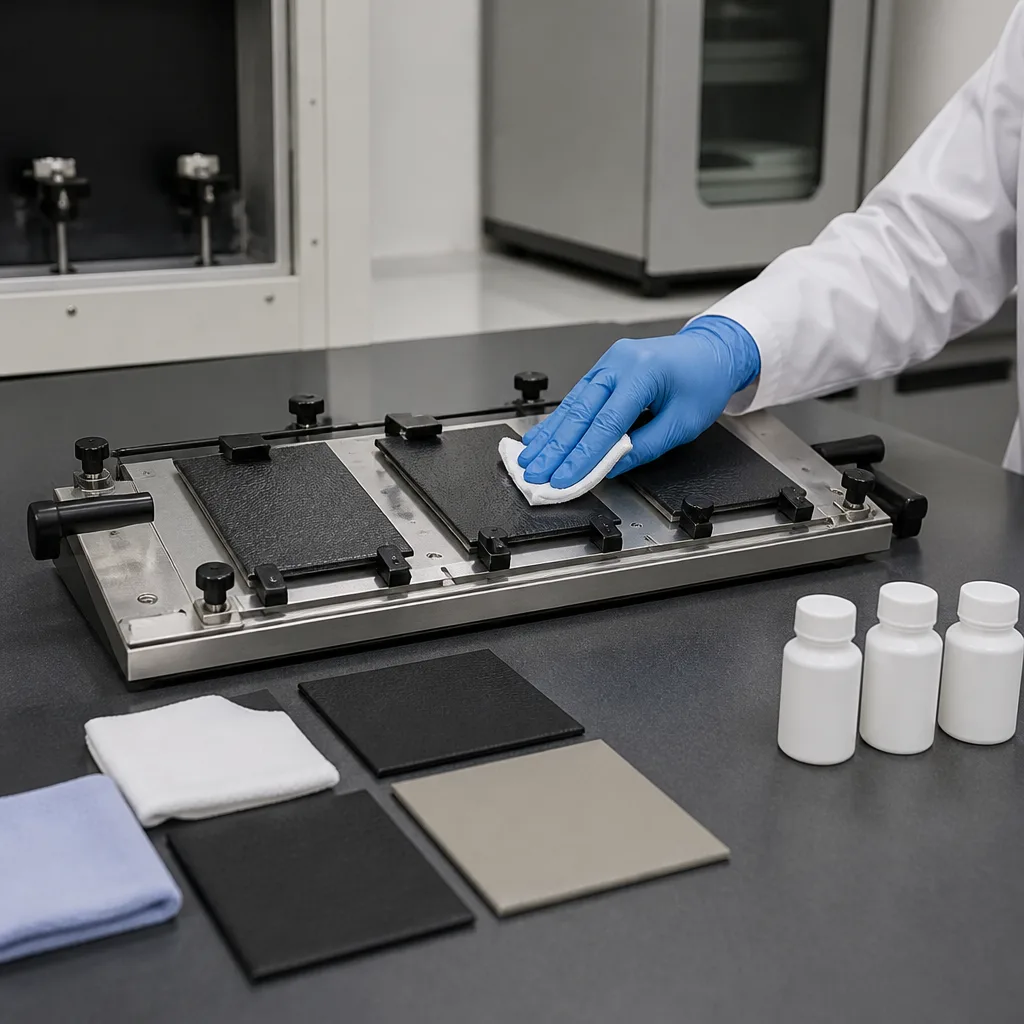
Automotive interior materials are exposed to dirt and contaminants during normal vehicle use. Passengers may also repeatedly clean these surfaces using commercial or specified cleaning products. Therefore, the GMW 3402 standard addresses two related questions:
The GMW 3402 standard is divided into two parts: Method A and Method B.
Method A evaluates the cleanability after exposure to the specified contaminants, while Method B assesses the material's resistance to liquid cleaners and checks for effects such as discoloration, surface damage, and color transfer to the cleaning cloth.
The GMW 3402 standard is designed for materials that may become soiled or cleaned during normal use. Therefore, it is particularly important for the following types of interior vehicle components:
Independent automotive testing laboratories list the GMW 3402 standard specifically for coated textiles, plastic roll products, leather/leather fiber boards, and textiles/yarns.
Method A (dirt and cleanability) determines a material's ability to be cleaned after being contaminated with specified contaminants. A typical assessment includes:
An important observation is ring formation after cleaning. The GMW 3402 standard defines ring formation as a particularly undesirable condition and states that it should be reported when observed.
The aim is not simply to determine whether the original contaminant has disappeared. The test also assesses whether the cleaning process itself leaves an unacceptable appearance.
Method B (cleaner resistance) evaluates how automotive material reacts to specified liquid cleaners. The cleaner is applied to a cloth and then rubbed onto the material surface under specified test conditions. The material is then examined for potential damage. Key observations include:
Therefore, a material may initially have good stain resistance but may not withstand repeated cleaning. Method B helps identify such problems.
The GMW 3402 standard uses specified contaminants to represent the types of pollution automotive interiors might encounter. For example, older versions of the method identified contaminants such as petroleum jelly, instant coffee, ketchup, ballpoint pens, soda, soy sauce, and potting soil. These examples illustrate the practical nature of the test: the procedure attempts to simulate everyday pollution, rather than simply testing an abstract laboratory chemical.
The exact contaminants, quantities, application procedures, cleaners, and evaluation requirements are included in the GMW 3402 standard.
The evaluation of the results primarily focuses on the visual condition of the material after contamination or cleaning. Depending on the method used, the laboratory may evaluate the following:
Previous versions of this standard specifically refer to the reporting of grayscale for color change after the cleaning process.
Acceptance limits are generally determined by the relevant material specification, drawing, component specification, or customer requirement, rather than a universal pass/fail limit.
The GMW 3402 standard is important because automotive interior materials must maintain an acceptable appearance throughout their lifespan. A seat, door panel, armrest, or other interior surface may be cleaned many times during vehicle ownership. An unsuitable material can cause:
In conclusion, this test allows manufacturers to compare materials and identify those that are both easy to clean and resistant to cleaning-related damage.
The difference between the two methods defined in this standard is as follows:
In short, these two methods complement each other. A material should be able to be easily cleaned without being damaged by the cleaning process.
The GMW 3402 standard applies specifically to the following automotive interior materials:
Advanced laboratories classify products according to the GMW 3402 standard, especially for leather, leather fiber boards, coated textiles, plastic roll products, and textiles/yarns.
The GMW 3402 standard belongs to a broader group of automotive interior tests relating to soiling, staining, and cleanability. For example, Ford FLTM BN 112-08, Mercedes-Benz methods, BMW surface tests, and Volvo procedures address relevant performance characteristics. However, test conditions and evaluation criteria are manufacturer-specific, so these methods should not be considered automatically interchangeable.
In conclusion, the GMW 3402 standard defines a cleanability and cleaner resistance test method for automotive materials. These methods evaluate both aspects of the issue. For automotive interior suppliers, this standard is valuable in verifying that leather, textiles, coated fabrics, and related materials can withstand realistic soiling and cleaning during vehicle use while maintaining acceptable appearance, color, and surface properties.
In short, this standard asks whether automotive interior materials can be cleaned and will still have an acceptable appearance and performance after cleaning.
For many years, our organization, with its competent and experienced staff, has been understanding the needs of its clients, providing the advanced testing services they require, and assisting them in the establishment, implementation, and improvement of management systems. Within this framework, we also provide testing services in accordance with the GMW 3402 standard.
To get an appointment, to get more detailed information or to request an evaluation, you can ask us to fill in our form and reach you.

