SES N 3304 Automotive Foam Materials
The “SES N 3304 Automotive Foam Materials” standard, developed by Suzuki Motor Corporation under the supplementary SES N standards (examples), describes the requirements, specifications, and test methods for foam materials used in vehicles, particularly in interior and sealing applications.
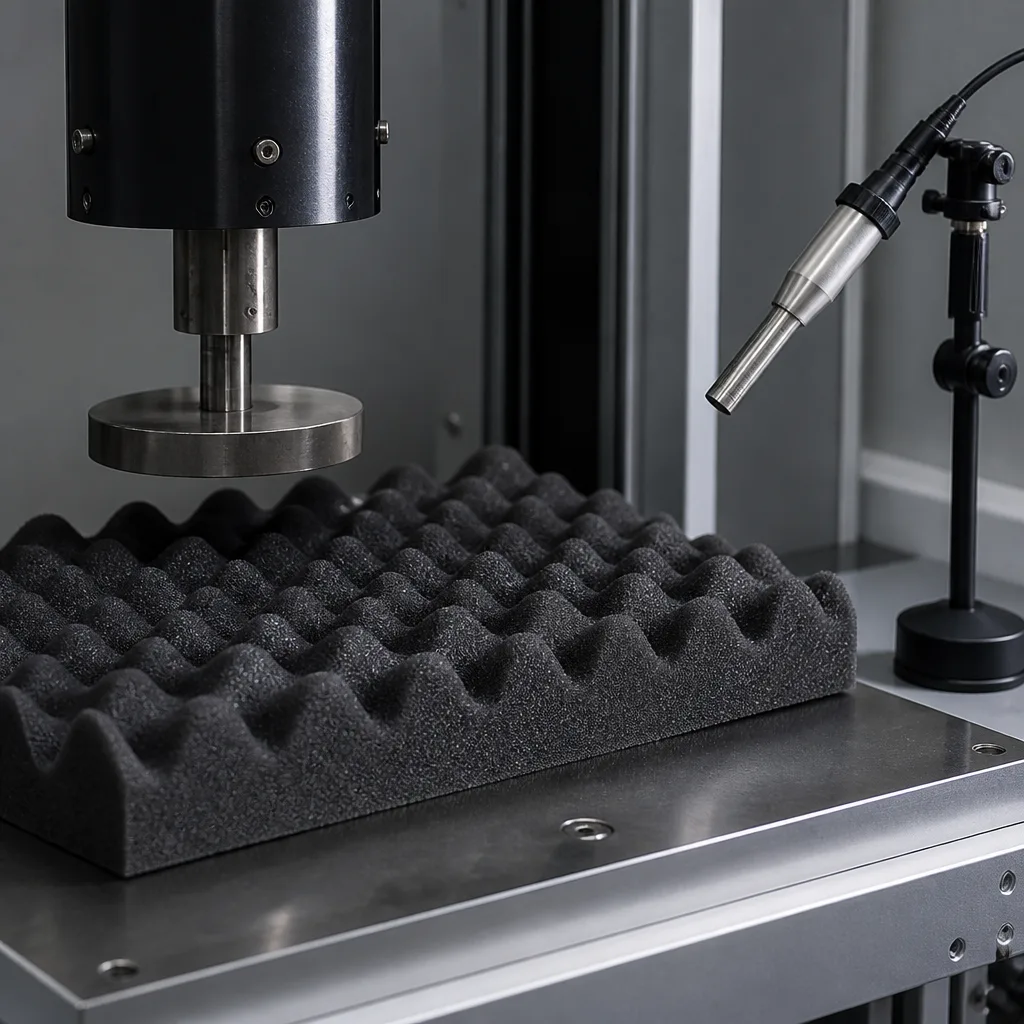
Foam materials are widely used in the automotive industry due to their lightweight, flexible, energy-absorbing, and excellent insulation and comfort properties. They play a critical role in both functional performance and passenger experience.
The main applications of foam materials in the automotive industry are as follows:
- Seating and comfort systems: Foams are important in seat cushions, backrests, headrests, and armrests. Typically made from polyurethane (PU) foam, these materials provide the following:
- Ergonomic support
- Pressure distribution
- Long-term comfort
- Noise, vibration, and harshness (NVH) control: Foams help reduce unwanted noise and vibration.
- Instrument panel insulation
- Door panels
- Floor carpets
- Ceiling coverings
It absorbs sound waves and vibrations, making the cabin quieter and more comfortable.
- Thermal insulation: Foam materials help maintain the internal temperature.
- HVAC duct insulation
- Engine compartment insulation
- Battery thermal management (especially in electric vehicles)
It has the following benefits:
- Improved energy efficiency
- Better climate control
Safety and impact energy absorption: Foams are used in the following areas:
- Buffers (energy absorbers)
- Door impact protection
- Knee supports
They provide the following:
- They absorb the impact energy.
- They reduce the risk of injury.
Sealing and gasketing: Closed-cell foams are used in the following areas:
- Door seals
- Window seals
- Dust and water barriers
It provides the following:
- Airtight seal
- Water resistance
- Noise reduction
Interior trim components: Foams are integrated into the following areas:
- Ceiling tiles
- Columns (A/B/C trims)
- instrument panels
They improve the following:
- Soft touch sensation
- Aesthetic quality
Electrical and battery protection (electric vehicles): In electric vehicles, foam is used in the following areas:
- Battery cushioning
- Thermal barriers
- Fire-resistant layers
It provides the following:
- Security
- Thermal stability
- Vibration isolation
Adhesive and tape backing: Foams are generally used for the following purposes:
- Double-sided foam tapes
- Mounting pads
It provides the following:
- Easy assembly
- Vibration damping
The main reasons for choosing foam materials are as follows:
- Lightweight: Improves fuel efficiency.
- Energy absorption: Increases safety.
- Flexibility: Adaptable to complex shapes.
- Insulation (sound and heat): Enhances comfort.
- Cost-effective: Can be produced in large quantities.
In short, foam materials are used in the automotive industry for the following purposes:
- Comfort (seats, upholstery)
- Safety (shock absorption)
- Insulation (thermal and acoustic)
- Sealing (air, water, dust)
- Structural support (lightweight components)
Vehicles without foam materials are noisier, less comfortable, less safe, and less energy efficient.
The SES N 3304 standard covers foam materials used in automotive components. For example,
- Seat cushions and fillings
- Headliners and interior trim
- Acoustic insulation (NVH control)
- Sealing and gasket elements
- Vibration damping components
These foams typically include the following:
- Polyurethane (PU) foams
- Polyester / polyether foams
- Silicone foams (for high-performance sealing)
The SES N 3304 standard ensures that foam materials meet stringent automotive performance criteria. The basic requirements are defined as follows:
- Physical and mechanical properties:
- Density (kg/m³)3)
- Compressive stiffness / permanent deformation
- Tensile strength and elongation
- Cell structure (open/closed cell)
For example, automotive PU foams typically have a density range of 23-80 kg/m³ with a defined compressive stiffness for comfort and durability.
- Thermal and environmental resistance:
- Heat aging resistance
- Low temperature flexibility
- moisture resistance
- UV/ozone resistance
This is especially important for parts exposed to temperature changes or sunlight.
- Flammability (fire safety):
- Compliance with FMVSS 302 or similar fire standards.
- Flame retardant properties
Automotive foams must be flame-resistant and slow the spread of flames.
- Emissions and fogging (indoor air quality):
- Low volatile organic compounds (VOCs)
- Low fogging (no film forming on the windshield)
Low-emission foams are required to meet stringent cabin air quality standards.
- Durability and aging:
- Permanent deformation due to compression after prolonged use.
- Resistance to fatigue and deformation.
- Long-term dimensional stability
- Chemical resistance:
- Oils resist
- Resistance to cleaning agents
- Resistance to sweat and environmental pollutants.
Typical applications in vehicles are as follows:
- Interior comfort:
- Seat foam (comfort and ergonomics)
- Armrests and headrests
- NVH (noise, vibration, harshness)
- Acoustic foams reduce cabin noise.
- Used in instrument panels, doors, and headliner trim.
- Sealing and protection:
- Dust and water insulation
- Battery protection in electric vehicles.
For example, silicone foam can operate between -55 degrees and +200 degrees, making it suitable for sealing and vibration isolation.
The SES N 3304 standard is considered important for the following reasons:
- Passenger comfort: Foam directly affects the following:
- Seating comfort
- Noise reduction
- Thermal insulation
- Security:
- Fire resistance (critically important in accidents)
- Structural energy absorption
- Durability:
- It prevents sagging, cracking, or deformation over time.
- Environmental compatibility:
- It ensures low emissions and compliance with global regulations.
- Production consistency:
- It standardizes foam quality among suppliers.
- Ensures compatibility with adhesives, fabrics, and coatings.
The SES N 3304 standard generally works in conjunction with the following standards:
- SES N 3301 Adhesive materials
- SES N 3302 Sealing materials
- SES N 3303 Coating material compatibility
Together, these standards ensure material compatibility and long-term durability in automotive components.
In conclusion, the SES N 3304 standard is a critical automotive materials standard that ensures foam components possess the following properties:
- Safe (fire resistant)
- Durable (resistant to aging and pressure)
- Comfortable (mechanical performance)
- Clean (low emissions and fogging)
The SESN 3304 standard plays a significant role in vehicle comfort, safety, and the overall perception of quality.
For many years, our organization, with its competent and experienced team, has been understanding the needs of its clients, providing the advanced testing services they require, and assisting them in the establishment, implementation, and improvement of management systems. Within this framework, we also provide testing services compliant with the SES N 3304 standard.



