KIA ES31110-30 Diesel Pump Module
The purpose of the “KIA ES31110-30 Diesel pump module” standard developed by Kia Corporation, the oldest motor vehicle manufacturer in Korea, is to ensure good quality through SPEC standardization. Since SPEC is an extension of engineering drawings, all parts must meet the requirements of this standard test item simultaneously with the requirements of the drawing and each component.
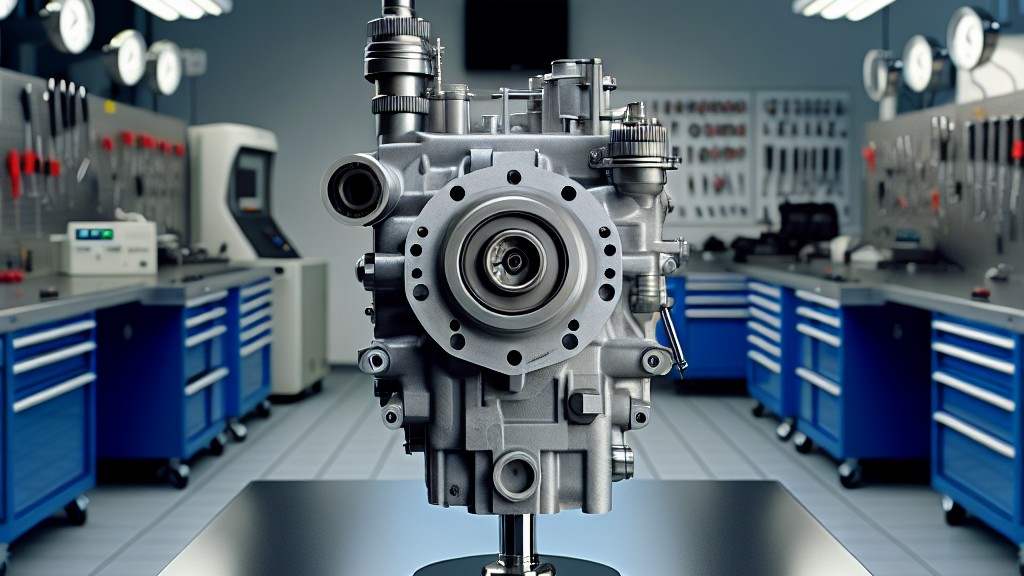
This standard describes the reliability test method and test criteria for an in-tank type electric fuel pump module applied to a gasoline engine. If the indicator on the drawing differs from this SPEC, the indicator on the drawing takes precedence.
Marking in the drawing is explained as follows:
- Shape and structure: It should be stated whether the detailed shape and structure are compatible with the drawings.
- Dimensions and thickness: Everything about dimensions and tolerance and required material properties should be given.
- Material and weight: Material and weight should be noted to meet the regulation of each country.
Environmental conditions: Operating ambient temperature, installation location, usable fuel, etc. should be given. Unless specified on the drawing, environmental conditions are as follows:
- Working environment temperature: Minus 40 degrees to 80 degrees.
- Installation location: Interior fuel tank in rear floor.
- Usable fuel: Commercial diesel (including biodiesel). Standard test fuel can be used for each test.
In general, fuel additive should not fail to perform under the driving conditions of general diesel and biodiesel fuel under hot temperature, high temperature, general environmental conditions, and should comply with the warranty period (whether rubber, plastic, steel, other materials and components (valves, sensors), throughout the life of the vehicle). There should be no cracks due to fuel tank fatigue damage such as start-up and shrinkage attributed to the performance deterioration of these materials and components. During the life of the vehicle, there should be no fuel leakage and fuel additive failure due to leakage of welded, assembled, connected areas under general driving conditions.
Test conditions:
- If there is no special indicator, the criteria are as follows: Test voltage and supply pressure 13V (system pressure of each motor). Test voltage tolerance plus/minus 0,1V (measurement specifications) / plus/minus 0,5V (endurance test). Test pressure tolerance plus/minus 5kPa.
- Test oil: Diesel (KS M 2610), biodiesel (BD5, BD20, EN590). Test oil temperature is equivalent to room temperature (25 degrees plus/minus 5 degrees). Base pressure, vehicle system fuel pressure and in case of new engine must comply with the drawing or LPC requirement.
While testing is being done,
- Primary performance: To verify whether a sample fuel is delivered to the engine part with constant pressure in a state of the module, the equipment is placed in this chamber, the module is immersed in diesel fuel, in accordance with the figure given in the standard. The flow is measured at 8,13V at each system pressure.
- Port strength: To check the strength of a port from external impact, a load impact tester is applied at a speed of 3 mm/min at 200 mm inside the edge of a port as shown in the figure. The test is repeated in the x, y and z directions with the same condition. However, the test should be performed in a single direction with a single sample.
- Reservoir cup leakage characteristic: In order to check the fuel economy in order to guarantee the startability of a vehicle parked on a sloped road for a long time, after filling 100cc oil into the sample, 30 percent (16,7 degrees) inclination is given to the forward, backward, left and right 15 percent (8,4 degrees). The sample is kept for 1 day. The number of test samples should be more than three. After filling 100cc and inclination, if the check valve is not sunk, the test is carried out with the minimum volume sunk by the check valve.
- Check valve opening characteristic: In order to measure the minimum fuel injection quantity at the moment when the fuel first starts to enter the R/CUP, which injects fuel into the vehicle, the R/CUP is fixed on the tank so that it does not move. When pouring the fuel with a beaker, the height is measured by stopping the injection when the fuel starts to enter the R/CUP.
Our organization has a strong staff that closely follows the developments in the world in the field of science and technology and constantly improves itself. Among the numerous test, measurement, analysis and evaluation studies provided for businesses in various sectors, there are also test services in accordance with the "KIA ES31110-30 Diesel pump module" standard.



