Ford FLTM BI 106-01 Coating Adhesion Test
The “Ford FLTM BI 106-01 Coating Adhesion Test” standard, developed by Ford Motor Company (Ford), describes a laboratory test method used to evaluate the adhesion strength of paint or coating systems applied to different surfaces such as steel, aluminum, galvanized steel, and plastics. This standard is one of the key internal Ford standards used in the validation of automotive materials to ensure painted parts can withstand service conditions without peeling, flaking, or delamination.
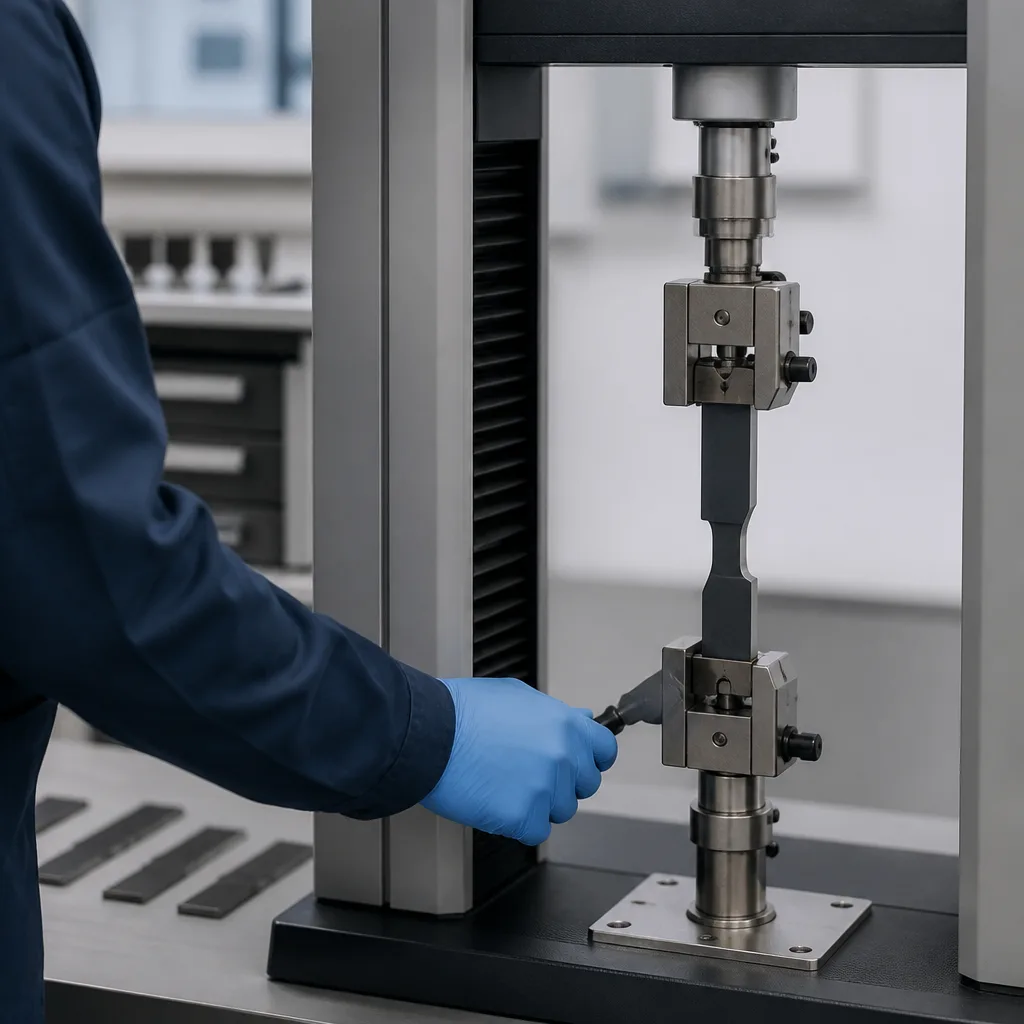
The primary purpose of the Ford FLTM BI 106-01 standard is to determine the relative adhesion quality of coatings and to detect potential coating failures early during the development or production phase. This standard helps answer the following questions:
- Will the paint remain adhered under stress?
- Will the coating peel off after being exposed to environmental factors?
- Is the surface preparation adequate?
The described test method is applicable to coatings on the following surfaces:
- Steel panels
- Aluminum surfaces
- Galvanized steel
- Plastic components
This standard is widely used in automotive exterior and interior trim validation and industrial coating qualification.
The Ford FLTM BI 106-01 standard is a family of adhesion assessment methods consisting primarily of the following:
- Scratch/knife test: A knife is run across the coating to expose the substrate, and the amount of flaking or cracking is visually assessed.
- Scratch (cross-hatching) test: A grid pattern is cut into the coating down to the substrate. Adhesive tape is applied (typically 3M 898 tape in the Ford procedure) and quickly removed. The amount of coating removed determines the adhesion quality.
- Tape pull evaluation: Used to check whether the coating remains intact after the tape is removed from the scratched area.
- Special variants: Some versions include modified methods for specific textures, such as:
- Two-component polyurethane systems
- Flexible coating systems
Typical conditioning requirements include:
- Temperature 23 degrees plus/minus 2 degrees
- 50 percent plus/minus 5 percent relative humidity
- Conditioning for at least 24 hours before the test.
These conditions ensure consistent and reproducible results across laboratories.
Results are generally classified according to the following criteria:
- Percentage of coating removed
- Number of damaged squares in the cross-scan grid
- The degree of flaking at the edges of the scratch.
Lower coating loss indicates better adhesion performance.
The Ford FLTM BI 106-01 standard is critically important in automotive engineering because...
- The coating ensures durability: Vehicles are exposed to the following:
- UV radiation
- Road salt
- temperature cycle
- Mechanical wear
Poor adhesion leads to visible defects such as peeling and corrosion.
- It prevents warranty and durability issues: Coating failure can cause the following:
- Rust formation
- Aesthetic flaws
- Customer complaints
- It standardizes supplier quality: Ford uses this test to ensure global supplier consistency for painted parts.
- It supports process validation: This standard verifies the following:
- Surface pretreatment effectiveness
- Paint formulation stability
- Quality of the application process (spraying, curing, etc.)
The Ford FLTM BI 106-01 standard is typically used with the following:
- FLTM BI 103: Panel Preparation
- FLTM BI 104: Environmental exposure / immersion in water
- FLTM BI 117: Film thickness measurement
The test methods described in the Ford FLTM BI 106-01 standard refer to different ways of mechanically stressing the coating and checking whether it remains adhered to the substrate. The main test methods used in this family of standards are as follows:
- Cross-line (grid) tape test: This is the most common method. A grid pattern is cut from the coating down to the substrate. Adhesive tape is applied over the grid. The tape is quickly removed. The amount of coating removed is evaluated. The purpose of this test is to measure the overall adhesion strength and coating cohesion.
- Scratch/single-line scratch test: A single straight cut is made through the coating. The cut edges are examined for peeling or lifting. Sometimes tape is applied over the scratched area. The purpose of this test is to evaluate edge lifting and the adhesion of the underlying film.
- Knife/removal tool test: The coating is attempted to be removed using a sharp knife or removal tool. The operator checks how easily the film can be removed. The purpose of this test is to provide a qualitative check for poor adhesion or inadequate surface preparation.
- Tape pull test: The tape is applied directly to the coated or damaged areas. It is removed quickly. Any coating transfer onto the tape is evaluated. The purpose of this test is to detect poor adhesion or a tendency to detach.
- Modified/material-specific variants: Depending on the type of trim, Ford may also use the following:
- Flexible coating adhesion variants (for plastics or soft coatings)
- Heat or humidity conditioned adhesive versions
- Multilayer coating evaluations (primer/base coat/clear coat systems)
The Ford FLTM BI 106-01 standard is important because it checks how well the coating adheres to the surface over time and under stress, which is one of the most critical quality characteristics of painted automotive parts. The main reasons why this standard is considered important are as follows:
- Prevents coating failure in actual use.
- Provides corrosion protection.
- It increases safety and reliability.
- It standardizes supplier quality.
- It verifies production processes.
- It reduces warranty and cost issues.
- Supports long-term durability verification.
In conclusion, all the test methods described in the Ford FLTM BI 106-01 standard are based on the same idea: to mechanically damage the coating and check whether it remains adhered. These differ primarily in terms of severity and detail.
- Cross-screening = Quantitative comparison
- Scratching/scratching = Edge behavior
- Knife test = Rapid qualitative screening
- Tape removal = Verification of poor adhesion.
The Ford FLTM BI 106-01 standard is a coating adhesion evaluation standard based on scratch and tape tests. It ensures that automotive paint systems adhere strongly to their substrates under mechanical and environmental stress, making it a crucial quality control method in vehicle manufacturing.
For many years, our organization, with its competent and experienced staff, has been understanding the needs of its customers, providing the advanced testing services they require, and assisting them in the establishment, implementation, and improvement of management systems. Within this framework, we also provide testing services compliant with the Ford FLTM BI 106-01 standard.



