

The “GME 60258 Accelerated Aging Test for Elastomers” standard, developed by General Motors Europe (GME), is a materials testing standard specifying accelerated aging testing for elastomeric materials. This standard is primarily used to evaluate how rubber and elastomer components maintain their physical and mechanical properties after prolonged exposure to high temperatures. Accelerated aging allows engineers to predict long-term durability before a vehicle enters production by simulating years of service in a much shorter period.
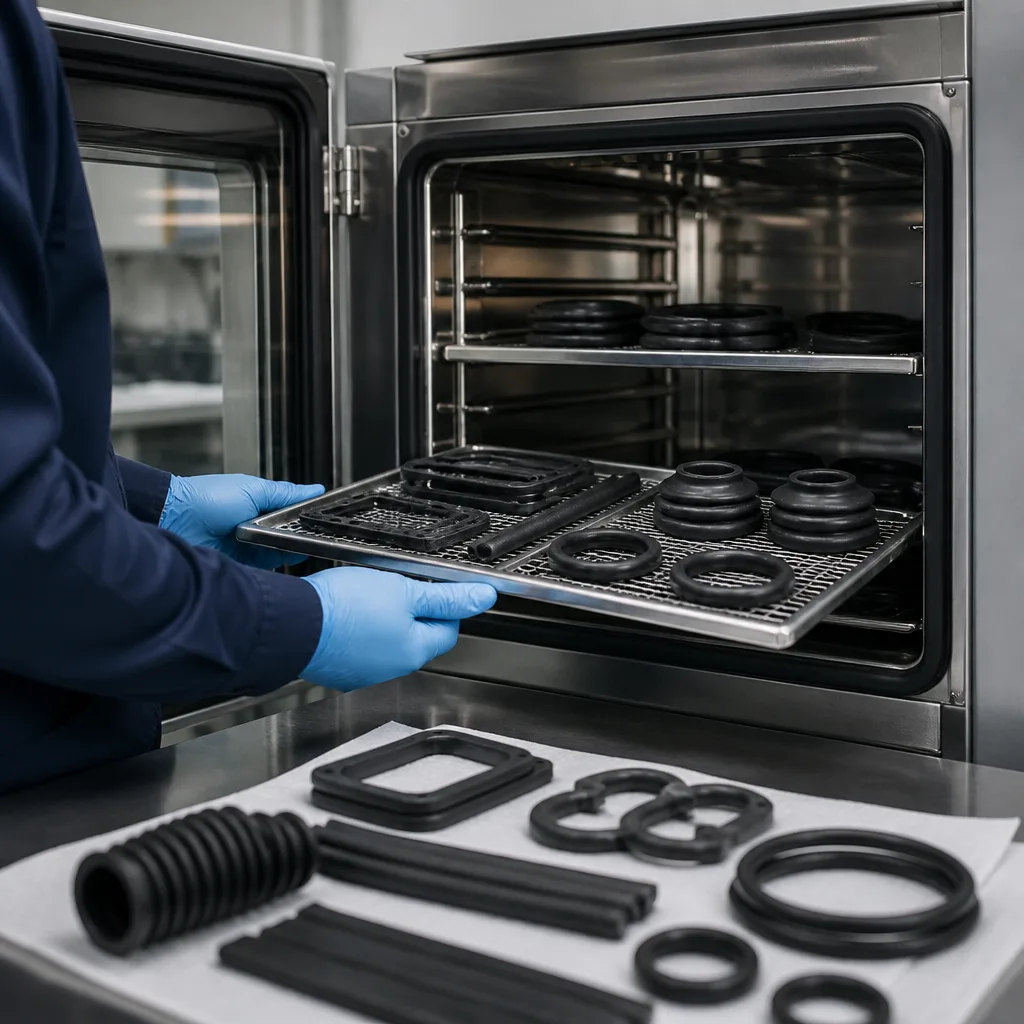
The GME 60258 standard is widely applied in the qualification of rubber components (including seals, gaskets, hoses, vibration isolators, and air seal strips) used in automotive vehicles.
Rubber materials gradually degrade when exposed to heat and oxygen. This degradation can lead to:
The GME 60258 standard provides a standardized laboratory procedure for accelerating these aging mechanisms so that suppliers and manufacturers can compare materials under the same conditions.
This standard applies primarily to:
Typical automotive components evaluated include:
In principle, this testing method accelerates thermal aging by exposing samples to high temperatures in a controlled hot-air oven for a specific period of time. After aging, the material is examined to determine how much its properties have changed compared to its original (unaged) state. The testing process generally follows these steps:
One of the distinguishing features of the GME 60258 standard is its use of coded aging conditions that define the temperature and exposure time for a specific application (combinations such as “B3”). Product specifications refer to these codes rather than repeating the exact test parameters, allowing for consistent selection of appropriate aging conditions for different rubber compounds.
The chosen aging condition depends on the following:
Following thermal aging, various physical and mechanical properties can be measured, including:
The oven must maintain a constant temperature and even air circulation to ensure repeatable results.
Acceptance limits are specified by the relevant General Motors material or component specification rather than the GME 60258 standard itself. Typical requirements might define the maximum permitted modifications as follows:
A material is considered valid if, after aging, all required properties remain within the specified tolerances.
In the automotive industry, the GME 60258 standard is commonly used in the following situations:
This helps verify that rubber materials can withstand prolonged exposure to the thermal environments encountered in vehicle servicing.
Accelerated aging testing, performed in accordance with the GME 60258 standard, offers several advantages:
The GME 60258 standard is often used in conjunction with other international elastomer standards such as:
While these international standards define general aging and property testing methods, the GME 60258 standard adapts the testing approach to General Motors' material qualification requirements.
Modern vehicles rely on hundreds of elastomer components that must maintain their flexibility and sealing performance for many years despite constant exposure to heat, oxygen, and environmental stresses. Failure of these components can lead to water ingress, air leaks, fluid leaks, increased noise, vibration problems, and reduced durability.
The GME 258 standard helps manufacturers identify durable elastomer compounds early in the development process by providing a consistent accelerated aging methodology, reducing warranty risks and increasing long-term vehicle reliability.
In conclusion, the GME 60258 standard is a key General Motors European test standard for evaluating the thermal aging resistance of elastomeric materials. Through controlled exposure to high temperatures followed by measurement of fundamental mechanical properties, it enables manufacturers to predict long-term performance in automotive applications. The use of standardized aging conditions and consistent evaluation criteria supports material selection, supplier qualification, and the reliable production of rubber components that can meet demanding vehicle durability requirements.
For many years, our organization, with its competent and experienced staff, has been understanding the needs of its clients, providing the advanced testing services they require, and assisting them in the establishment, implementation, and improvement of management systems. Within this framework, we also provide testing services compliant with the GME 60258 standard.
To get an appointment, to get more detailed information or to request an evaluation, you can ask us to fill in our form and reach you.

