

The “GMW 14130 Scratch or Abrasion Resistance” standard, developed by General Motors Worldwide (GMW), is a test procedure used to evaluate how well automotive interior surfaces resist visible damage from friction or contact with relatively hard objects. This standard is particularly applicable to plastic films, vinyl, leather, coated textiles, foils, and other materials used in automotive interior trim.
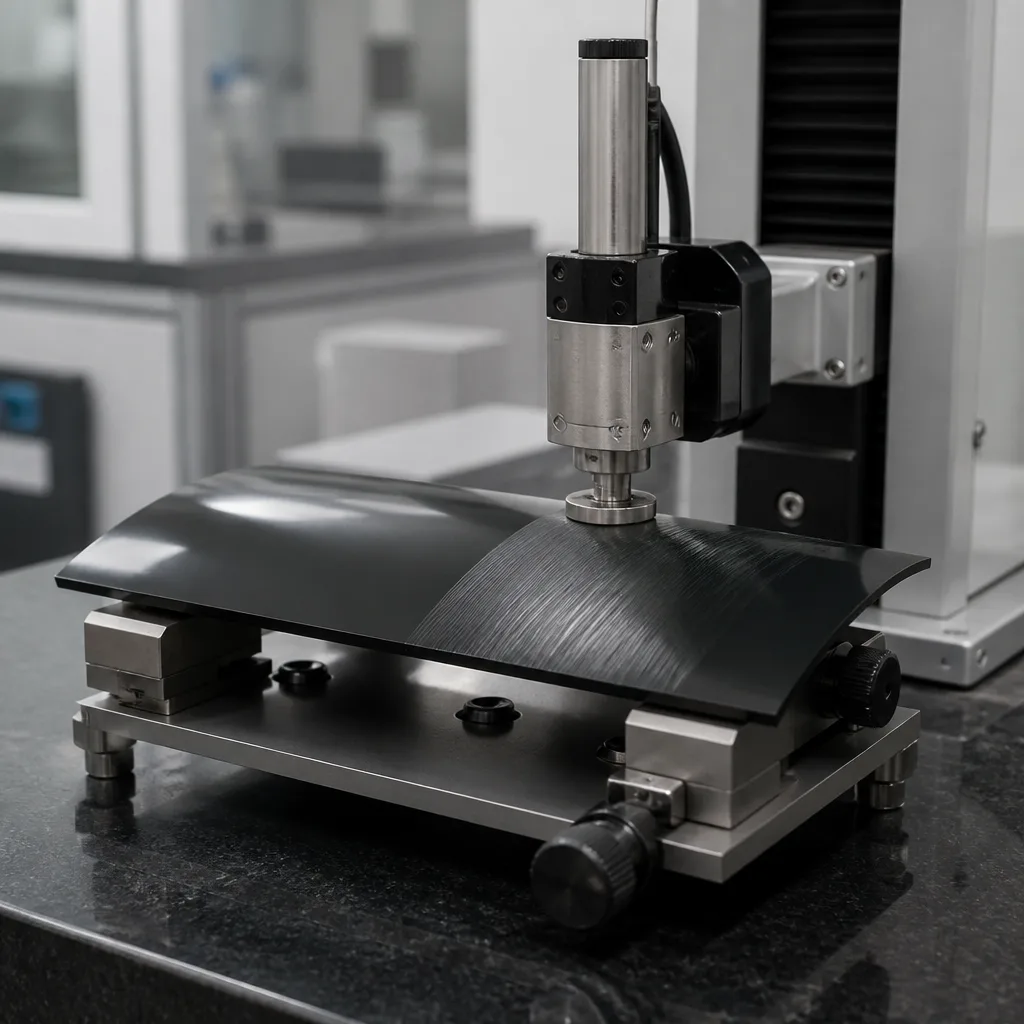
The primary purpose of the GMW 14130 standard is to determine the resistance of a material or finished surface to scratching and abrasion. This standard distinguishes between two types of damage:
Therefore, the GMW 14130 standard essentially deals with whether normal mechanical contact causes unacceptable visual damage to the automotive surface.
This distinction is important because a material can remain structurally sound while still developing an unacceptable visual defect.
The GMW 14130 standard primarily relates to automotive interior trim surface testing. The materials for which its applicability has been determined are as follows:
Testing laboratories list the GMW 14130 standard, particularly for surface property and scratch resistance testing of automotive interior trim materials. Typical applications may include:
The GMW 14130 standard, in principle, uses a controlled abrasion process to determine whether a surface has been unacceptably scratched. A commonly described application uses a paperclip as the abrasive element and applies a linear, unidirectional motion against the sample. This method essentially questions whether the surface can withstand contact and abrasion without developing unacceptable permanent or visible damage. After the test, the resulting surface mark on the sample is examined, and the nature and severity of the damage are assessed. Therefore, it differs from conventional wear tests that simulate prolonged friction over many cycles. The GMW 14130 standard focuses more on localized surface damage resulting from abrasion/contact.
To understand the difference between surface damage and wear, it is necessary to correctly interpret the GMW 14130 standard:
Features Surface Damage Wear
Automotive interior components are frequently in contact with objects such as the following:
A surface that looks attractive when new can quickly become unacceptable if it is easily scratched, stained, or worn. Therefore, the GMW 14130 standard helps manufacturers assess the surface durability and cosmetic quality of a material before it enters production.
This test is particularly important for modern automotive interiors because many components utilize decorative coatings, textured plastics, soft-touch finishes, films, and other surface treatments that can make their appearance more susceptible to localized damage.
In general, the testing procedure follows these steps:
The GMW 14130 standard should not be confused with every automotive scratch or wear test. For example,
The GMW 14130 standard can be used in various stages of automotive product development:
The importance of the GMW 14130 standard for automotive interior design is not limited to simply preventing scratches. Automotive interiors are extremely sensitive products in terms of appearance. A component can continue to function perfectly while appearing defective due to a single noticeable surface mark. Consequently, scratch and abrasion resistance contributes to:
These features are especially important for premium interiors, as relatively minor cosmetic flaws can be noticed by passengers.
Ultimately, the GMW 14130 standard's value lies in addressing a very practical automotive problem: a component may remain functional but become visually unacceptable due to daily contact and friction. For suppliers of plastics, vinyl, leather, coated textiles, films, foils, and other interior trim materials, the GMW 14130 standard provides a standardized way to assess this aspect of surface durability and support General Motors' material and component qualifications.
For many years, our organization, with its competent and experienced staff, has been understanding the needs of its clients, providing the advanced testing services they require, and assisting them in the establishment, implementation, and improvement of management systems. Within this framework, we also provide testing services in accordance with the GMW 14130 standard.
To get an appointment, to get more detailed information or to request an evaluation, you can ask us to fill in our form and reach you.

