

Developed by BMW, a multinational vehicle manufacturer, the “BMW GS 93036 Lightweight Reinforced Thermoplastic (LWRT) for Exterior Uses - Requirements and Tests” standard describes the requirements and test methods for lightweight reinforced thermoplastics (LWRT) used in automotive exterior components.
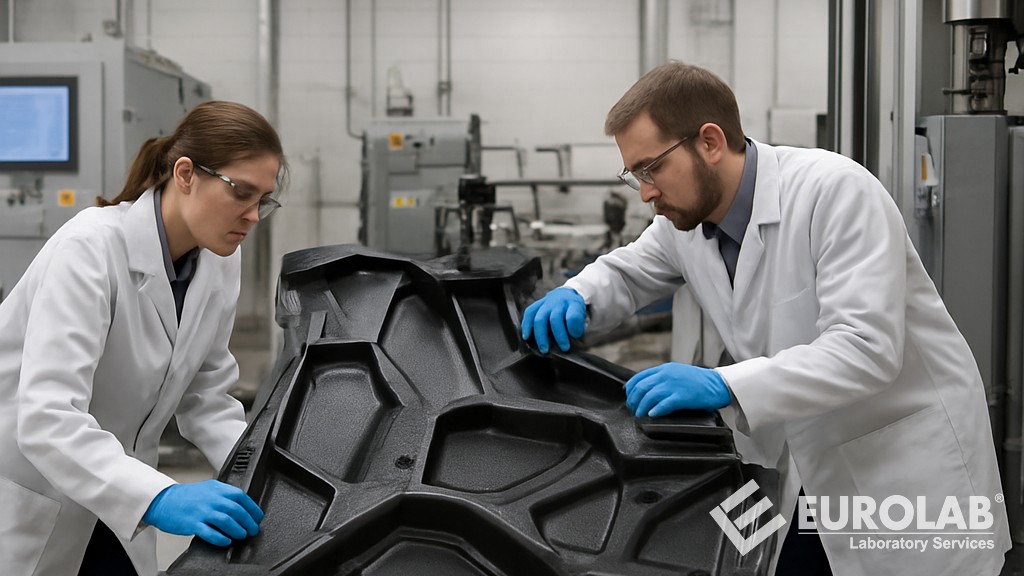
Lightweight reinforced thermoplastic (LWRT) materials are lightweight, fiber-reinforced thermoplastic composites that typically contain glass fibers pressed into a thermoplastic matrix. These materials combine low density (for weight savings) with good acoustic damping properties, stiffness, and moldability. This material is commonly used in vehicles for parts such as lower body panels, wheel arch covers, engine bay covers, or other interior and exterior trim elements where reducing mass while maintaining structural integrity and noise reduction is important.
In BMW vehicles, lightweight reinforced thermoplastic (LWRT) material contributes to overall vehicle weight reduction strategies, improved fuel efficiency/electric range, and enhanced noise, vibration, and harshness (NVH) performance.
The BMW GS 93036 standard includes the following:
According to this standard, tests to ensure that lightweight reinforced thermoplastic (LWRT) materials or components comply with BMW approval requirements are carried out by accredited laboratories.
Typical applications of this standard include:
This standard is part of BMW’s broader set of “GS” standards for plastics, coatings and materials. In an era of stricter emissions regulations and the transition to electrification, the BMW GS 93036 standard and similar standards help suppliers provide innovative, lightweight materials that meet BMW’s demands for high performance, durability and quality for outdoor applications.
The basic test categories under this standard are as follows:
These tests ensure the material can withstand assembly, stone impact, and service loads.
These are critical for underbody and wheel well applications to reduce road and engine noise.
The BMW GS 93036 standard is a specific and mandatory standard because it must meet extremely high demands that go beyond general industry standards for exterior applications such as lower body panels, wheel arch covers, engine bay guards, and other exposed components. The main reasons why this standard is necessary are as follows:
This standard includes specific tests such as water/environmental absorption, heat aging, chemical resistance, and weather exposure to prevent swelling, deterioration, delamination, or loss of properties over the vehicle's 10-15 year lifespan.
In conclusion, without the BMW GS 93036 standard, lightweight exterior LWRT parts may save weight but could compromise noise comfort, long-term durability, or safety.
For many years, our organization, with its competent and experienced team, has been understanding the needs of its clients, providing the advanced testing services they require, and assisting them in the establishment, implementation, and improvement of management systems. Within this framework, we also provide testing services in accordance with the BMW GS 93036 standard.
To get an appointment, to get more detailed information or to request an evaluation, you can ask us to fill in our form and reach you.

